By Dr Wan Chee Kwang, Medical Director, 1Aesthetics
Let’s be honest. In Singapore, we live in a unique intersection of high-tech modernity and deep-rooted tradition. I can’t tell you how many times a patient has walked into my consultation room at 1Aesthetics, pointed to a spot on their face, and said, "Dr. Wan, my Feng Shui master said this mole is blocking my wealth. It has to go. Yesterday."
I get it. Whether you believe it’s blocking your qi, your career advancement, or just your ability to take a nice selfie without a filter, the desire to remove a mole is real. But here is the scenario that breaks my heart—and frankly, frustrates me as a doctor:
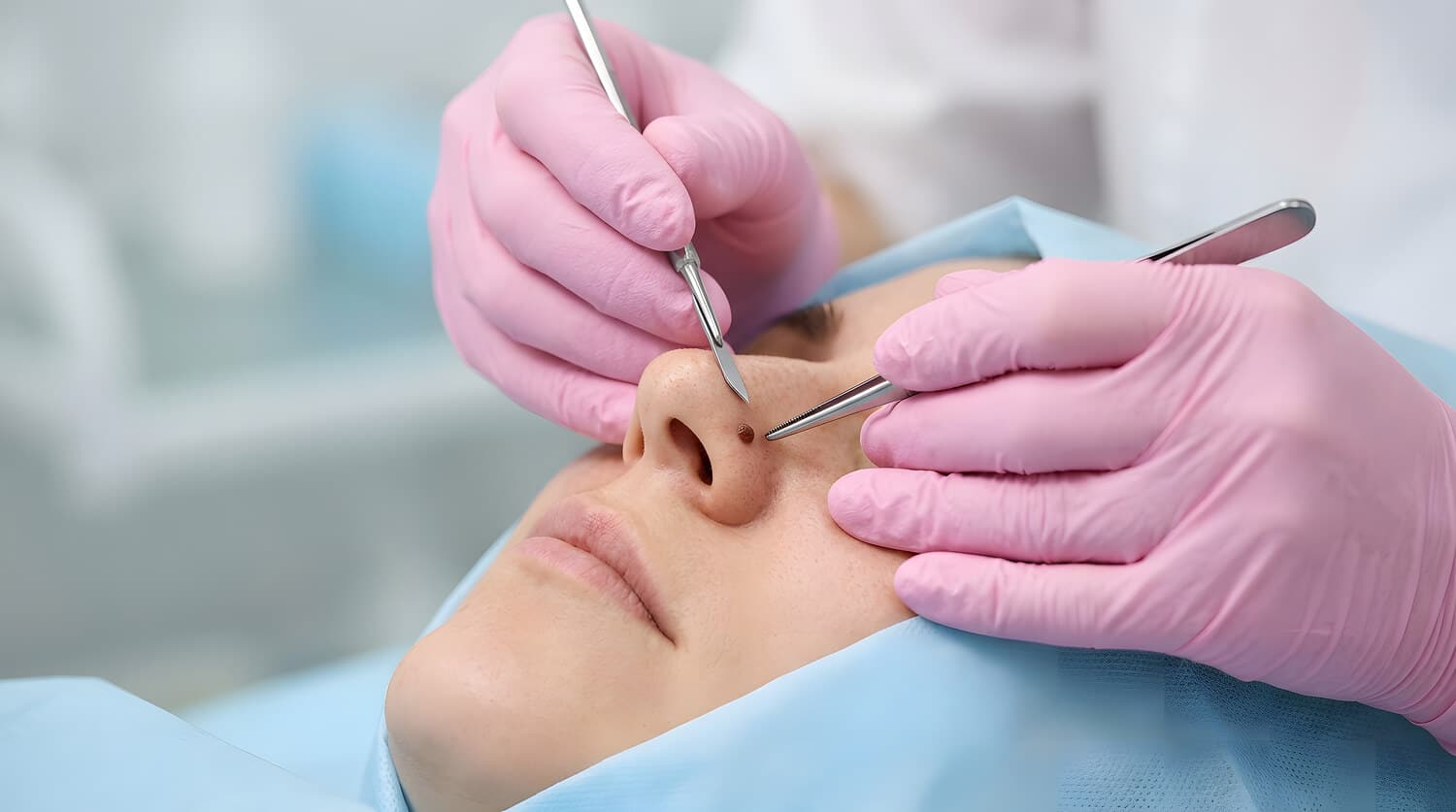
You go to get the mole removed to improve your fortune. The operator zaps it aggressively with a standard laser or burns it off with acid. The mole is gone, yes. But in its place sits a depressed, white, shiny scar. Or worse, a raised, angry keloid.
Now, you go back to the Feng Shui master, and they shake their head. "A scar is a breakage in the landscape of the face," they might say. "This is also bad Feng Shui."
So, you’ve traded a "bad luck mole" for a "bad luck scar," and you’re out a few hundred dollars. That is the definition of a bad day.
This is the saga of mole removal in Singapore. It seems simple—just remove the spot, right?—but biologically, it is a complex negotiation with your skin. If we want to change your fortune, we have to outsmart your biology first. But before we get into the science of how we remove them, let's look deeper into why these spots matter so much to us culturally.
In Singapore, many patients who visit us are not only concerned about their appearance or health, but also about the deeper meanings their moles may hold. As a medical aesthetics physician, I am often asked: "Doctor, is this mole bad for my luck?" or "Will removing this mole improve my fortune?" These questions reflect the enduring influence of Chinese cultural beliefs—especially feng shui and face reading (mian xiang)—on our daily lives.
Mole reading is a centuries-old tradition in Chinese culture, closely linked to face reading and the five-element theory. In this system, every mole is seen as a "mark of fate," with its location, color, size, and shape believed to reveal insights about your destiny, character, and fortune.
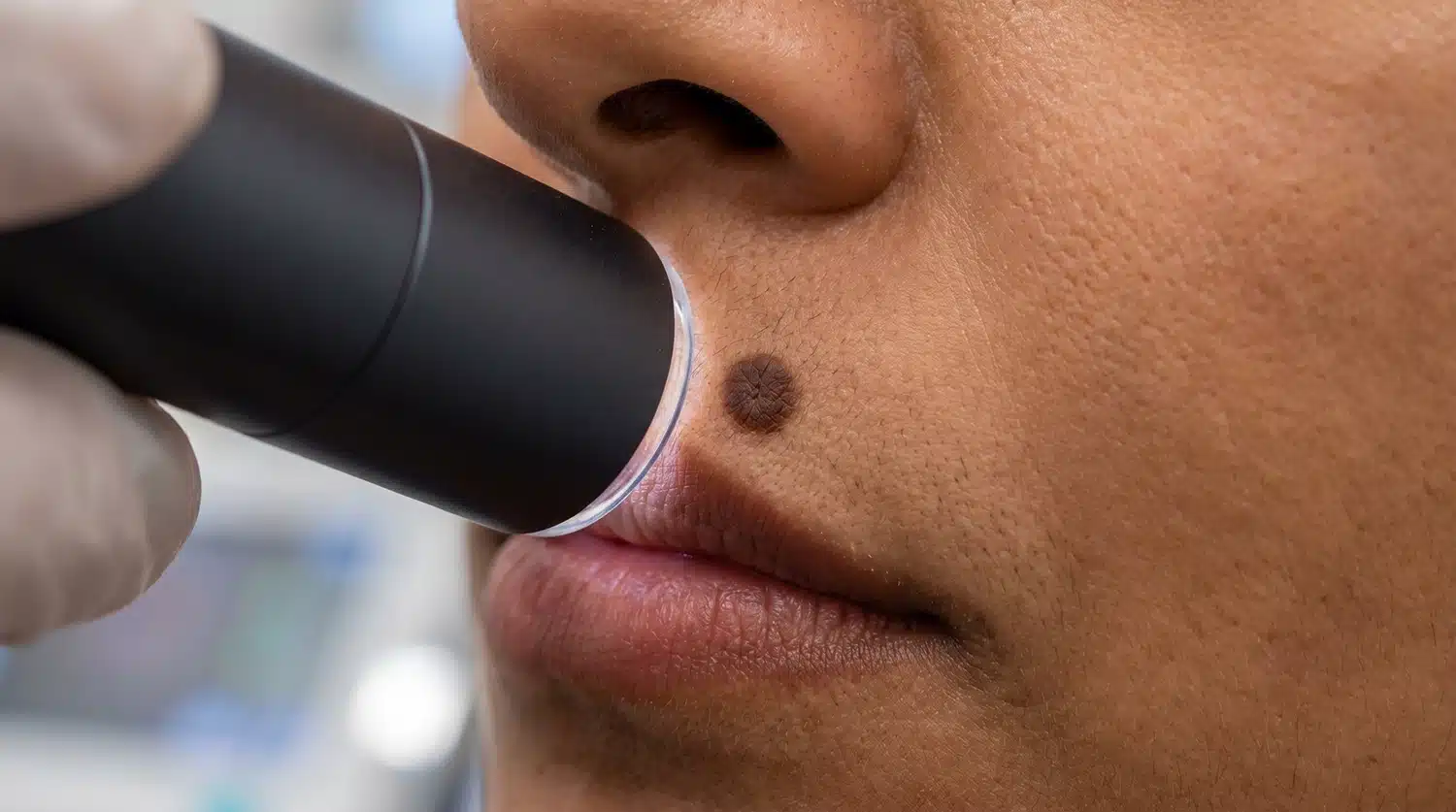
Moles are interpreted through the lens of the five elements—Wood, Fire, Earth, Metal, and Water. The color and location of a mole may correspond to a particular element, which can either harmonize with or disrupt the energy (qi) of the face or body. For example, a black mole (Water element) on the nose (Earth area) may be seen as Water controlling Earth, potentially indicating financial or career challenges.
Please note: While I am a medical aesthetics physician, I am not a feng shui master. The following is a synthesis of traditional beliefs and medical best practices, not professional feng shui advice.
While some moles are considered lucky, many patients are more concerned about those that are believed to bring misfortune or obstacles. Here is a detailed breakdown of inauspicious mole locations and their traditional feng shui meanings, along with the rationale behind each interpretation:
Forehead Area
Eye Area
Nose Region
Cheek and Chin
Ears and Back
Extremities
This is where the medical reality meets the cultural belief. In traditional feng shui thinking, incomplete mole removal can be worse than leaving the mole untouched. The rationale is that:
Furthermore, scars left after mole removal carry their own feng shui implications:
Now that we understand why you want the mole gone, let's talk about why it's so hard to remove cleanly. The antagonist of our story isn't the Feng Shui master, and it isn't the laser machine. It’s your own skin’s biology.
Think of a mole (a melanocytic nevus) not as a sticker on the surface of your skin, but as an iceberg. What you see on top—the brown or black bump—is just the tip. Underneath, deep in the dermis (the structural layer of your skin), there are "nests" of nevus cells.
These cells are like stubborn tenants who have dug a basement.
When we try to evict them, your body reacts with what I call "biological warfare." The moment we injure the skin to remove the cells, your body screams, "Emergency! Breach in the hull!" It rushes to patch the hole.
Here is the problem: Your body prioritizes speed over aesthetics. It throws down collagen fibers in a messy, chaotic pile just to seal the wound. That messy pile? That’s a scar.
Furthermore, if we don't get all the tenants out of the basement, the remaining nevus cells sense the trauma. They get agitated. They start dividing. This is why you often see moles recurring after removal. It’s the skin’s way of saying, "You missed a spot, and now we’re fortifying our position."
For decades, the approach to mole removal was frankly medieval. We treated the skin like we were clearing a forest—slash and burn. Let’s look at the methods that gave mole removal a bad reputation.
The shift in my own practice—and in advanced aesthetic medicine generally—came when we stopped trying to "delete" moles and started trying to "remodel" the skin.
We realized that the goal isn't just removal; the goal is restoration. We learned that the skin has a "memory." If you traumatize it too much, it remembers that trauma forever in the form of a scar. But, if you can trick the skin into healing calmly—persuading it rather than forcing it—you can remove the mole while leaving the "landscape" intact.
This requires a shift from a "one-and-done" mentality to a "strategic dismantling" mindset. This is why we spend so much time debunking common myths about mole removal—because the old ways of thinking simply don't serve the patient's best interests.
So, what is the best way to remove moles? We don't use just one tool. We use a Multimodal Approach. We attack the mole from different angles using different physics, confusing the "tenants" so they leave without trashing the house.
Note: The following describes established techniques available in the field of aesthetic medicine that can be employed to optimize results.
If you take one thing away from this article, let it be this: Mole removal is a relationship, not a one-night stand.
I often tell my patients, "I can remove this mole in 5 seconds and leave a scar, or we can take 5 weeks and leave clear skin."
For raised moles, a Staged Removal strategy is often employed. But this doesn't mean just shaving the top off and waiting. That usually fails.
Instead, the focus can be on reducing the surface area of the mole first, rather than just the depth. Imagine the mole is a pond. Instead of draining the whole pond at once (which leaves a big, empty crater), parts of the mole such as the edges, can be treated first. This encourages the surrounding healthy skin to creep in and shrink the mole's footprint.
Once the mole is smaller, the center is treated. By breaking the removal into fractions of the surface area, the tension on the wound is reduced. Less tension means less scarring. This gentle approach is also why parents often ask when they should consider mole removal for their child.
I need to be absolutely transparent with you, because trust is the foundation of what we do at 1Aesthetics.
Scarring and recurrence are always possibilities.
No matter how careful we are, no matter how refined the technology, biology is sometimes unpredictable. Some people are genetically prone to keloid scars. Some moles have roots that twist and turn deep into the skin, where we cannot safely reach without causing damage.
The difference lies in the unseen details of how these risks can be managed. Specialized scopes with different light wavelengths can be used to aid visualization, allowing for the identification of roots that the naked eye might miss. Growth factors can be employed to guide the skin’s repair process at a cellular level, calming the response before a scar can form. Strategic fractional reduction techniques can trick the skin into healing smaller wounds rather than one big one.
These extra steps are taken because for you, this isn't just a medical procedure. It's your face, and it's your fortune.
If you are considering mole removal—whether for medical, aesthetic, or cultural reasons—choosing the right specialist makes all the difference. At 1Aesthetics, we combine medical expertise with cultural understanding to deliver results that address all your concerns, including the management of any complications that may arise.
Will removing a mole change my luck? While there's no scientific evidence linking mole removal to fortune, many patients report feeling more confident after removing moles they perceive as unlucky. This improved self-confidence can positively impact your opportunities and relationships. The key is ensuring complete, professional removal to address any concerns fully.
What if there is a scar after removal? Appropriate surgical techniques and comprehensive aftercare can minimize scarring risk. In traditional beliefs, a minimal, well-healed scar is considered much less significant than a prominent mole. Specialized scar management options are available to optimize healing.
Is it safe to remove a mole for feng shui reasons? Absolutely, when performed by a qualified medical professional. We respect all motivations for mole removal and ensure safe, effective treatment regardless of your reasons.
Can moles grow back after removal? With proper technique and complete removal, recurrence is rare. However, it is possible if microscopic cells remain. Regular monitoring allows for early detection and simpler touch-up treatments if regrowth occurs.
How long does it take to heal? Healing time varies by the method used and the mole's location. Generally, superficial wounds heal within 1 to 2 weeks, while deeper removals may take a few weeks. Redness can persist for a few months as the skin remodels.
Does mole removal hurt? Most procedures are performed under local anesthesia, making the removal itself virtually painless. You may feel a slight pinch during the injection, but the rest of the process is comfortable.
What happens to the mole after removal? If there is any suspicion of irregularity, the removed tissue can be sent for pathological examination to rule out skin cancer. This provides peace of mind regarding your health alongside the aesthetic improvement.
Can I use home remedies like apple cider vinegar or mole removal creams? We strongly advise against this. Home remedies often cause chemical burns, infection, and severe scarring because they cannot distinguish between the mole and healthy skin. Furthermore, they destroy the tissue, making it impossible to check for cancer if the spot was actually malignant.
Whether you are removing a mole because you want to clear a blockage in your career path, or simply because you’re tired of concealing it with makeup, the goal remains the same: Harmony.
You want your face to look balanced, clear, and untouched.
At 1Aesthetics, we bridge the gap between the mystical and the medical. We respect the "why" behind your visit—whether it’s cultural or cosmetic—and we apply the most rigorous, modern scientific "how" to achieve it.
We move away from the "burn and hope" methods of the past and embrace a sophisticated, multimodal approach that respects your tissue. Techniques such as precise excision, pigment management with lasers, and regenerative signaling can all be leveraged to achieve the best possible outcome.
If you have a mole that’s been bothering you—spiritually or aesthetically—don't gamble with a night market cream or a quick-fix laser. Come in and let’s talk. Let’s create a plan to evict those tenants for good, without wrecking the house.
Ready to clear the path for better fortune (and better skin)? Book a consultation with us today.
Dr Wan Chee Kwang, MBBS (Singapore), MRCS (Edinburgh), PGDip Clinical Dermatology (London) Medical Director, 1Aesthetics Medical & Surgery
Disclaimer: This article is for informational purposes only and does not constitute medical advice. Please consult a qualified healthcare professional for personalized recommendations. While I am a medical aesthetics physician, I am not a feng shui master. For specific advice on feng shui or mole interpretation, please consult a qualified practitioner in that field.
Address:
1Aesthetics, Medical & Surgery
#14-90 The Central Tower 1
8 Eu Tong Sen Street
Singapore 059818
Mon-Fri 10 AM to 730 PM
Sat 10 AM to 6 PM
Phone / WhatsApp:
+65 66125173 / +65 84899962
Email:
[email protected]