
Warts are more common than most people realise, and more treatable than many expect. At 1Aesthetics, Dr Wan offers a range of evidence-based wart removal treatments in Singapore, selected according to the type, location, and depth of your wart. The goal is always the same: complete removal with the least possible disruption to the surrounding skin.
Warts are caused by the human papillomavirus (HPV), which is a common skin infection. There are more than 100 different strains of HPV that can cause warts, but the most common types that cause warts on the hands and feet are types 1, 2, 4, 27, and 57. Genital warts are caused by types 6 and 11 of the HPV virus.
In Singapore, warts are particularly common among young adults and children. Warts can spread from person to person through skin-to-skin contact or by coming into contact with contaminated objects, such as towels, shoes, or shower floors.
For more information on how warts are caused and how they can be prevented, you can read our detailed guide on how you get warts and how to remove them.
Warts can be uncomfortable, embarrassing, or persistent. In some cases, they can even carry genuine health implications. There are several reasons patients come to 1Aesthetics for wart removal in Singapore.
Not sure whether what you have is a wart? Read our guide on how to tell the difference between warts and skin cancer before booking, or come in for a consultation, and Dr Wan will assess it directly.

There are several approaches to wart removal. Understanding how each of them works can help you make an informed decision on treatment.
Wart removal creams target the virus that causes warts by causing the skin cells around the wart to die and peel off. There are various types of creams, such as acids, immune system modulators, vitamin A derivatives, and others. It may take weeks or even months for topical medications to effectively remove warts. In some cases, these medications may not even work, particularly for larger or long-standing warts. Be cautious when using topical wart removal creams, as they may cause skin irritation, pain, allergic reactions, and other complications like pigmentary changes or scarring.
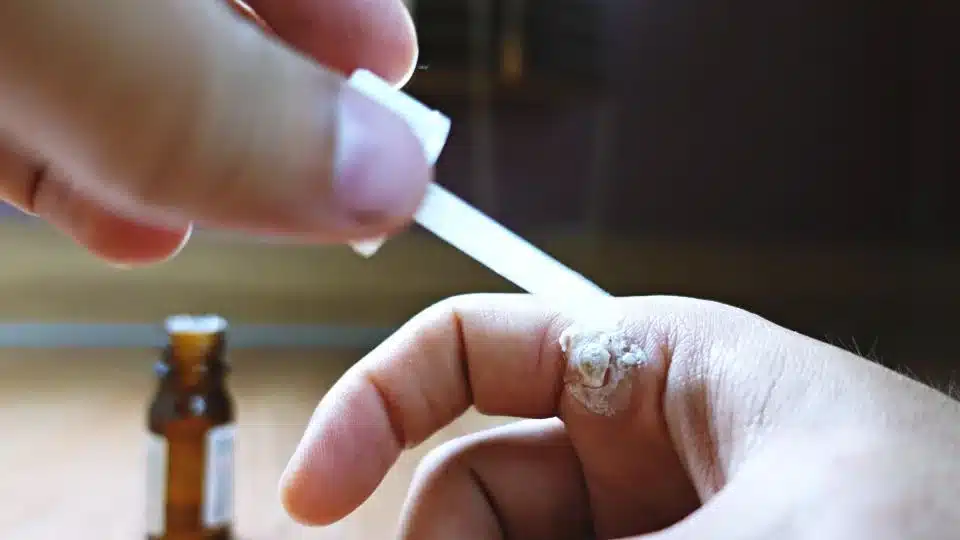

Cryotherapy wart removal involves the application of liquid nitrogen to freeze and subsequently eliminate warts. During the procedure, the extreme cold causes the wart to break down, leading to scabbing and eventual shedding. While cryotherapy can be used for removing smaller warts, it is difficult to be very accurate with cryotherapy. Cryotherapy may be less effective for deeper or larger warts, necessitating multiple sessions. If any wart tissue survives treatment, it can infect the surrounding area of cryo-damaged skin, sometimes causing the wart to grow larger than it was before treatment. Additionally, it may cause complications such as blistering, skin colour changes, and scarring.
For patients whose warts have not responded to cryotherapy, this guide explains why and what the alternatives may be.
The CO2 laser works by delivering energy that is absorbed by water in skin cells, vaporising targeted tissue while leaving a controlled zone of coagulation (heat-sealing of surrounding tissue) around the treated area. The Ultrapulse CO2 system produces very short, high-powered pulses that allow Dr Wan to precisely control the ratio of tissue removal to coagulation. This means only the abnormal wart tissue is targeted, with minimal disruption to the healthy skin around it. Most warts can be cleared in one to two sessions using this method.

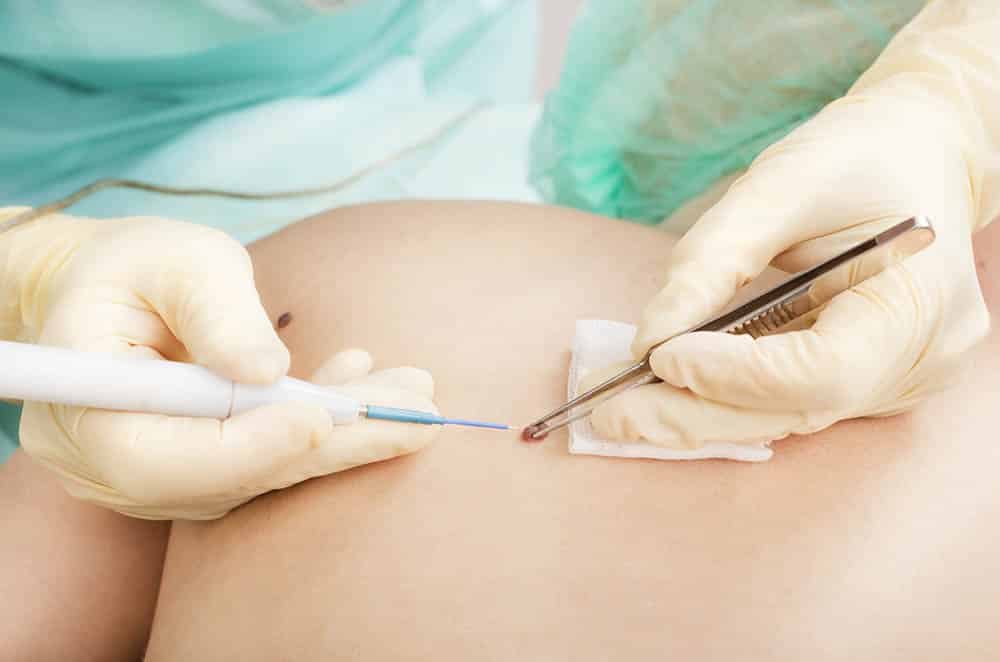
Radiofrequency ablation (the controlled removal of tissue using high-frequency energy) works by delivering energy that is absorbed by water in skin cells. Depending on the waveform used, it can either vaporise or coagulate the wart tissue. Dr Wan uses radiofrequency as a precise instrument to either dissect the wart away from surrounding tissue or seal it, depending on the wart type and location. It is particularly useful for warts in areas where fine control over tissue damage is important.
Vascular lasers, such as pulsed dye, gold, long-pulsed NdYAG, or KTP lasers, can be used to remove warts by targeting the blood vessels that supply the wart. The laser emits a specific wavelength of light that is absorbed by the blood vessels in the wart, causing them to heat up and coagulate. This cuts off the blood supply to the wart, leading to its eventual death and removal. Vascular lasers have a relatively low risk of scarring compared to other wart removal methods and are popular amongst patients looking for 'scarless' wart removal. However, they have relatively limited penetration and clearance, so not all warts are suitable for wart removal with vascular lasers, and multiple sessions may be required.

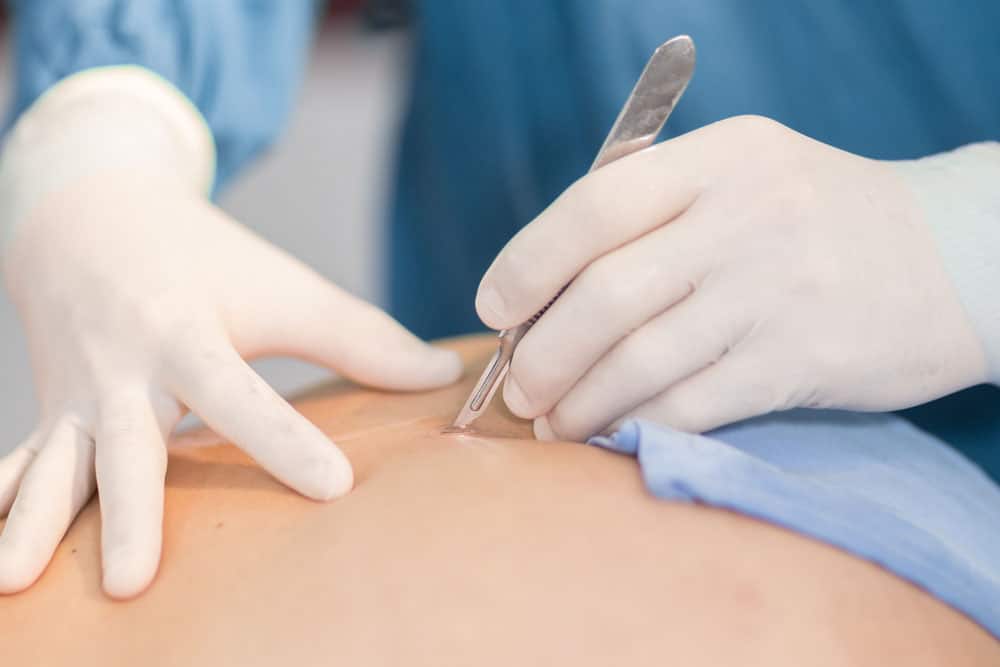
Surgical excision involves physically removing the wart using a scalpel or surgical instrument. It is generally reserved for more severe or treatment-resistant cases and is not typically a first-line option.
Warts that are unusual in appearance or have not responded to other treatments may need to be surgically removed and sent for a biopsy (a procedure where a small tissue sample is examined under a microscope) to rule out the possibility of skin cancer. Dr Wan's surgical background means he is well placed to make this assessment and perform the excision where needed.
Wart removal injections do not directly remove the wart but work by either damaging the wart tissue or stimulating the body’s immune system to fight off the wart. They’re less invasive and require less recovery time than destructive treatments, posing less risk of scarring.
However, they also have some drawbacks such as requiring multiple sessions, having a relatively higher failure rate, potentially being more expensive overall, and causing more systemic side effects like fever.
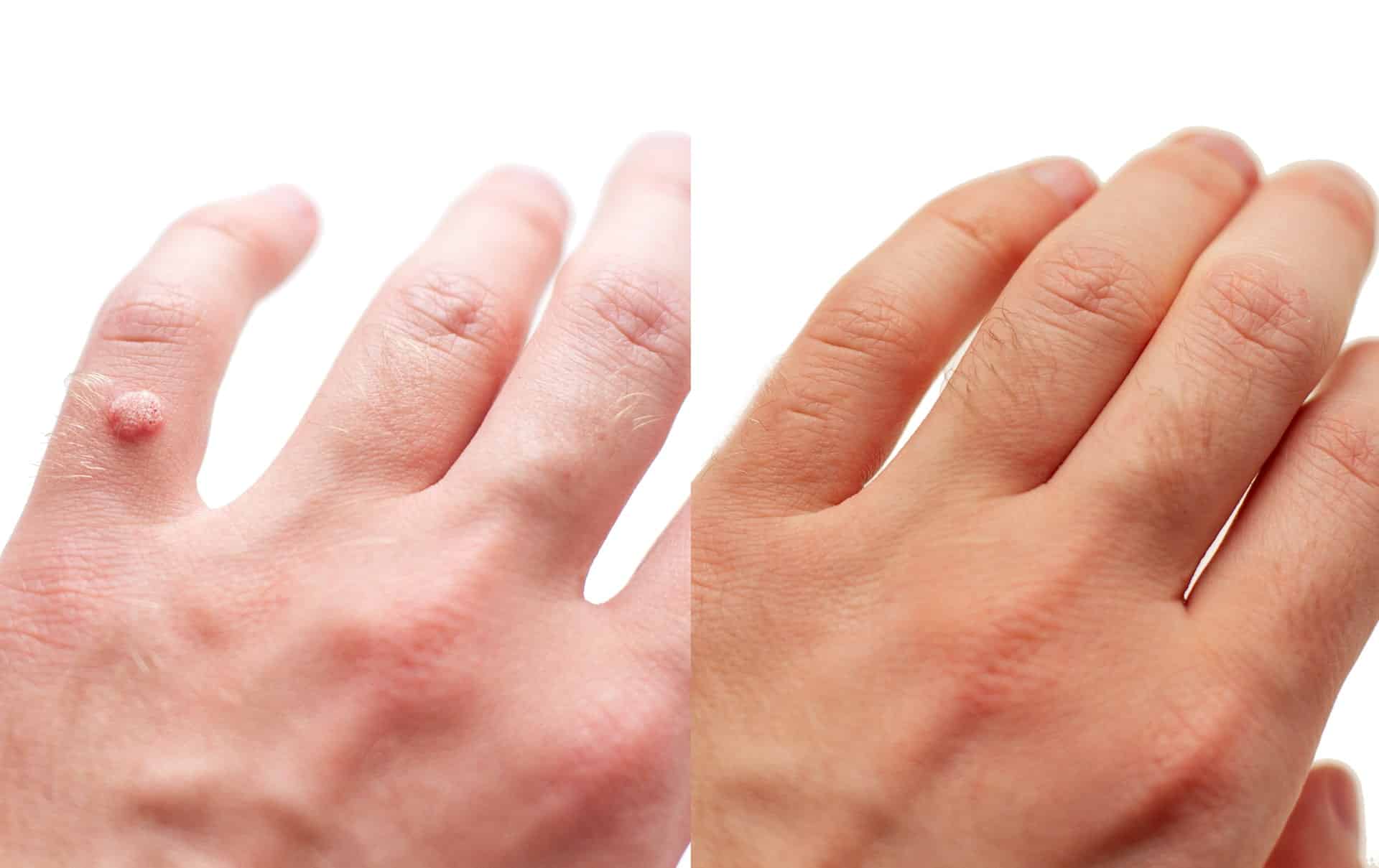
Warts can be persistent and difficult to eliminate. Each treatment method has its trade-offs: topical creams have limited effectiveness for established warts; cryotherapy is imprecise and often requires multiple sessions; ablative lasers and radiofrequency can remove warts in one to two sessions but carry a higher risk of scarring if not applied carefully; vascular lasers have a more favourable scarring profile but may need repeating for deeper warts.
Dr Wan's approach centres on two priorities that patients consistently raise: preventing recurrence and minimising scarring. To address both, he uses treatment methods that offer precise, controllable tissue damage. For example, the Ultrapulse CO2 system and high-frequency radiofrequency allow him to tune the ratio of ablation (tissue removal) to coagulation (tissue sealing), targeting only the infected cells while preserving the surrounding skin. Vascular lasers approach the same problem from a different angle, disrupting the blood supply to the wart rather than directly destroying its tissue.
For complex cases, Dr Wan combines modalities (treatment methods) to compensate for the limitations of each. A combination approach may reduce both recurrence risk and the number of sessions required, and is particularly suited to warts in cosmetically sensitive areas such as the face.
Wart removal injections offer an alternative for difficult locations, treatment-resistant warts, or patients with multiple warts. Dr Wan will advise whether this is the more appropriate route at your consultation.


Removing warts on the face can be tricky as the face is the most visible part of the body. While wart removal on facial skin tends to heal well, minimizing the risk of scarring from wart removal is of relatively more importance compared to wart removal on other parts of the body.
Hence, many patients prefer the precision of vascular lasers or ablative lasers. Vascular lasers minimize the risk of scarring and downtime, while ablative lasers are able to remove most warts within a single session. Combining multiple lasers can decrease the chances of recurrence, the number of sessions required as well as the risk of scarring.
Plantar warts grow on the soles of the feet. The pressure from walking often causes the wart to grow inward, making it painful to walk. Plantar warts can be difficult to treat as they tend to be thicker and go deeper than warts on other parts of the body. Wart removal wounds on the soles can cause relatively more functional limitations in day-to-day life, such as difficulty walking due to discomfort from the raw area. The skin on the soles also tends to heal more poorly and slowly than other parts of the body.
Hence, vascular laser tends to be preferred for plantar wart removal as it has the easiest recovery with no painful raw areas to heal. However, it may need to be repeated a few times for full clearance.
Genital warts appear on the genitals, anus, or surrounding skin. They may be sexually transmitted or passed on through direct skin-to-skin contact. As genital warts can be unsightly and can be passed from person to person during vaginal and anal sex, most patients prefer to use wart removal treatments that work more quickly without the need for multiple sessions. Hence ablative lasers and radiofrequency ablation are more often chosen over vascular lasers.
Wart removal costs in Singapore vary depending on the treatment method, the number of warts, and the complexity of the case. As a general guide, straightforward single-wart removal may start from under S$200, while more complex cases involving multiple warts, difficult locations, or combination treatment methods may cost considerably more. Dr Wan will provide a clear cost estimate at your consultation once he has assessed your specific situation.
Topical medication should be adhered to in order to reduce the risk of complications and recurrence after wart removal. The treated area should be monitored closely and any recurrences should be treated early to minimize the risk of the lesions seeding new ones. Avoid touching any existing or suspected warts and keep them covered until treatment can be performed, preferably early.
There is no single best treatment for every wart. The right choice depends on the wart's type, size and location, and how it has responded to earlier treatment. Here is how the three most common options compare at 1Aesthetics.
| Laser (Ultrapulse CO2 / vascular) | Wart removal injections | |
| How it works | CO2 laser vaporises the wart tissue; vascular laser targets the blood vessels that supply the wart | Either damages the wart tissue or stimulates the body's immune system to clear the HPV infection |
| Typical sessions | Most warts clear in one to two sessions | Immunotherapy injections need at least 3 to 6 sessions |
| Interval | At least 2 weeks between sessions | At least 2 weeks between sessions |
| Cost guide | S$200 - $1,000 (before GST) | From around S$100 to a few hundred dollars or more per injected wart |
| Possible side effects | Redness at the site for 2 to 6 months, which usually heals well with scar cream | Pain, swelling, redness; immunotherapy can cause mild flu-like symptoms |
| Best suited for | Precise removal that minimises damage to surrounding skin | Complicated or multiple warts, or warts in difficult-to-treat areas |
A straightforward single-wart removal may start from under S$200. More complex cases, such as multiple warts, difficult locations or combined treatments, may cost considerably more. Wart removal is generally considered elective in Singapore and is not typically covered by MediShield Life or Integrated Shield Plans.
Most warts are harmless, but see a doctor if:
let us clear your doubts!
At your consultation, Dr Wan will examine the wart and assess its type, depth, and location. Where there is any uncertainty about whether a growth is a wart or something that warrants further investigation, he will advise accordingly — including whether a biopsy is needed to rule out skin cancer. You will leave the consultation with a clear treatment plan, a cost estimate, and answers to any questions you have.
During treatment, the area is cleaned, and topical anaesthesia (a numbing cream applied to the skin surface) is applied before the procedure begins. Most patients report minimal discomfort. Treatment time varies from around five minutes for a single straightforward wart to 30 minutes or more for multiple or complex cases.
After treatment, you can expect some redness and mild swelling at the treated site, which typically settles within a few days. Dr Wan's team will give you specific aftercare instructions, including how to apply antiseptic and scar cream, and when to return if you notice any signs of recurrence. Avoiding sun exposure on the treated area is important during healing to reduce the risk of post-inflammatory hyperpigmentation (PIH), a darkening of the skin that can occur after inflammation.
Address:
1Aesthetics, Medical & Surgery
#14-90 The Central Tower 1
8 Eu Tong Sen Street
Singapore 059818
Mon-Fri 9 AM to 7 PM
Sat 9 AM to 3 PM
Phone / WhatsApp:
+65 66125173 / +65 84899962
Email:
[email protected]