
Cosmetic tattoos or embroidery have grown in popularity and social acceptability. Eyeliner and eyebrow embroidery or tattoos tend to be popular these days since the eyes, as people say, are the windows to the soul. Having defined, well-groomed brows and immaculate eyeliner frames the face enhancing all your facial features.
However, getting the look consistently on point during the busy morning rush out of the house can be challenging. Thus time-starved ladies and men often opt for eyeliner or eyebrow embroidery or tattoos to look more put together and presentable while saving time on make-up.
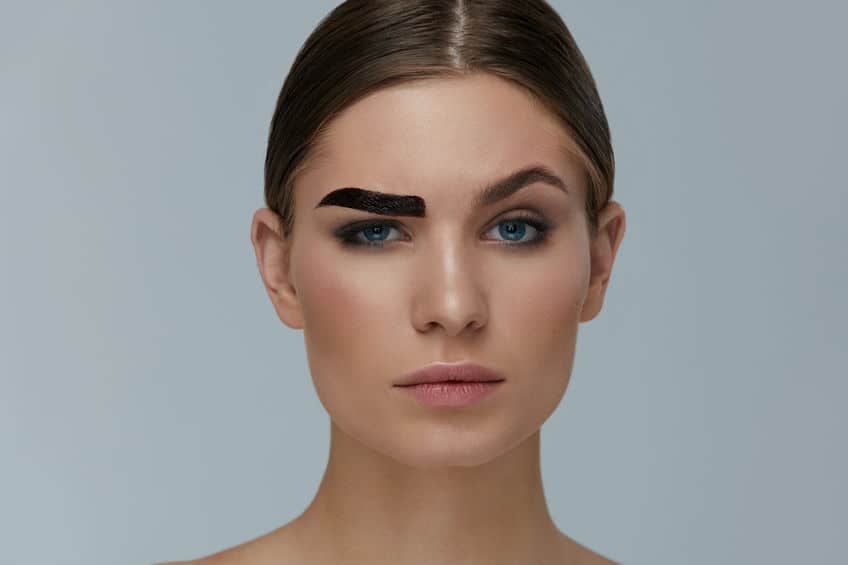
Eyeliner/eyebrow embroidery or tattoos may not turn out as perfectly as envisaged and patients often seek removal. Common reasons include:

We use a second-generation triple-wavelength picosecond laser for tattoo removal.
Compared with standard nanosecond Nd:YAG lasers, it delivers higher peak power with picosecond pulses, which are considerably shorter. This produces a stronger photoacoustic effect (a shockwave that helps break up ink particles), which can reduce collateral damage to surrounding skin.
Shattering pigment more effectively may help reduce the number of sessions needed and lower the risk of complications such as scarring, though results vary by tattoo and individual.
The tattoo removal process uses three wavelengths, which together cover most colours of tattoo ink pigment:

One of the most popular choices in Singapore, the Ultrapulse fractional CO2 laser is absorbed by water in cells.
It produces ablation of a fraction of the skin, vaporising many tiny channels. Due to the short pulse duration, there is deep penetration of the skin with minimal collateral damage, reducing downtime and the risk of complications like post-inflammatory pigmentation.
It is used to pretreat the skin before shattering the tattoo pigments with a Q-switched laser. The results of this laser removal technique in Singapore highly depend on the doctor's experience using the laser.


Extracorporeal Shockwave Therapy is another choice in Singapore.
It uses a hand-held device to transmit focused shockwave energy deep into the tissues. This enhances tattoo removal by increasing lymphatic drainage and metabolic activity, thereby accelerating the clearance of dermal pigment vacuoles produced by the picosecond laser and minimising side effects such as redness, swelling, and crusting.
Dr. Wan's perspective
Eyebrow/eyeliner tattoos and embroidery are becoming exceedingly commonplace in Singapore, from ubiquitous professional brow studios to the mushrooming of home-based salons.
Correspondingly, requests for removals have skyrocketed such that even salons are (illegally) offering 'laser removal' for eyebrow/eyeliner tattoos or embroidery.
Common concerns when patients consult for eyebrow/eyeliner tattoo/embroidery laser removal are:
Anytime a laser or light-based device is used, particularly near the eyes, there is a risk of visual damage.
It is essential to have the right equipment available to ensure safe and comfortable removal, which is not always available everywhere eyebrow/eyeliner tattoo/embroidery laser removal is offered. I've heard feedback from patients that they've had some difficulty locating clinics that actually have the right equipment ready.
The eye area is very delicate and sensitive. Most patients can tolerate the procedure with strong numbing cream, but having options for more complete pain relief can make a huge difference to patient comfort as well as the outcome.
If the patient is too uncomfortable during the procedure, we wouldn't be able to accurately target the ink in the right area with the right power.
Having the right tools, techniques, and experience to perform appropriate nerve blocks will enable more optimal laser removal for eyebrow/eyeliner tattoos or embroidery in fewer sessions.
on hair-bearing skin. Any scarring that develops can thus destroy the normal hair follicles, producing bald spots, making it even more important to minimise the risk of scarring.
Q-switched laser tattoo removal (whether using traditional nanosecond or newer picosecond lasers) uses ultrashort laser pulses to produce photoacoustic breakdown of tattoo pigment. This also creates superheated gas and steam trapped within the skin that causes collateral damage, resulting in blistering, increasing the risk of scarring and hair loss.

My approach is to use a combination of fractional ablative laser, q-switched picosecond laser (sometimes referred to as FracTAT), and shockwaves to address these pain points:
Ghosting or faint remnant tattoos are difficult to remove with nanosecond lasers or lower-powered picosecond lasers. These occur when there are:
The combination of high peak power from the pico laser and the increased penetration afforded by the fractional laser pretreatment is especially crucial for faint remnant tattoos that are hard to clear with traditional nanosecond laser treatment.
This higher safety margin and effectiveness allow for more aggressive treatment and better tattoo clearance in fewer sessions.
For tattoos that have faded to a green/blue/purple shade, a third wavelength is necessary to match the absorption of these colours. Most clinics produce this third wavelength through conversion, whereas the pico laser produces a native full-powered ruby wavelength that can deliver more energy for better removal of these colours.
Overall, combination treatment improves the efficacy, safety, and tolerability of laser tattoo removal in Singapore, and I strongly recommend it over conventional single Q-switched laser tattoo removal.
To my knowledge, it's not common for a triple combination technique to be used in Singapore for tattoo removal. Other than the actual techniques and machines used, the safety, speed, comfort, and effectiveness of the removal are also strongly dependent on the clinic and doctor, so choose wisely!

FOUNDER / MEDICAL DIRECTOR
Address:
1Aesthetics, Medical & Surgery
#14-90 The Central Tower 1
8 Eu Tong Sen Street
Singapore 059818
Mon-Fri 9 AM to 7 PM
Sat 9 AM to 3 PM
Phone / WhatsApp:
+65 66125173 / +65 84899962
Email:
[email protected]