
Acne scars appear in different forms and affect your skin differently. That’s why at 1Aesthetics, Dr Wan focuses on treatments that address your specific scar concerns, improving skin quality and long-term wellbeing.

Acne scars are complex. A single treatment modality, applied repeatedly, rarely produces the best outcome. Dr Wan's approach is built on assessment first, treatment second.
Before recommending anything, he evaluates:
From there, Dr Wan typically recommends a combination protocol rather than a single treatment. For example, a patient with rolling scars may benefit from subcision to release the tethered tissue, followed by fractional microneedle radiofrequency to stimulate collagen from within.
A patient with ice pick scars may respond better to TCA CROSS, with a fractional CO₂ laser used to refine the surrounding texture. The specific combination depends on your skin, not a fixed menu.
Dr Wan does not believe in applying the same treatment to every patient and waiting for results. Each plan is built around what your scars need.
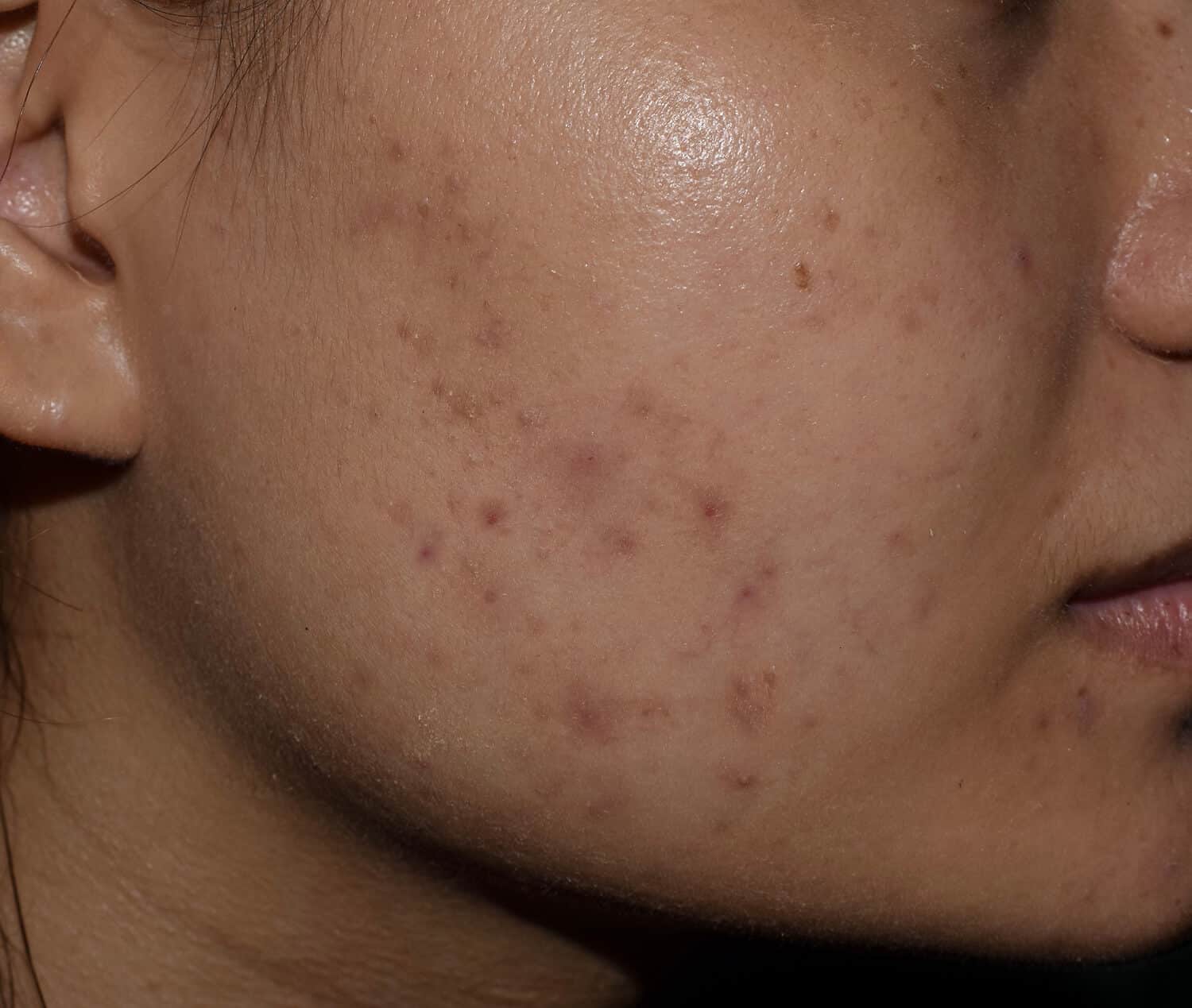
Acne doesn’t just fade on its own—it often leaves behind marks that stick around long after the breakouts clear. Scars can appear as pits, raised bumps, or red and dark spots. Knowing the type of scar you’re dealing with helps you choose the right treatment and take action quickly.
From microneedling and laser therapy to steroid injections and medical-grade skincare, there are several ways you can smooth, lighten, and restore your skin.
Scar Type and Typical Treatments at 1Aesthetics
| Scar Type | Treatments |
| Rolling Scars | Subcision with Filler/Graft, Fractional Microneedle Radiofrequency, Fractional CO₂ Laser |
| Ice Pick Scars | TCA CROSS, Fractional CO₂ Laser, Scar Excision (for larger isolated scars) |
| Boxcar Scars | Subcision with Filler/Graft, TCA CROSS, Scar Excision (isolated scars) |
| Papular Scars | Fractional/Pinhole/Ablative Laser |
| Post-Inflammatory Erythema (PIE: | Fractional Radiofrequency, Vascular Laser, Fractional Microneedle Radiofrequency |
| Hypertrophic / Keloid Scars | Intralesional Injections, Vascular Laser, Fractional Laser, Surgical Excision |

Rolling scars create a bumpy, uneven texture that simple surface treatments can’t fix. Dr Wan uses subcision to release the fibrous bands pulling the skin down, freeing the scarred areas to smooth the skin.
After subcision, he may use resurfacing treatments such as fractional microneedling, fractional lasers, or fractional radiofrequency to stimulate collagen. Of the three approaches, Dr Wan finds that Fractional Microneedling Radiofrequency strikes the right balance between downtime and results.
Ice pick scars are deep, narrow, and can be especially tough to treat. The TCA CROSS method can lift and noticeably improve these pitted areas by targeting the scar from the inside out.
For some scars, a more focused CO2 laser can help refine the skin further. When an ice pick scar is larger or very deep, a small excision procedure may be the better approach to remove the scar entirely so the skin can heal with a more refined finish.


Boxcar scars form broad, sharply defined depressions that can be tethered to deeper layers of the skin. To lift and smooth these areas, Dr Wan often performs subcision and adds fillers.
Smaller boxcar scars can be treated with CROSS (Chemical Reconstruction of Skin Scars), which stimulates collagen growth directly within the scar. For isolated scars, excision may be performed depending on size and location, creating a smooth and even skin surface.
Papular scars appear as small, soft, skin-coloured bumps around hair follicles. Ablative lasers are typically used to flatten these raised areas — improving skin texture and appearance.


Post-inflammatory erythema (PIE) appears as localised redness after skin inflammation and can sometimes lead to scarring.
Dr Wan finds that treatments like fractional radiofrequency, fractional lasers, and fractional microneedling with radiofrequency can reduce PIE while improving active acne and existing scars. When the risk of deeper scarring is low, vascular-focused treatments may help calm redness and even out skin tone.
Hypertrophic and keloid scars are raised, thickened areas caused by excess collagen during healing. In these cases, steroid injections are usually combined with vascular or fractional lasers/radiofrequency to reduce thickness and improve texture.
Other options include topical silicone, steroid creams, and pressure therapy to manage scar growth. For certain keloids, Dr Wan may recommend surgical excision followed by steroid injections or fractional laser treatment to improve skin tone.
Read more about our approach to the various keloid scar removal options.

Dr Wan uses a combination of the following evidence-based treatments, selected and sequenced according to your scar profile. Below is an overview of each option and how it works.


Fractional laser resurfacing creates a grid of tiny laser spots while leaving surrounding tissue untouched, allowing faster healing and improving scar appearance compared with non-fractional methods. Fractional lasers can be divided into two types:
CO₂ lasers generally achieve stronger results but require longer recovery and carry a slightly higher risk of side effects. In Singapore, fractional CO₂ lasers are well-supported by clinical evidence and are generally the preferred choice for treating deep acne scars.
Fractional Pico laser uses a specialised microlens array to focus its energy into precise micro-beams that reach beneath the skin's surface. This targeted effect supports collagen renewal through a process known as laser-induced optical breakdown (LIOB), which helps soften the look of acne scars and refine overall texture.
Because the energy is concentrated below the surface, fractional picosecond laser treatments keep surface disruption very low. Another key benefit is the short recovery period, so that you can resume your daily routine while gradually seeing clearer skin and reduced post-acne pigmentation over a series of sessions.


Fractional Radiofrequency (RF) treats acne scars by delivering controlled heat beneath the skin’s surface. The energy creates a wider, pyramid-shaped zone of collagen stimulation in the deeper layers, while keeping surface damage minimal. This design helps remodel depressed scars from within, encouraging a more refined and even skin texture over time.
Because the skin surface remains more intact compared with fractional ablative lasers, Fractional RF generally involves shorter downtime and a lower chance of post-inflammatory hyperpigmentation. This can make it a suitable option for those with higher skin pigmentation or who prefer reduced recovery time.
Scar remodelling tends to work better when the treatment reaches the deeper layers of the skin. Traditional lasers often release energy mostly at the surface, which means deeper scars may not receive the full intended effect. This is why microneedle radiofrequency can be a helpful option for deep or pitted acne scars with very little disruption to the top layer of skin.
Fractional microneedle radiofrequency uses insulated microneedles that safely bypass the skin surface and deliver energy up to around 4mm beneath the skin. This supports collagen rebuilding where scars originate, reduces downtime, and maintains a comfortable and safe treatment experience.


Vascular lasers, such as pulsed dye lasers, yellow lasers, long-pulsed diode, or Nd:YAG, target haemoglobin in blood vessels to break them down. They are commonly used for hypertrophic or keloid acne scars and fresh stretch marks.
Intense Pulsed Light (IPL), when combined with special vascular filters, can achieve similar results for acne scars, though it is generally less strong than vascular lasers. It is suitable for mild to moderate acne scarring.
IPL is also popular for its minimal downtime — for example, you can get this procedure done during your lunch break and return to work straight afterwards. It is suitable for mild to moderate acne scarring. To get the most from IPL, Dr Wan recommends that you avoid sun exposure in the days and weeks before and after the treatment.
Chemical Reconstruction of Skin Scars (TCA CROSS) works by applying a highly concentrated chemical peel, such as trichloroacetic acid, directly to the base of deep scars. This targeted approach stimulates the skin to lift and remodel, improving the appearance of pitted acne scars over time.


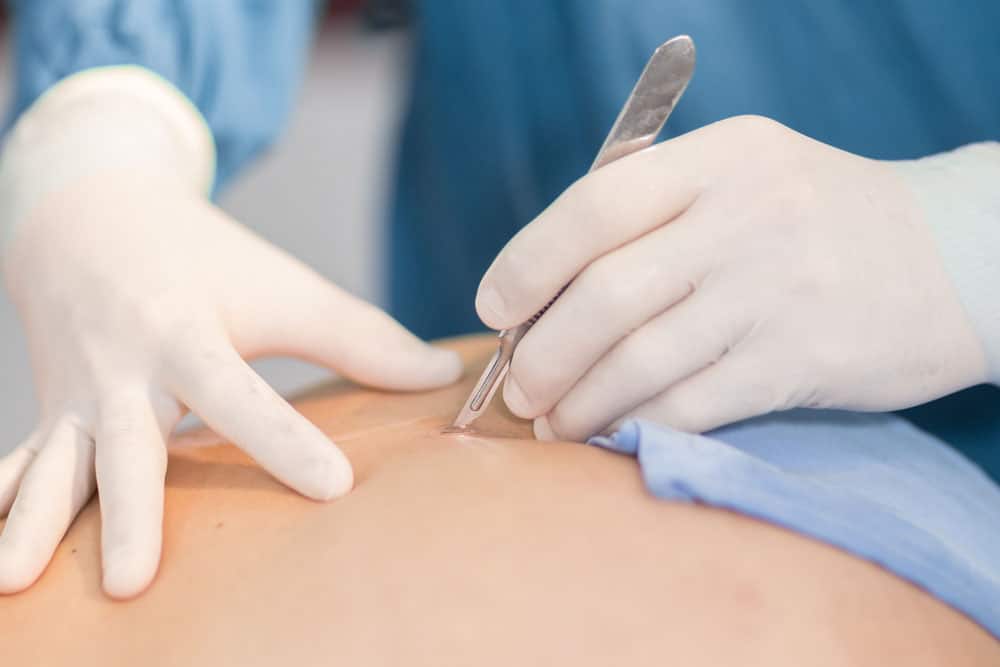
In subcision, tiny needle punctures are used to release scars that are stuck down to deeper layers of the skin. A filler is then placed between the layers to prevent them from sticking back together, helping the skin look more even as it heals.
The primary aim is to improve your skin’s appearance by breaking up the fibrotic tissue that causes uneven texture. These types of scars are often considered the most difficult to treat, and subcision is the technique needed to effectively correct them.
Usually, Dr Wan recommends this technique for:
Excision is often used to treat isolated ice pick scars or narrow boxcar scars. It works by carefully removing scar tissue and then closing the skin with either a skin graft or small sutures for a uniform skin texture and natural contour.
Corticosteroid injections help to reduce acne scars and make them less noticeable by calming inflammation and slowing down excess collagen growth. This allows thick or inflamed keloid and hypertrophic scars to gradually flatten and feel less uncomfortable over time.
Other intralesional injections may also be used, either alongside steroids or as an alternative. These include 5-fluorouracil (5-FU), a medication that helps limit excess collagen production, verapamil, a blood pressure medication that can also help soften scar tissue, and neurotoxin, which relaxes the tension in the tissue around a scar.
Acne scar treatment is a gradual process. Collagen remodelling takes time, and most patients see the clearest improvements after a course of sessions rather than after just one.
Here is a general guide to what to expect across the most common treatments at 1Aesthetics.
A note on expectations: Scar improvement is a gradual process, and Dr Wan will always try to give you an honest picture of what is achievable before treatment begins. The realistic goal is a meaningful, visible improvement in texture, depth, and tone over a planned course of treatment.
Aftercare for all treatments:
The cost of acne scar removal in Singapore depends on several factors, including scar type, severity, treatment method, and the number of sessions required. Here is a general guide:
Dr Wan believes that a combination approach is essential for effective acne scar removal. Acne scars are complex and varied, so there is no one-size-fits-all solution. He conducts a thorough assessment of each patient, combined with a multimodal treatment plan, aiming for lasting and natural results.
When evaluating a patient, Dr Wan considers:
While the cost of acne scar removal in Singapore varies depending on the severity of the scars and the type of treatment, Dr Wan personalises every approach to achieve results. Options such as laser acne scar removal or fractional CO2 laser may be recommended based on your specific needs and goals.


FOUNDER / MEDICAL DIRECTOR
Address:
1Aesthetics, Medical & Surgery
#14-90 The Central Tower 1
8 Eu Tong Sen Street
Singapore 059818
Mon-Fri 9 AM to 7 PM
Sat 9 AM to 3 PM
Phone / WhatsApp:
+65 66125173 / +65 84899962
Email:
[email protected]