Summary:
Patients ask me all the time: “Doctor, how do you know when an acne scar needs surgery rather than another round of laser?”
As the Founder and Medical Director of 1Aesthetics, I believe the answer isn't about how long you've been treating the scar or how many sessions you've tried. In my clinical experience, it comes down to the scar's depth and shape.
For a defined group of acne scars, I don't view surgical excision as a backup plan. It's typically the treatment that was always going to be needed.
Energy-based treatments create the conditions for improvement through collagen remodelling, resurfacing, or controlled thermal injury, but the tissue does the work.
For diffuse textural irregularity, mild atrophy, or post-inflammatory pigmentation, fractional microneedle radiofrequency or fractional lasers can produce meaningful improvement. These approaches form the foundation of most acne scar removal plans.
For scars that are too deep, too narrow, and too sharply bounded, additional sessions of biological stimulation are unlikely to produce meaningful improvement on their own.
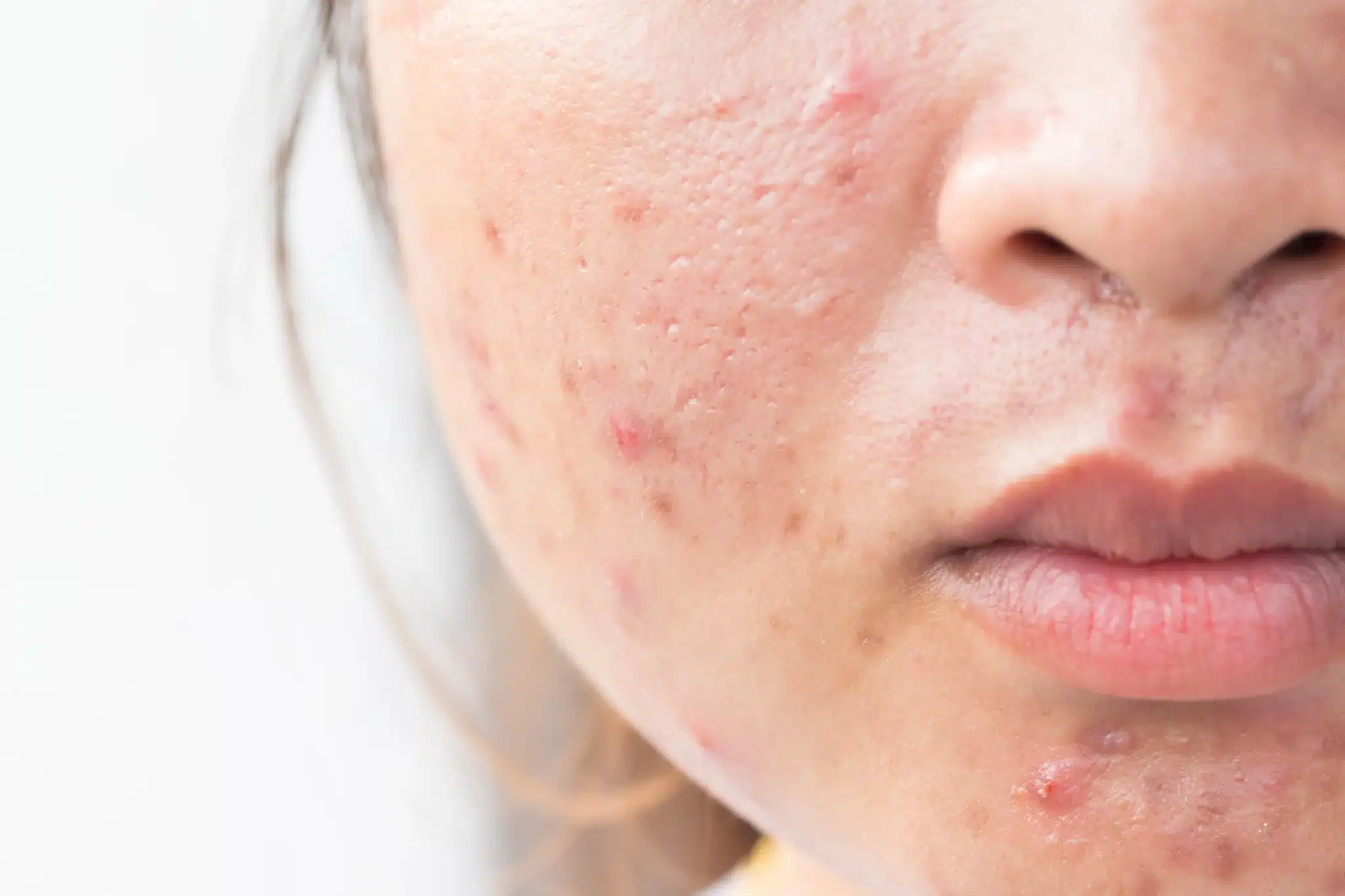
As described in a foundational classification paper in the Journal of the American Academy of Dermatology, icepick scars, deep narrow boxcar scars, and certain post-inflammatory pit scars extend through the full thickness of the dermis and sometimes into the subcutaneous (fatty) tissue below.
The walls are often fibrotic (composed of dense, disorganised scar tissue), and the base may be adhered to deeper tissue layers. No amount of thermal stimulation or surface resurfacing changes this architecture. The only way to fundamentally alter it is to physically remove it.
This is the clinical rationale for surgical excision, and is part of Dr Wan's approach to acne scar treatment at 1Aesthetics: identifying which scars require structural correction before any device-based treatment is proposed.
If your scars have not responded to laser or energy-based treatment, the structural cause may not have been addressed. Contact my team at 1Aesthetics to find out whether surgical correction is appropriate for your scars.
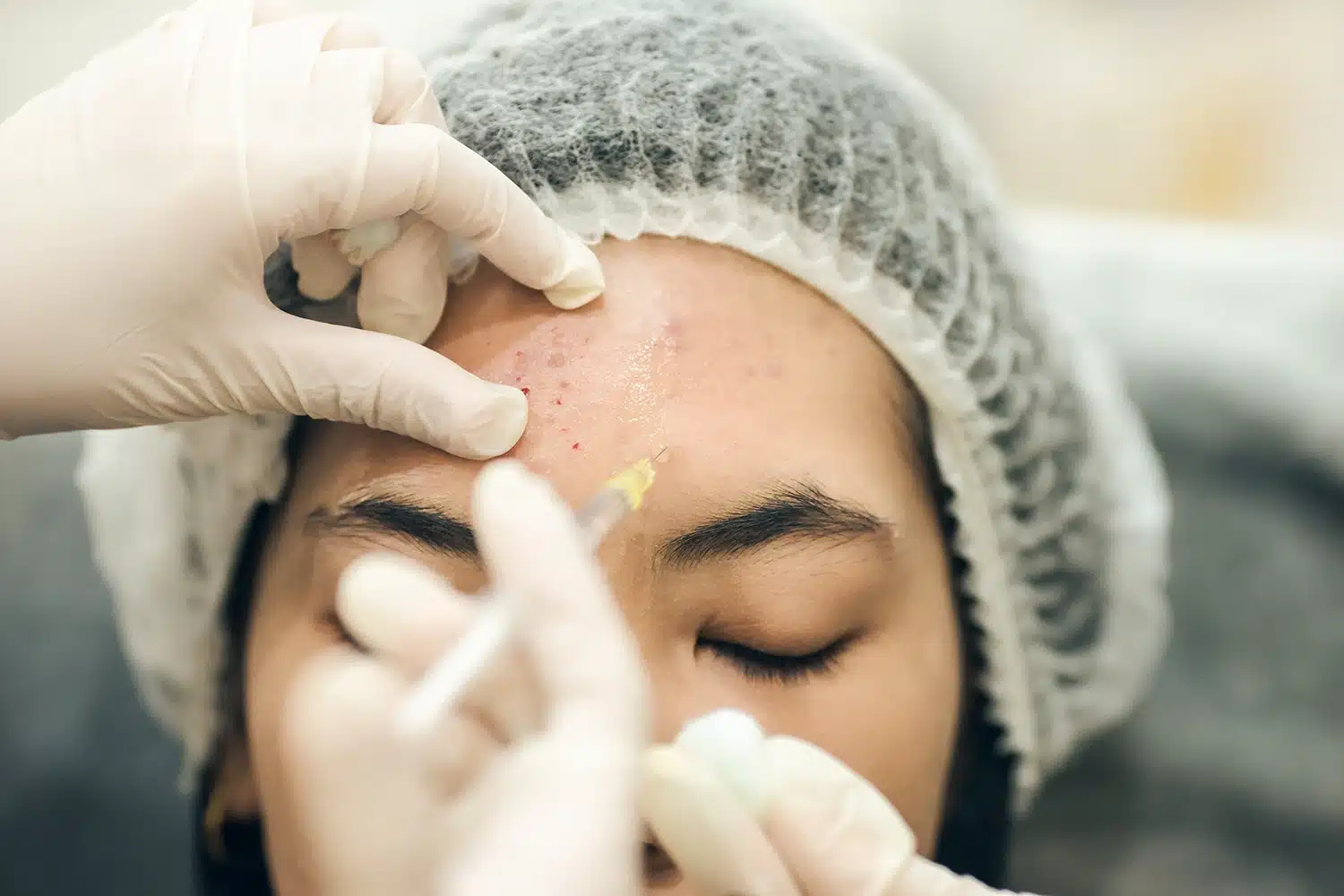
Microsurgical scar excision removes the scar tissue and closes the wound edges with fine sutures under local anaesthesia, typically in a clinical setting without hospital admission.
The goal is not simply to cut out the scar. It is to replace an architecturally disorganised defect with a clean, precisely aligned linear closure that will heal with a far less visible result than the original scar. A well-executed excision replaces a conspicuous, complex scar with a fine, controlled one that is far more amenable to subsequent refinement.
Excision is best suited to icepick scars, deep, narrow boxcar scars, and isolated pitted scars with clear anatomical boundaries.
It is less appropriate for rolling scars, caused by subcutaneous fibrous tethering, or for broad, shallow boxcar scars, which may respond adequately to a combination of subcision and energy-based treatments.
The quality of the final result depends heavily on surgical technique. Three principles are particularly important.
A well-planned excision replaces an architecturally unpredictable scar with a micro-linear wound of predictable geometry. Linear wounds aligned with the natural skin tension lines heal with less widening and less surface irregularity, producing a fine-line scar that is far more treatable with subsequent laser refinement than the original icepick or pit.
Healing continues long after the wound is closed. Depending on the scar characteristics and individual healing response, I may recommend adjunctive treatments such as growth factor therapy, early laser treatment, or targeted injectable therapies to support your healing and minimise scar formation.
Vascular lasers (such as pulsed dye or yellow lasers) can be used in the weeks following excision to reduce post-inflammatory erythema at the wound margins and moderate the elevated blood supply of fresh scars, reducing the risk of a thickened or pigmented closure.
Once fully healed, typically after four to six weeks, fractional and pinhole lasers may be introduced to refine the surface of the new scar and improve blending with the surrounding skin.
This post-excision laser work is not cosmetic refinement: it is a continuation of the treatment plan, with surgery providing structural correction and laser work supporting the biological healing process.
A thorough pre-procedural assessment is essential before any surgical approach is considered. The following is a general guide on the presentations most and least likely to benefit from surgical excision:
| Likely suitable | Likely not suitable |
| Isolated icepick scars | History of keloid or hypertrophic scarring |
| Deep, narrow boxcar scars | Active inflammatory acne in the treatment area |
| Discrete pitted scars are unresponsive to energy-based treatment | Contraindications to local anaesthesia |
| Structurally well-defined scars with clear boundaries | Very broad or shallow scarring is better suited to subcision or resurfacing |
| Surrounding skin is in reasonable condition | Expectation of complete scar elimination, which is unlikely in most cases |
These are indicators, not absolute rules. Individual suitability is determined at the consultation.
Many patients present with mixed scar types, some amenable to surgical correction and others better suited to subcision, TCA CROSS, or energy-based treatment.
A combined plan that sequences surgical and non-surgical interventions appropriately is likely to produce better overall results than either approach alone, with surgery addressing the most structurally defined scars first.
Not sure which category your scars fall into? Book a consultation at 1Aesthetics for an assessment before committing to any treatment.
Following microsurgical excision, the treated area will be tender and swollen for several days. Sutures are typically removed within five to seven days. Some bruising and redness are normal and settle within one to two weeks.
Most patients return to non-strenuous daily activities within a few days, though strenuous exercise should be avoided for two to three weeks.
The final result is not apparent for several months. In the first four to eight weeks, the new scar may appear raised, pink, or firm as the collagen matures. This is normal.
Over the following three to six months, the scar will typically flatten, soften, and fade. For most patients, the final result is significantly more refined than the original scar, though complete invisibility is unlikely in most cases.
Not every scar needs surgery. But for the ones that do, continuing with laser sessions may not produce the structural improvement that a well-executed acne scar removal procedure can. Knowing which category your scars fall into is the starting point, and this is where I can help you
At 1Aesthetics, a skin assessment with me includes a clear evaluation of whether surgical correction is appropriate and for which specific scars, planned as part of a full treatment sequence rather than in isolation.
To arrange an assessment, get in touch with my team.
Address:
1Aesthetics, Medical & Surgery
#14-90 The Central Tower 1
8 Eu Tong Sen Street
Singapore 059818
Mon-Fri 10 AM to 730 PM
Sat 10 AM to 6 PM
Phone / WhatsApp:
+65 66125173 / +65 84899962
Email:
[email protected]