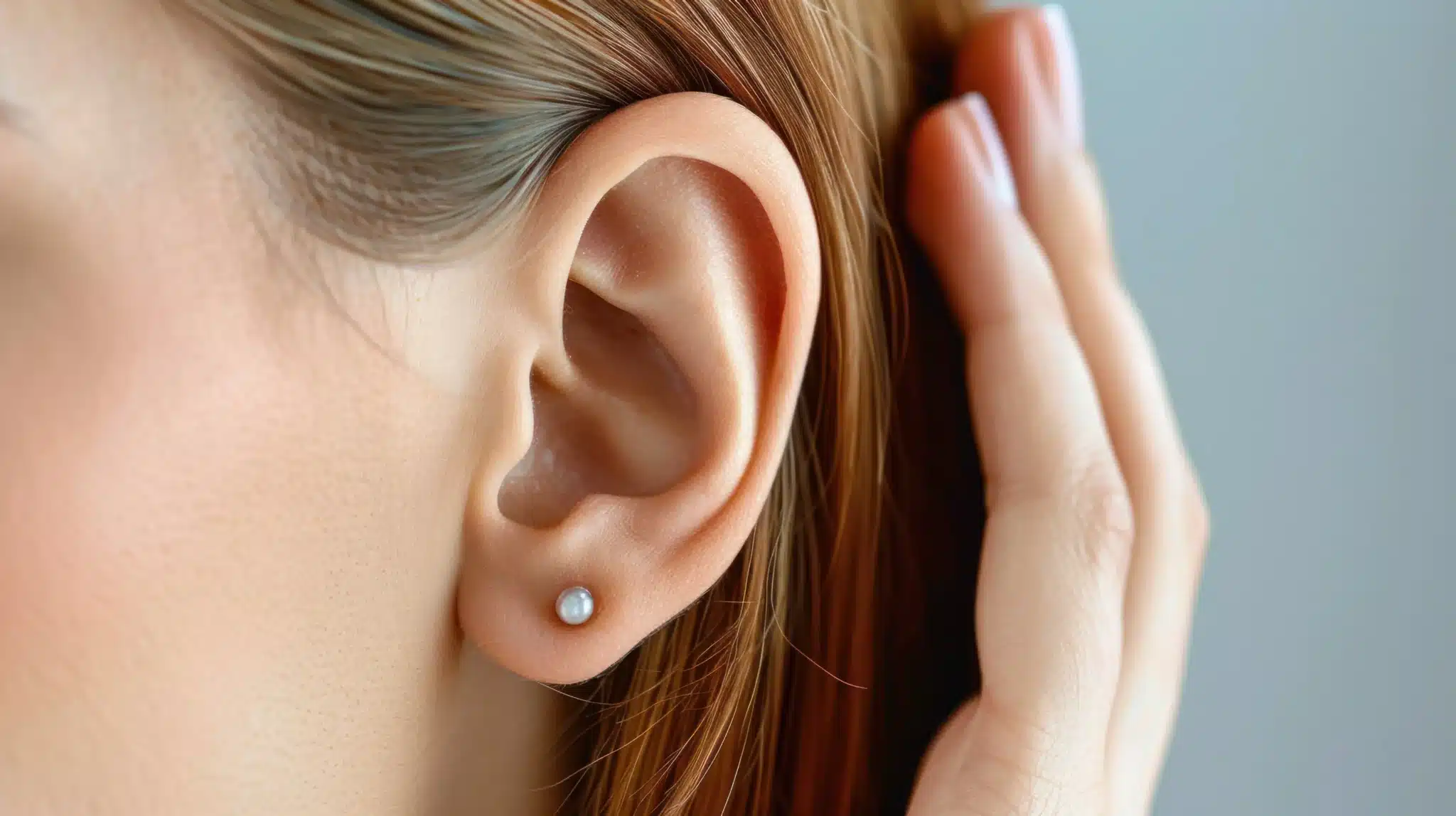
Let’s get straight to the clinical reality that brings so many of you into my consultation room. You went in for a simple ear piercing, hoping for a beautiful aesthetic update, but your body responded by forming a hard, stubborn, and often painful keloid scar. You have already been through the gruelling journey of getting that keloid treated—whether we meticulously flattened it with advanced injections or carefully managed its removal.
Now, staring in the mirror at a beautifully healed, flat earlobe, you find yourself asking a very natural question: “Dr. Wan, is it ever going to be safe to re‑pierce my ear?”
It is an incredibly common dilemma. You want to reclaim your personal style and wear your favourite jewellery again. However, as an aesthetic doctor, my primary duty is to protect your skin from cyclical trauma. If you have a known history of keloids, a new piercing is not just a casual cosmetic decision; it is a profound biological stress test.
To answer your question properly, we have to look past the marketing hype and dive directly into what modern published medical research actually says about the risks of re‑piercing, the fascinating science behind pre‑emptive injectable treatments, and the strict, evidence‑based protocols required to keep your ear flat if you choose to take the plunge.
To understand why a new piercing in a previously treated ear is so risky, we must first examine the underlying pathophysiology of thefirst must look at the underlying pathophysiology of your skin. The real antagonist here is not the piercing needle itself, but a genetic miscommunication within your body’s cellular biology.
Imagine a normal wound‑healing process as a highly coordinated cellular factory. When a piercing needle punctures your ear, it sets off an immunological alarm. Your body sends a specialised workforce of cells called fibroblasts to the site to produce collagen—the biological “cement” needed to repair the hole. In a typical patient, once the tissue is healed, the fibroblasts naturally die off (apoptosis), and a neat, stable piercing tract is left behindfactory manager blows the whistle, the fibroblasts naturally die off (apoptosis), and you are left with a neat, stable piercing tract.
If you are prone to keloids, however, this factory loses its “off switch”. The fibroblasts relentlessly multiply and overproduce dense, disorganised collagen bundles. The scar does not just heal the wound; it aggressively invades the surrounding healthy skin.
If you do not have the genetics for keloids, you generally do not have to worry. But if you do possess this predisposition, your cellular factory is always on a hair‑trigger. You can explore these microscopic mechanisms further in our guide on what’s inside keloids and how it affects keloid removal. We also discuss why certain demographics are disproportionately affected in “Why some people are more susceptible to keloid scarring”.
When patients ask me if they can just “try again” with a new piercing, I have to be completely transparent. The medical literature paints a stark picture of what happens when we re‑traumatise keloid‑prone skin.
General population data suggest that the incidence of keloid formation after ear piercing is relatively low, but this risk rises significantly in people with a personal or family history of keloids and when piercings are done later in life rather than in early childhood (for example, Lane et al. and Tantithamthanakul et al.). Once your ear has already formed a keloid, your skin has definitively proven that its cellular factory is hyper‑reactive. In such patients, published series on ear keloids show that new trauma or surgery in the same area carries a substantial risk of another keloid unless aggressive preventive strategies are used (Aljodah et al., Mohammadi et al., Sclafani et al., Jung et al., Tahir et al., Viera et al., Oberman et al.).
By choosing to electively re‑pierce that same ear, you are deliberately introducing a new puncture wound, ongoing mechanical tension, and a foreign body (the jewellery) right back into a highly sensitised danger zone. Relying on over‑the‑counter creams to prevent this biological response is simply inadequate. A superficial topical cannot adequately alter the deep inflammatory microenvironment caused by a through‑and‑through puncture wound. We break down the clinical realities and limitations of these topical products in “Keloid removal creams – do they work and what’s the cost?”.
Because of these high risks, my more research‑savvy patients often ask a brilliant question: “Dr. Wan, if I decide to get re‑pierced, is there evidence that we can just pre‑emptively inject the fresh wound to stop the keloid from forming?”
It sounds like the perfect biological hack. And interestingly, the medical literature strongly supports the broader concept—but with crucial nuances that require precise clinical expertise.
There is robust, well‑documented clinical evidence that combining surgical excision with perioperative or early postoperative intralesional corticosteroid injections significantly reduces keloid recurrence compared with excision alone, including in ear keloids after piercing (for example, Aljodah et al., Mohammadi et al., Sclafani et al., Jung et al.). While these studies focus on surgical wounds rather than cosmetic piercings, the same biological principles of early inflammatory control and fibroblast modulation strongly inform how we approach a new piercing in keloid‑prone tissue.
When a new wound is created, the inflammatory cascade (driven by cytokines like TGF‑beta) begins within minutes. If we wait weeks or months for the physical lump to appear, the cellular factory is already fully built and fortified. In practice, we extrapolate this evidence to high‑risk piercings by treating them more like a minor surgical event than a simple cosmetic procedure.
Research on keloid surgery shows that targeted intralesional corticosteroids, started perioperatively or shortly after excision, lower recurrence rates and improve cosmetic outcomes compared with surgery alone. These medications aggressively cool the biological fire and dampen the initial immune alarm. When appropriate, we may combine them with antimetabolites such as 5‑fluorouracil, which interfere with fibroblast proliferation and collagen overproduction.
Studies in this area consistently show that when these agents are used early around surgical trauma, they reduce the likelihood and severity of hypertrophic or keloid scars versus waiting until a bulky scar has already formed.
One of the most fascinating advancements in modern scar prevention is the understanding of mechanotransduction—the process by which cells translate mechanical stretch into chemical signals. Fibroblasts become hyperactive and produce excess collagen when they feel tissue tension.
Botulinum toxin type A (BoNT‑A) reduces local muscle pull and micro‑tension, and controlled studies show that BoNT‑A can significantly improve hypertrophic scar scores compared with placebo (for example, Shaarawy et al.). Additional work by Gassner and Sherris demonstrates that reconstituting BoNT‑A with local anaesthetic improves the predictability and localisation of its effects, reinforcing its role as a precise, tension‑modulating tool. Clinically, when we carefully inject neuromodulators into musculature or soft tissue adjacent to a fresh wound, we often see more favourable scar pliability, surface smoothness, and contour at follow‑up.
You can learn more about these precise, advanced formulations in “keloid scar removal injections – beyond just steroids”.
While this evidence is phenomenal for surgical incisions that are stitched completely closed, a cosmetic piercing presents a unique clinical challenge. It is an open tract that is deliberately meant to heal and epithelialise around a piece of jewellery.
If we aggressively inject high doses of strong, tissue‑atrophying medications directly into the walls of a fresh piercing hole, we risk shutting down the healing process entirely. The cellular factory needs to work just enough to line the new piercing hole with healthy skin. If we halt it completely, the piercing tract may remain a chronic, non‑healing, weeping wound that is highly susceptible to severe bacterial infections.
To solve this paradox, we utilise a highly modified injection technique. Rather than injecting directly into the open tract, we carefully place specific concentrations of tension‑reducing neuromodulators and anti‑inflammatory agents in the adjacent (perilesional) tissue.
This creates a protective “halo” or forcefield around the new piercing. It calms the hyperactive immune response and reduces pulling forces in the surrounding ear tissue, without completely halting the necessary, localised healing of the piercing tract itself. In essence, we are trying to let the cellular factory do just enough work to form a stable tract—while preventing it from spiralling into keloid overdrive.
This transforms a simple piercing from a cosmetic gamble into a carefully managed event.
At 1Aesthetics, we do not believe in a rigid, one‑size‑fits‑all approach. If a patient comes to me, fully aware of the high recurrence risks, and still deeply desires to re‑pierce their ear to reclaim their aesthetic confidence, we do not send them to a standard mall kiosk.
We elevate the entire process to prioritise your safety. If you insist on a new piercing in a previously treated ear, we manage it as a strict clinical event using a highly customised defence:
In selected high‑risk cases, we may also integrate compression devices or pressure earrings, which have demonstrated reduced recurrence when used consistently after ear keloid surgery (for example, Tahir et al., Viera et al., Oberman et al.).
Attempting to re‑pierce an ear that has suffered from a keloid is not a quick cosmetic update; it is a clinical marathon.
So, what is my final verdict?
If your previous keloid was massive, required multiple rounds of complex surgical excisions, or if you have a documented family history of severe, disfiguring scars, my professional medical advice is to definitively avoid elective re‑piercing. Published evidence and extensive clinical experience strongly suggest that your body’s cellular factory is simply too reactive, and the risk of permanently altering the shape of your ear is not worth another earring. In these cases, we pivot to elegant, non‑piercing alternatives like high‑quality clip‑on jewellery or magnetic cuffs, provided they do not place mechanical friction on your old scar.
However, if your previous keloid was small, responded rapidly to our initial injectable protocols, and has remained completely flat, soft, and dormant for an extended period, we might consider a new lobe piercing—provided it is treated as a highly monitored event integrating our peri‑piercing injection and, where indicated, compression protocols.
This comes with a strict caveat: you must commit to hyper‑vigilance. If you feel even the slightest firmness, itchiness, or a tiny bump forming near the new site, you must return to the clinic immediately. Catching that localised inflammation early allows us to intervene with targeted injections and other measures before the cellular factory can rebuild its fibrotic armour.
Navigating the aftermath of an ear keloid can be a frustrating and confusing process, but you do not have to rely on internet guesswork or take unnecessary risks with your skin. By understanding the research, utilising peri‑piercing preventative injection therapies, and respecting your body’s unique biology, we can help you make aesthetic choices that are both beautiful and scientifically sound.
If you are currently battling an ear keloid, or if you are carefully weighing the complex decision of whether to re‑pierce, our team at 1Aesthetics is here to help you build a safe, evidence‑based roadmap.
Stay safe, stay informed, and I look forward to welcoming you to the clinic.
– Dr. Wan Chee Kwang
Address:
1Aesthetics, Medical & Surgery
#14-90 The Central Tower 1
8 Eu Tong Sen Street
Singapore 059818
Mon-Fri 10 AM to 730 PM
Sat 10 AM to 6 PM
Phone / WhatsApp:
+65 66125173 / +65 84899962
Email:
[email protected]