Summary:
Hello, friends and patients. I'm Dr Wan Chee Kwang, Founder and Medical Director of 1Aesthetics, Medical & Surgery in Singapore.
In my practice, I often meet patients who struggle to improve their acne scars not because they choose the wrong treatments, but because they are treating the wrong layer.
A little known fact: For a significant proportion of acne scars, particularly the rolling and tethered kind, the real cause sits millimetres beneath the surface of your skin, in fibrous tissue that no laser or resurfacing device can directly reach.
With this understanding, my approach to acne scar removal is quite specific.
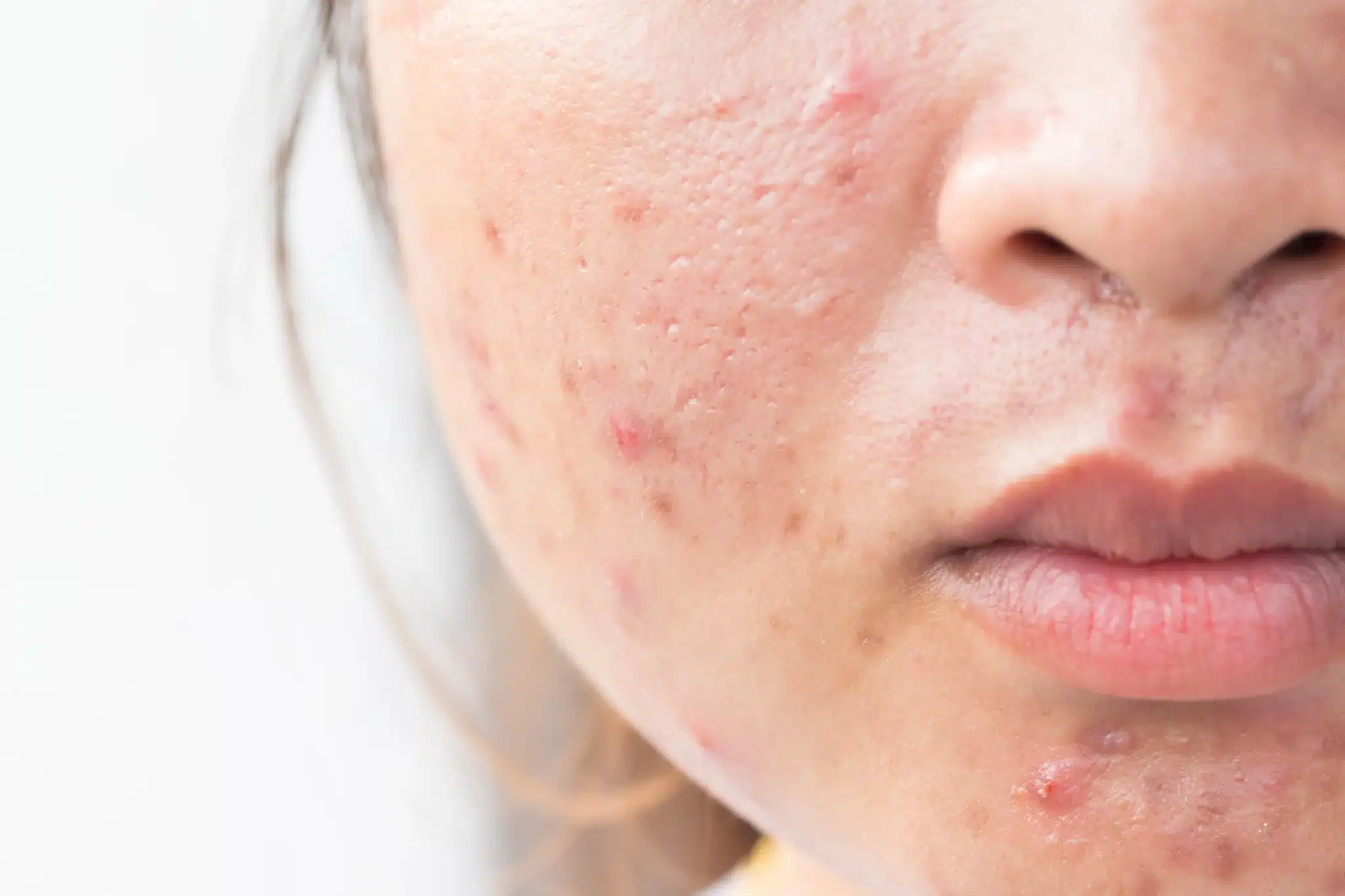
Acne scars exist on a spectrum. At one end are post-inflammatory changes (redness, darkening, or uneven texture) that sit close to the surface and tend to respond reasonably well to resurfacing treatments. At the other end are structural scars: icepick, boxcar, and rolling types that involve genuine architectural disruption beneath the skin.
As described in a foundational classification paper in the Journal of the American Academy of Dermatology:
Rolling and tethered scars are difficult to treat because the visible depression is not the problem; it is a symptom. The scar is being held in place by fibrous bands anchored deeper in the tissue, and until those bands are addressed, no amount of surface treatment will reach the mechanism actually causing the combination of tethering and volume loss.
When a severe acne lesion forms, the inflammation disrupts the extracellular matrix (the structural scaffolding beneath the skin) and triggers a wound-healing response that does not always repair tissue in an orderly way.
The body sometimes produces disorganised collagen fibres that run vertically through the tissue rather than horizontally, as healthy dermis does.
Research confirms these fibrous bands tether the skin downward, producing a visible depression that cannot be resolved by resurfacing the surface above it. This is precisely why so many patients find that even well-regarded treatments leave their deepest scars unchanged.
Fractional lasers stimulate new collagen and improve texture effectively. However, their limitation is anatomical.
They are designed to deliver energy within the dermis and cannot reach the fibrous bands that sit at or below the dermal-subcutaneous junction. For deep tethered scars, the structural cause remains intact regardless of how many sessions are completed.
The issue is not a failure of the technology. Energy-based treatments address what tissue is made of. They do not sever the bands physically anchoring the skin downward.
A network meta-analysis of 68 randomised controlled trials found that multi-modal treatment consistently outperformed monotherapy, with laser combined with fillers or PRP ranking highest for reducing scar severity and patient satisfaction.
At 1Aesthetics, I use a combination approach for acne scar removal that is tailored to each patient's scar types and treatment goals.
If previous treatments have not delivered the results you expected, the structural cause may not have been addressed. Find out whether a combined approach could work for your scars.
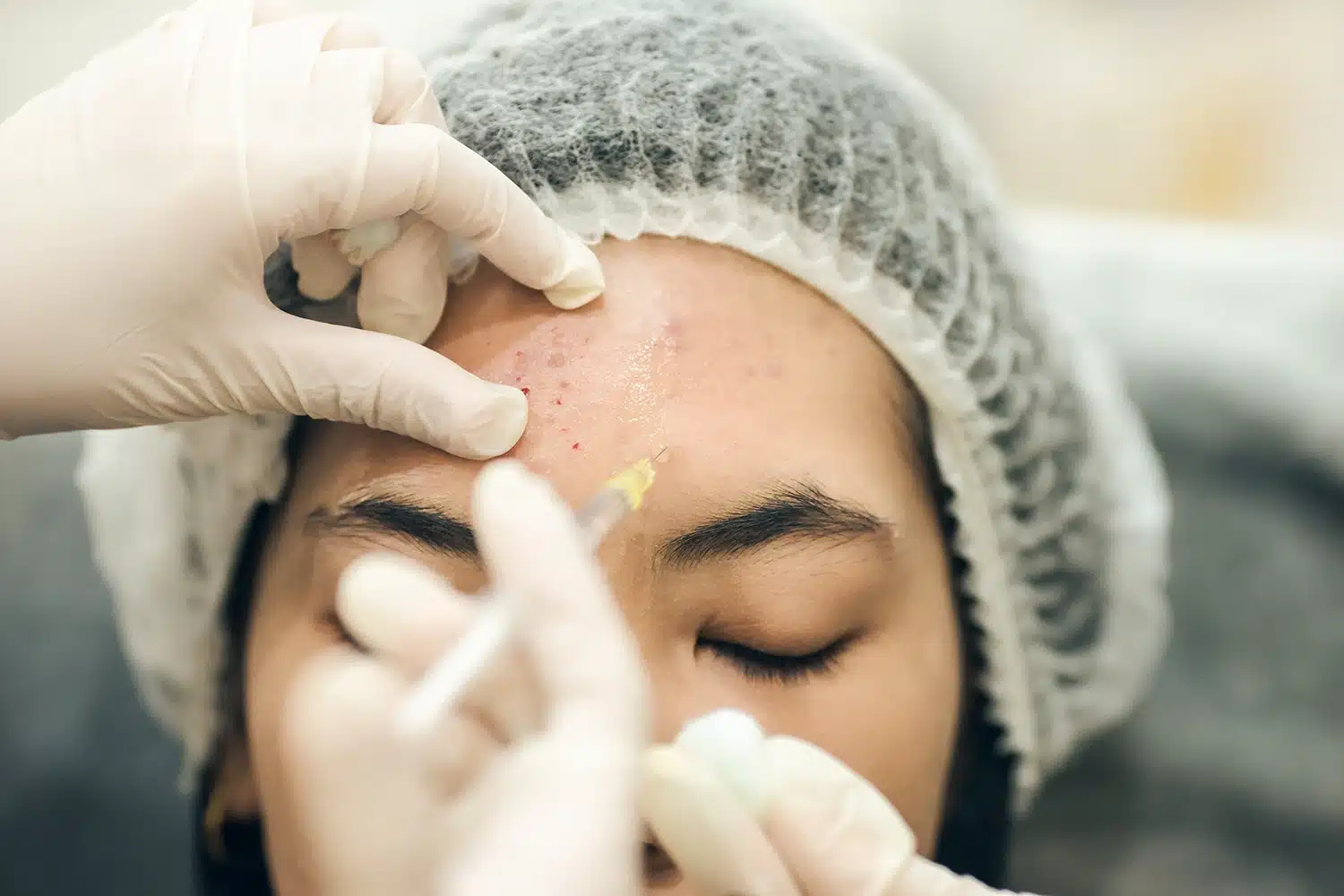
Subcision is a minimally invasive procedure in which a fine needle is inserted beneath the skin and moved in a fanning motion to cut through the fibrous bands tethering the scar.
Performed under local anaesthesia, it targets the fibrous tissue at the level causing the downward pull. Patients may notice a snapping sensation as the bands release and the skin begins to lift.
Once severed, the bands no longer hold the skin down, and the procedure also triggers a localised wound-healing response that begins laying down new collagen. This makes it suitable for pairing with collagen-stimulating treatments (more on this below).
Typically, I perform subcision only after thoroughly examining a patient’s scar type and depth, skin condition, and medical history factors such as recent retinoid use or a tendency towards abnormal scarring.
Severing a fibrous band does not permanently solve the problem on its own. During wound healing, new tissue can allow bands to re-form and re-anchor the skin. This is why subcision produces better long-term outcomes when combined with a treatment that occupies the released space and stimulates more organised repair.
Calcium hydroxylapatite microspheres and poly-L-lactic acid (PLLA) are the two collagen-stimulating injectables most commonly used alongside subcision.
Neither is a traditional volume filler. Both injectables work by stimulating the body's own collagen production over time. Together, they address both reasons for relapse: occupying the space left by released tissue and stimulating new collagen to replace the structural volume the scar had lost.
Not sure whether subcision is right for your scar type? Get in touch with my team at 1Aesthetics.
The table below maps each scar type to its typical treatment approach and flags the key considerations that determine suitability.
| Scar type | Typical approach | Notes |
| Rolling scars | Subcision + collagen-stimulating fillers | Best suited to this combined approach, caused by fibrous tethering |
| Shallow to deep boxcar scars | Subcision + collagen-stimulating fillers | May respond well where tethering is present; the improvement tends to be more visible than with rolling scars, as the scar borders are more defined |
| Deep and narrow boxcar scars | TCA CROSS + Energy devices + Growth factors | Subcision may be part of the plan; excision is considered for isolated scars |
| Icepick scars | TCA CROSS + Energy devices + Growth factors | Clinically shown to improve scar depth and appearance; excision for very deep cases |
| Active inflammatory acne | Early energy device treatment to preempt incipient scarring | Ongoing inflammation interferes with healing and collagen response |
| History of keloid or hypertrophic scarring | Subcision may not be suitable | Thorough consultation required to assess risk |
Most patients require two to four subcision sessions spaced approximately one month apart, with optimal results typically seen within six months of completing the course.
A realistic expectation is a meaningful reduction in visible depth and shadow. Complete elimination of scarring is unlikely in most cases, though significant improvement in texture and appearance is achievable for many patients.
Where appropriate, I may also recommend fractional microneedle radiofrequency as a complementary step, delivering radiofrequency energy into the deeper dermal to stimulate collagen rebuilding while minimising disruption to the outer skin layer.
Before committing to any treatment, I encourage my patients to ask me questions such as:
If surface treatments have left you with limited results, the structural cause of your scarring may not have been treated yet. A consultation is how you get started.
At my clinical practice, 1Aesthetics, I take a combination approach to acne scar removal in Singapore, assessing each patient's scar types individually and building a treatment plan around what the skin needs.
To arrange a consultation, get in touch with us. There is no obligation, just a conversation about your options and what is realistically possible for your skin.
Address:
1Aesthetics, Medical & Surgery
#14-90 The Central Tower 1
8 Eu Tong Sen Street
Singapore 059818
Mon-Fri 10 AM to 730 PM
Sat 10 AM to 6 PM
Phone / WhatsApp:
+65 66125173 / +65 84899962
Email:
[email protected]