By Dr Wan Chee Kwang, Medical Director, 1Aesthetics, Medical & Surgery
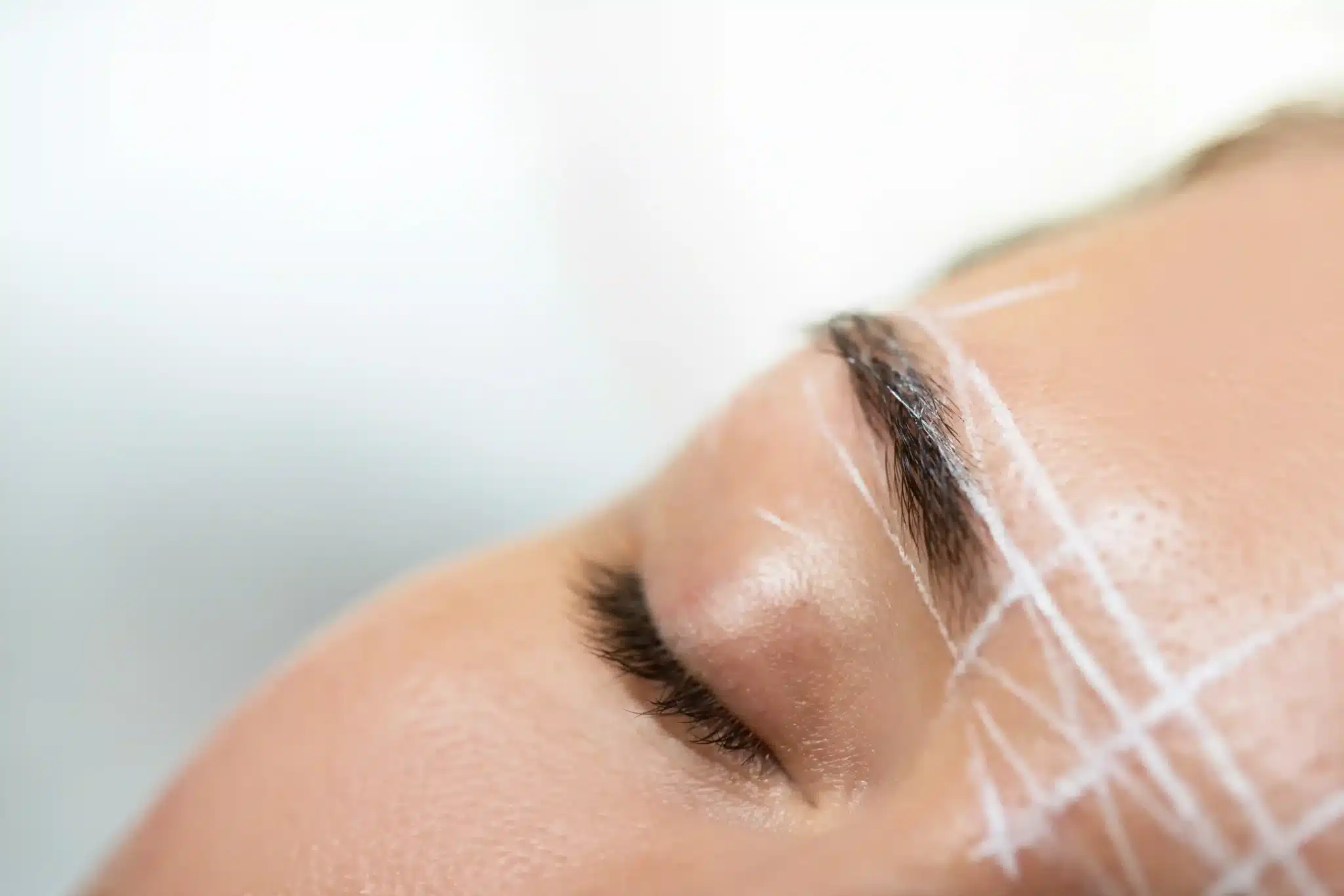
Eyebrow tattoos, eyebrow embroidery, and microblading have gained significant popularity in recent years. For many, the initial results are highly satisfying, providing shape and definition to the face. However, as months and years pass, it is common to see an eyebrow tattoo change colour—red, grey, blue, or sometimes even green. Furthermore, you might notice your eyebrow embroidery fading unevenly or the crisp borders beginning to smudge and blur.
If you are looking in the mirror and wondering why your eyebrow tattoo turned orange, ashy, or blue, you are certainly not alone. This phenomenon is a well‑documented dermatological event. In this article, I will explain the science behind why brow pigment changes over time by looking at published medical research on how tattoo ink interacts with human skin. I will address the evidence behind “semi‑permanent” techniques versus permanent tattoos, explain the formulation clash between organic and inorganic pigments, and outline how to fix discoloured eyebrow tattoos using safe, evidence‑informed medical treatments.
While my practice is at 1Aesthetics, Medical & Surgery in Singapore, my goal here is to provide you with a factual, objective understanding of your medical options, without guarantees, but with a strong foundation in clinical research.
In Singapore, “eyebrow embroidery” and “microblading” are widely marketed as “semi‑permanent” procedures. Many customers assume that eyebrow embroidery and eyebrow tattooing are fundamentally different processes. Often, embroidery is marketed as using a semi‑permanent pigment formulated to fade naturally over time without the risk of turning blue or green.
Are the techniques and pigments actually different? The clinical reality is nuanced.
Human skin is divided into the epidermis (the top layer) and the dermis (the deeper layer). The epidermis constantly renews itself. If an artist placed pigment purely into the epidermis, your brows would completely wash away in a month.
Therefore, to last 1 to 3 years, the pigment must be deposited into the dermis. While manual techniques (like embroidery) may aim for a shallower dermal depth to achieve a softer result, any percutaneous introduction of pigment into the dermal layer is medically classified as a tattoo. Once ink enters the dermis, your body’s immune system treats it as a permanent foreign body.
There is a documented difference in the types of pigments chosen for these procedures. Pigments used in the tattoo and permanent makeup (PMU) industries fall into two main categories: organic and inorganic.
The marketing myth is not that the products are identical; the myth is the promise that “semi‑permanent” organic or mixed inks will completely and cleanly disappear. Instead, as the body interacts with these complex chemical blends, the brows often undergo unpredictable colour shifts.
To understand why an old eyebrow tattoo in Singapore might look vastly different today, we must look at how human skin interacts with these mixed inks on a cellular level.
To create a balanced, natural‑looking brown, manufacturers almost always use a “hybrid” blend of both organic and inorganic pigments. However, these two families behave completely differently in human tissue:
As years pass, a clash occurs. The smaller organic warm tones may fade away naturally over time. Meanwhile, the larger inorganic metal oxides remain stubbornly anchored in the dermis, undergoing chemical changes such as oxidation. The original brown separates, leaving you with entirely different, unbalanced hues.
When pigment is injected into the skin, the immune system immediately perceives it as a foreign invader. White blood cells called macrophages rush to the area to engulf the ink particles.
Landmark immunological research by Baranska and colleagues in 2018 demonstrated that tattoos persist due to a continuous, dynamic cycle of cellular turnover. Dermal macrophages take up the pigment; when these cells eventually die, they release the pigment into the extracellular space, where it is subsequently recaptured by newly recruited macrophages.
This “capture‑release‑recapture” cycle explains your eyebrow embroidery fading unevenly. During this cellular turnover, the smaller organic pigment particles more easily escape and may be cleared away by the lymphatic system. Conversely, the larger inorganic particles (like iron oxides and titanium dioxide) are too large and too inert to be moved efficiently, so they are repeatedly recaptured and left behind in the skin.
A frequent question is: Does the body push old tattoo ink deeper into the skin over time?
The ink is carried deeper rather than mechanically pushed. Over time, pigment‑laden macrophages can slowly travel along the connective tissue framework and lymphatic routes. As these immune cells migrate, they drag heavy inorganic ink particles deeper into the dermis and sometimes sideways. This gradual downward and lateral migration is one of the reasons crisp microblading strokes eventually blur and look “smudged” years later.
The clinical basis for brows turning red often lies in the chemical behaviour of inorganic iron oxides. Black iron oxide can oxidise over time in tissue, shifting toward redder iron oxide forms, which likely contributes to brows turning orange, red, or pink. In biological terms, a portion of the black inorganic pigment effectively “rusts” within your skin.
This is why a beautifully dark eyebrow tattoo can slowly evolve into an orange or pinkish hue over a period of years, especially if other components of the pigment blend have already faded away.
To lighten colours or create skin‑coloured “flesh tones” to camouflage mistakes, PMU artists heavily utilise the inorganic mineral titanium dioxide. While iron oxides can change valence state, titanium dioxide is chemically inert and highly stable. Because its particles are large and insoluble, macrophages clear them very poorly.
Over the years, as the surrounding skin naturally ages or changes tone from sun exposure, the dense deposits of titanium dioxide remain stubbornly fixed. This makes the pigment appear as thick, chalky, or yellowed patches under the skin.
As inorganic pigment is carried deeper by migrating macrophages, it falls victim to an optical phenomenon known as the Tyndall effect.
The overlying skin layers act as an optical filter. Shorter wavelengths of light (blue and green) scatter much more easily through the tissue than longer wavelengths (red). Consequently, deep, stable brown or carbon black pigment will be visually filtered by the overlying skin and appear ashy or distinctly bluish.
This is why old eyebrow tattoos or deep microblading strokes can take on a cool grey‑blue tone even if the original pigment was a warm brown or black.
Singapore’s high UV index aggressively attacks the organic components of your tattoo. Photomedicine studies and chemical analyses of modern tattoo inks demonstrate that UV radiation can cleave key chemical bonds in many organic pigments. This photodegradation breaks the molecule’s colour‑bearing structure, leading to rapid, uneven fading of the warm tones.
As these warm organic colours fade preferentially, the remaining inorganic and carbon‑based cool tones dominate the visual appearance, further contributing to ashy, grey, or bluish brows over time.
When a doctor assesses an old eyebrow tattoo in Singapore, the specific colour shift provides a diagnostic clue about the formulation clash and dermal depth.
Ashy grey or bluish brows
Ashy brows usually indicate two things. First, the small organic warm components have been degraded by UV or cleared more readily by macrophages, leaving the large, stable inorganic or carbon‑based cool components behind. Second, the pigment is sitting relatively deep in the dermis, resulting in the light‑scattering Tyndall effect.
Red, pink, or orange brows
Bright red or orange brows occur when the cooler components fade, and when black iron oxide in the blend has oxidised into redder forms. The result is a persistent, rust‑red or orange residue in the skin.
Chalky white or yellowing patches (The Flesh Tone Effect)
Opaque, chalky white, or yellow‑beige patches around the borders are the hallmark of inorganic “flesh‑toned” titanium dioxide camouflage tattoos. As discussed, these large, inert deposits persist for years and gradually clash with your dynamic natural skin tone.
No cosmetic tattoo is entirely permanent in its original state. A “normal” trajectory involves the organic pigments fading and the overall hue lightening over 1 to 3 years. Problematic shifts occur when the formulation clash is severe, causing cosmetic distress, or when smudging severely alters your facial features.
Red‑flag situations – Certain presentations require formal medical assessment before any further cosmetic cover‑ups are attempted:
When patients ask how to fix discoloured eyebrow tattoos, non‑medical options like makeup camouflage are considered first. However, salon‑based “colour correction” often poses long‑term limits.
In cosmetic salons, an artist might use flesh‑toned pigments (inorganic titanium dioxide) as an “eraser” to tattoo over mistakes. Medically, this is highly problematic. Embedding flesh‑toned ink over dark ink simply sandwiches the original pigment deeper.
When the patient eventually seeks medical laser removal, these titanium dioxide‑heavy flesh tones present a significant clinical hurdle known as paradoxical darkening. When the skin is saturated with these pigments and then exposed to high‑energy laser light, titanium dioxide and certain iron oxides can darken dramatically, forming black or dark grey compounds. When the skin is already oversaturated, medical laser treatments are typically indicated rather than further camouflage.
Medical‑grade laser therapy remains the evidence‑based standard for tattoo removal, grounded in the foundational scientific principle of Selective Photothermolysis, as first described by Anderson and Parrish.
By using specific wavelengths of light delivered in ultra‑short pulses, a laser can selectively target and heat a specific chromophore (the tattoo pigment) without causing widespread thermal damage to the surrounding skin.
When the laser energy hits the tattoo ink, it causes a photomechanical shockwave that shatters the large, stubborn inorganic ink particles into microscopic fragments. Once shattered, the body’s macrophage cells can finally engulf these newly minted tiny fragments and clear them through the lymphatic system.
Doctors typically utilise two main types of lasers for this process:
In complex cases—especially those involving heavily layered tattoos, stubborn inorganic titanium dioxide camouflage inks, or pre‑existing microblading scars—a doctor may utilise ablative fractional lasers alongside pigment‑targeting lasers. Clinical evidence demonstrates that ablative fractional lasers create microscopic treatment zones that allow a portion of the shattered pigment to physically extrude (escape) through the skin’s surface during the healing process. This also helps remodel underlying scar tissue, allowing the pigment laser to penetrate better in future sessions.
A clear understanding of the clinical process, backed by research, helps set realistic expectations.
The clinical pathway
After a medical assessment, a topical numbing cream (and occasionally a local anaesthetic injection) is applied. Protective ocular shields are mandatory. The laser application itself typically takes only a few minutes per brow.
Realistic expectations and clearance
Laser removal relies entirely on your body’s immune system to clear the shattered ink. Most patients require several sessions (often 3 to 6 or more). Treatment sessions are usually spaced 4 to 8 weeks apart to allow the macrophages to achieve maximum clearance before re‑treating the area.
Managing potential side effects and paradoxical darkening
While no procedure is immune to biological degradation, you can minimise dramatic shifts based on the clinical evidence discussed:
Deciding to address an eyebrow tattoo that has changed colour is a personal choice. A medical assessment is appropriate when:
During a consultation, a doctor can assess the likely histopathology and pigment composition of your specific tattoo, discuss the clinical options, and outline a realistic, evidence‑informed treatment plan.
If your eyebrow tattoo has turned orange, ashy, or blue, or if you are dealing with yellowing flesh tones, I want to reassure you that this is a common occurrence dictated by the clash between organic and inorganic pigment chemistry, UV exposure, and the body’s natural immune responses. It is not a failure on your part.
Understanding the medical science behind why these changes happen often makes the decision regarding correction or laser lightening much less overwhelming. Today, we have sophisticated, research‑backed medical options to help safely break down unwanted pigment and restore your skin.
This article is meant for general educational and informational purposes only and should not be taken as personalised medical advice. Pigment fading, skin reactions, and laser treatment outcomes vary significantly from person to person. For recommendations and treatment plans tailored to your specific situation, please consult a qualified healthcare professional or doctor in person.
Address:
1Aesthetics, Medical & Surgery
#14-90 The Central Tower 1
8 Eu Tong Sen Street
Singapore 059818
Mon-Fri 10 AM to 730 PM
Sat 10 AM to 6 PM
Phone / WhatsApp:
+65 66125173 / +65 84899962
Email:
[email protected]