Hello, friends and patients. I'm Dr Wan Chee Kwang, Founder and Medical Director of 1Aesthetics, Medical & Surgery in Singapore.
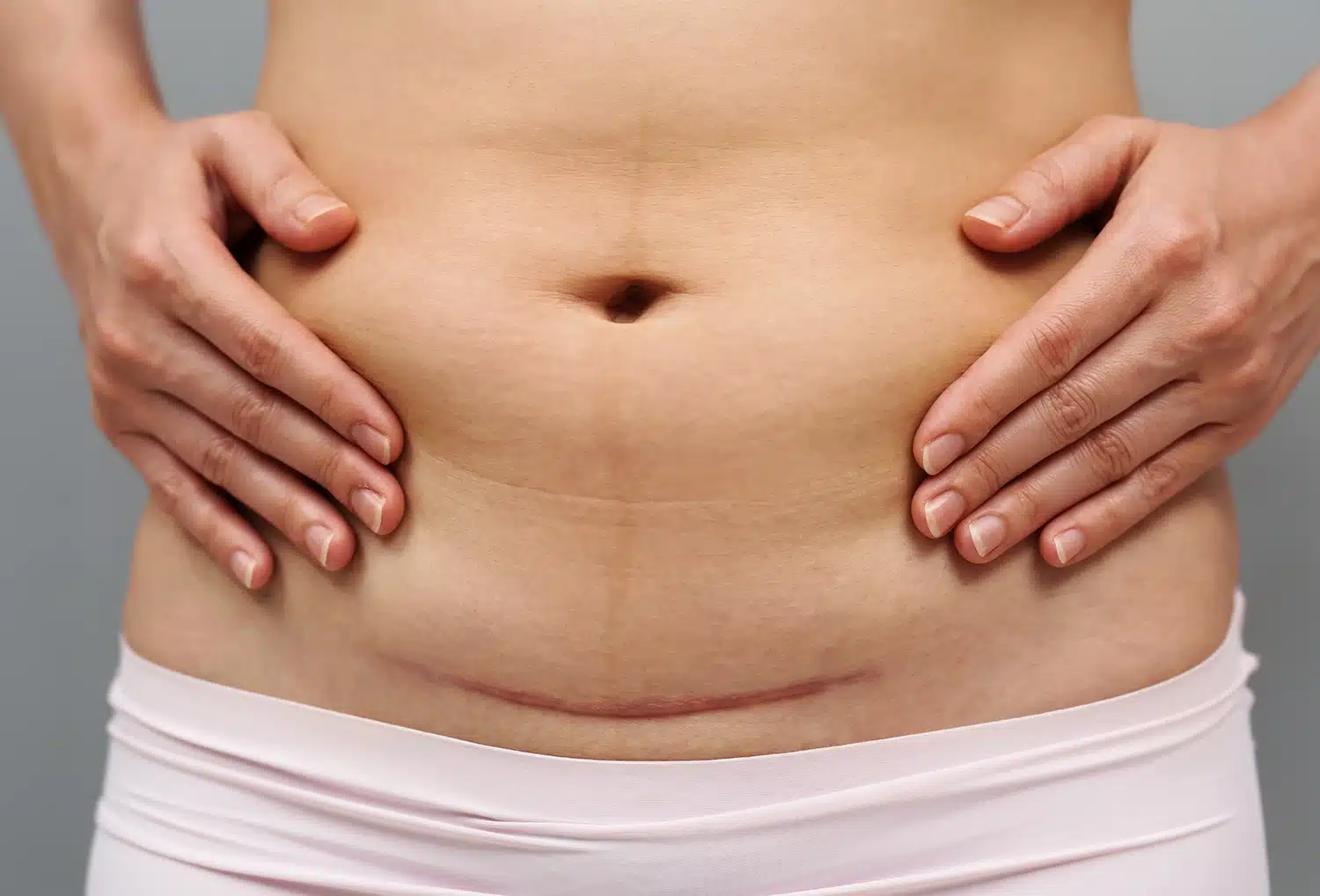
Of all the keloid presentations that arrive in my consultation room, the post-caesarean scar is the one I most wish I'd been able to see earlier. Not because the treatment is unusually difficult — it isn't — but because the women carrying these scars are almost universally exhausted, time-poor, and surrounded by well-meaning advice that boils down to "give it a year and see." By the time many of them reach me, the scar has often crossed from a manageable proliferative lesion into a mature, ropey keloid that's harder to flatten and — more importantly, as I'll explain — impossible to fully narrow without surgery.
This article is structured around the timeline that actually matters clinically: pre-emptive strategies before the wound even closes, early-window intervention in the first six months, and management of the established C-section keloid. Three threads run throughout: how the approach changes for higher-risk versus average-risk women, what remains safe to do while breastfeeding, and the honest distinction between what we can flatten with injections and lasers and what only surgery can narrow.
This article is for educational purposes only and does not constitute medical advice. Individual outcomes vary, and treatment suitability should always be assessed by a qualified medical practitioner.
This is the patient pathway I work with in the clinic. Find yourself on it:
| Where you are | What to do now |
| Pregnant, no scar yet (especially with prior keloids or family history) | Pre-delivery consult during the 2nd trimester to plan pre-emptive BTX-A at closure and coordinate with your obstetrician |
| Weeks 0–2 post-op | Wound-healing optimisation; pre-emptive BTX-A if not already given at closure |
| Weeks 2–6 | Start medical-grade silicone gel/sheets + high-waisted compression; UV avoidance |
| Weeks 6–12 with thickening, redness, or itch | Clinical assessment within 2 weeks; begin intralesional therapy ± vascular laser |
| 3–6 months with declared keloid | Multi-drug intralesional matrix + combination laser protocol |
| >6 months, established keloid | Combination injection + laser; consider surgery if width matters |
| Wide, ropey, or hanging keloid | Discuss surgical scar revision with adjuvant suppression |
| Planning a second pregnancy with an existing keloid | The "second-pregnancy reset" — excise at the next caesarean with intra-op triamcinolone |
If you've read What's Inside Keloids?, you'll already know that keloid formation represents a wound-healing programme that has failed to switch off — fibroblasts continue laying down disorganised collagen long after the wound has epithelialised, driven by sustained TGF-β1 signalling and chronic low-grade inflammation. High levels of inflammation are well-recognised as being associated with excessive dermal scarring and the formation of pathological scars.
What makes the C-section incision a particularly hostile location is its biomechanical environment. The lower abdomen is loaded by every cough, every laugh, every nappy change, every reach for a baby in a cot. Wound tension is one of the most consistent biomechanical drivers of pathological scarring — and post-partum abdominal laxity adds an extra wrinkle, quite literally, by altering how that tension distributes across the healing wound.
Patient-level risk factors I see most often include:
When several factors coincide, "wait and see" stops being a neutral choice — it becomes an active one, and usually the wrong one.
This is one of the most consequential calls at the bedside, and getting it wrong costs you the proliferative window. Here's how the two differ in clinical practice:
| Feature | Hypertrophic Scar | Keloid |
| Lateral spread | Stays within the original incision boundary | Grows beyond the original incision into the surrounding skin |
| Natural course | Often regresses over 12–18 months | Rarely regresses without treatment |
| Onset | Typically, within 4–8 weeks | 6 weeks to several months, sometimes later |
| Symptoms | Mild itch, mild firmness | Itch, burning, tenderness; often pronounced |
| Treatment urgency | Moderate — observation often acceptable | High — early intervention preserves outcomes |
| Response to monotherapy | Reasonable | Poor — requires combination protocols |
| Surgical revision | Rarely needed | May be needed to narrow the lateral spread |
Misclassifying a keloid as a hypertrophic scar is the most expensive diagnostic error you can make in this setting. If you're unsure whether your scar warrants intervention, our overview Scar Removal in Singapore: Should I Get It? is a sensible starting point.
This is the section I'd most like every Singaporean mother in the second trimester to read. The leverage available before a scar declares itself is dramatically greater than the leverage available after — and yet this is the window most commonly squandered.
The biology of keloid suppression rewards early intervention because the early scar contains rapidly dividing, pharmacologically responsive fibroblasts. The mature keloid contains relatively quiescent ones. Presurgical and early post-surgical steroid injections may prevent a hypertrophic scar or keloid from forming — or reduce its size — and the same proliferative-phase biology applies to BTX-A, laser, and silicone interventions.
This is the single most important concept in this entire article.
A normal surgical scar stays within the original incision line. A keloid grows beyond that line — pushing sideways into the surrounding healthy skin. Once that lateral spread has happened:
Said another way: in the early window, you are fighting to prevent lateral spread. In the late window, you are managing a scar whose width has already been written. This is not a reason to give up if you've missed the early window — but it is the single biggest reason urgency in the first six months matters.
The first six months post-delivery is your prevention window.
The way pre-emptive BTX-A is usually pitched is: "if you have a strong keloid history, consider it." That's true, but incomplete. A more accurate framing — and the one I work to in clinic — is that pre-emptive BTX-A is medically indicated for higher-risk patients and electively beneficial for average-risk patients, with the strength of recommendation scaling with risk rather than the underlying mechanism switching on or off.
Our companion piece on keloid injection treatments in Singapore unpacks the multi-drug rationale in depth.
The mechanism doesn't care about your risk category. BTX-A reduces dynamic tension on the healing wound by relaxing the lower rectus abdominis and surrounding fibres engaged during coughing, bending, and lifting your baby. Beyond the mechanical effect, BTX-A directly suppresses fibroblast proliferation, modulates TGF-β1 expression, and dampens the early inflammatory cascade — the conceptual case being that controlling inflammation pre-emptively or at the time of wounding is fundamentally more effective than waiting for an abnormal scar to declare itself.
Fu et al. (2024) reported in a meta analysis that high-dose BTA injected immediately after surgery was associated with better scar beautification effects. A literature review by Bi et al (2019) concluded that BTX can be as helpful as steroids in improving the troublesome characteristics of keloid scars — with a notably cleaner adverse-effect profile (no atrophy, no telangiectasia, no hypopigmentation).
How does this map to actual C-section patients:
| Patient profile | Indication strength | Framing |
| Prior keloid, strong family history, Fitzpatrick V–VI, prior C-section keloid | Strong — medically indicated | Meaningfully shifts probability away from a difficult-to-treat keloid |
| Fitzpatrick IV, no prior keloid, no family history | Moderate — reasonable to consider | Same mechanism, lower absolute risk; worth discussing as scar optimisation |
| Fitzpatrick III, healthy healing, no risk factors | Elective — cosmetic optimisation | Unlikely to develop a keloid regardless; this is fine-scar-quality optimisation |
The right time for this conversation is during pregnancy, not after delivery — for high-risk and average-risk women alike.
Topical silicone gel is a safe and effective treatment for hypertrophic and keloidal scars. For C-section scars specifically, many women benefit from using silicone for 3 to 6 months, particularly if they are prone to raised or thickened scars, and a silicone pad or silicone-based scar cream may be helpful early on, while a developing keloid or hypertrophic scar may additionally benefit from steroid-based treatments.
For low-risk patients, silicone monotherapy can carry the day. For higher-risk women, it earns its place in a combination protocol but shouldn't be carried alone.
Pressure therapy is used after surgery to remove keloids, with the goal of reducing or preventing a scar by putting pressure on the wound as it heals. High-waisted compression garments deliver this naturally across the suprapubic region — low-cost, evidence-supported, and frequently under-prescribed in the post-partum setting.
Weeks 2 to 6 — the subtle phase: firmness that doesn't soften as expected; persistent pink, red, or purplish discolouration; itchiness or tingling; a scar sitting above the surrounding skin.
Weeks 6 to 12 — the declarative phase: lateral spread beyond the original incision margins (the diagnostic clue distinguishing keloid from hypertrophic scar); tenderness or burning, often worsened by waistbands; visible thickening with a rubbery quality; halos of post-inflammatory hyperpigmentation (McKeown SR et al., 2015; Fu S et al., 2024). This is the itchy C-section scar months later presentation that brings most women into the clinic.
If anything in the Week 6–12 column applies to you, please don't wait until your six-week postnatal review. A clinical assessment within two weeks gives us the widest range of options — and the best chance of preventing lateral spread.
If BTX-A is the newer pre-emptive tool, intralesional triamcinolone is the long-standing workhorse — and in the early proliferative window, it's particularly potent.
How it works. Triamcinolone suppresses TGF-β1, induces fibroblast apoptosis, and remodels the abnormal vasculature feeding the scar. In a wound just beginning to declare itself — say, at 6–8 weeks post-op with a thickening, reddening line — a well-placed series of injections at 4–6 week intervals can frequently halt progression entirely.
What to expect. Reported response rates run 50–100%, with recurrence as monotherapy in the 9–50% range (Berman B et al., 2017), which is why I rarely use it as a single agent in higher-risk patients. Side effects to be aware of include skin atrophy, telangiectasia, and hypopigmentation, all of which are more conspicuous in Fitzpatrick IV–VI skin, and which I manage by careful concentration selection and dilution.
The presurgical and early-post-surgical role. Steroid injections given at or near the time of surgery may prevent a hypertrophic scar or keloid from forming, or reduce its size — a strategy I'll return to in Part 2 in the context of repeat caesareans.
For a deeper dive into how steroids fit alongside other intralesional agents, see our article on keloid injection treatments in Singapore.
Lasers earn their place in early-window care through two distinct mechanisms.
Vascular lasers (pulsed-dye and long-pulsed Nd: YAG) target the abnormal microvasculature feeding the early scar, reducing the persistent pink/red/purple discolouration that defines an actively forming keloid. Used early — sometimes from 6 weeks post-op — they can significantly accelerate scar maturation.
Fractional CO₂ laser plays a different role: it creates microthermal zones of controlled injury that trigger remodelling of the scar's collagen architecture (Waibel, 2013), while simultaneously enabling laser-assisted drug delivery of topical or injected agents into tissue that would otherwise be impermeable. In the early window, this means we can effectively double the impact of an intralesional steroid or BTX-A session.
Combination protocols — vascular laser plus fractional CO₂ in the same session, often with intralesional injection layered in — are how I typically structure active treatment for an early-declaring C-section keloid.
The single most consistent finding across the keloid literature: combinations outperform monotherapy. Silicone + pressure + intralesional triamcinolone + BTX-A + laser, layered intelligently across visits, produces results that no single modality matches. The full rationale is in our deep-dive on combination protocols and beyond-steroid keloid injections.
For women reading this with a scar that's already raised, ropey, and clearly past the early window — please don't close the tab. Established C-section keloids are absolutely treatable. They just demand a different approach, more patience, and more layering of modalities — and an honest framing of what's achievable without surgery versus what requires it.
Mature keloids are dense collagen "bricks" populated by relatively quiescent cells, far less sensitive to single-modality treatment than the proliferating fibroblasts of a fresh wound. Keloids have been shown to respond to a variety of therapies, including topical and injectable corticosteroids, 5-fluorouracil, radiotherapy, lasers, and surgical excision — but the operative word is combinations, not any one modality on its own. This is where the hard C-section scar years later presentation gets its honest answer.
I covered this briefly in Part 1, but it bears restating here:
If width matters to you — and for many post-partum women, especially those who notice the scar peeking above lower-rise underwear or swimwear, it does — then surgery needs to be on the table. If width matters less than height, redness, and symptoms, then the non-surgical combination protocol will likely take you most of the way.
This is one of the most common scenarios I see in the clinic: a patient who had a course of triamcinolone injections at another provider, saw partial improvement, plateaued, and was told there was nothing more to do.
Reported recurrence rates after intralesional steroid monotherapy run 9–50% (Berman B et al., 2017) — meaning that plateau or rebound after a triamcinolone-only course is well-documented and expected, not a sign that steroids don't work. The next step is rarely more steroids; it's a multi-drug intralesional matrix combining triamcinolone with 5-fluorouracil (Khan MA et al., 2014) and BTX-A (Bi M et al., 2019), often with laser-assisted delivery to penetrate the dense collagen of an established keloid.
For mature C-section keloids, laser treatment for keloid scars earns its place primarily as an adjunct rather than primary therapy.
Vascular lasers (PDL, long-pulsed Nd: YAG) remain useful even years out for stubborn erythema and dilated vessels feeding the mature scar.
Fractional ablative CO₂ does double duty in the established setting: textural remodelling of the surface, plus laser-assisted delivery enabling steroid/5-FU/BTX-A penetration into a collagen matrix that would otherwise resist diffusion (Waibel JS et al., 2013). This is one of the most underutilised techniques for established keloids that have plateaued on injections alone.
BTX-A is most often discussed in the pre-emptive context, but it remains useful in established keloids, too. A 2017 study reported a very encouraging degree of effectiveness in resistant, invalidating keloid scars, and combined with steroid and 5-FU in a layered injection matrix, BTX-A often unlocks response in keloids that have plateaued on triamcinolone monotherapy. The suprapubic area never stops being mechanically loaded, so the tension-reduction rationale remains as relevant at year three as it is at week three.
For bulky, ropey, or hanging C-section keloids that have failed conservative measures — or where the patient specifically wants to narrow the scar — surgical excision becomes a reasonable consideration. But never as a standalone intervention.
Recurrence rates after surgical excision alone range from 45% to 100%; this risk can be reduced to 10–50% with adjunctive intralesional corticosteroid therapy (Berman B et al., 2017) and below 20% when combined with radiotherapy (Mankowski P et al., 2017; Fu S et al., 2024). Read those numbers carefully — they're the entire reason "just cut it out" is a trap that leads to bigger, worse keloids in many patients.
The full surgical decision-making framework is in our keloid surgery deep-dive, and the misconception that surgery is futile is addressed in Keloid Surgery Risks and Recurrence. For patients who, after consultation, would like to consider post-excisional superficial radiation therapy, my reasoning for not personally using SRT is set out in our SRT article.
For patients with an established C-section keloid planning another pregnancy, the next caesarean is not a dread scenario — it's an opportunity. The standard practice in this scenario, well-supported in the obstetric and dermatological literature, is to excise the existing keloid at the time of the repeat caesarean and inject triamcinolone acetonide into the wound edges before closure. Pre-emptive BTX-A at the same session further compounds the benefit.
This is one of the most rewarding scenarios I manage, because it combines three benefits in a single operation: the obstetric procedure the patient was going to have anyway, the surgical narrowing that injections and lasers can't deliver, and the optimal pre-emptive environment (intra-op steroid + BTX-A + structured post-op silicone, pressure, and follow-up injections) for the new wound. It requires close coordination with your obstetrician, which is why I encourage these conversations early in the second pregnancy, not in the third trimester.
Patients understandably want to know what improvement looks like and when. Here's the timeline I share at first consultation, calibrated to the established-keloid scenario:
| Time after starting treatment | What to expect |
| Weeks 1–4 | Itch and tenderness often improve first; objective changes are still subtle |
| Months 1–3 | Softening begins; rubbery texture starts giving way; redness begins to fade |
| Months 3–6 | Visible flattening; height reduction is usually appreciable in photos |
| Months 6–12 | Pigmentation improves; the surrounding hyperpigmented halo lightens; the texture continues to refine |
| Beyond 12 months | Maintenance phase: periodic top-up sessions to prevent rebound |
Two honest caveats: response varies between individuals, and a widened scar will not narrow on this timeline without surgical revision. But the flattening, softening, calming, depigmenting trajectory is what the vast majority of committed patients experience.
Patterns repeat themselves in the clinic. These are the five most common — and most avoidable — errors I see in C-section keloid care:
The principles above — biomechanical tension as a driver of keloid formation, the proliferative-window opportunity, the flatten-vs-narrow distinction, combination protocols outperforming monotherapy — apply equally to laparotomy scars, hysterectomy scars, breast surgery scars, orthopaedic surgical scars, and high-tension scars on the chest, shoulders, and upper back. The specific adjustments for each anatomical site differ, but the framework is the same. You may also find our How Do You Prevent & Treat Keloid Scars From Mole Removal? article a useful example of site-specific keloid management.
The short version: most early-line interventions are lactation-compatible.
| Intervention | Lactation Status | Notes |
| Silicone gel/sheets | Compatible | Topical; no meaningful systemic absorption |
| Pressure garments | Compatible | Mechanical only |
| Intralesional steroid | Generally compatible | Localised; minimal systemic absorption at standard doses |
| Intralesional BTX-A | Generally compatible | Highly localised; large molecular size makes breast milk transfer extremely unlikely |
| Laser treatment | Compatible | Light-based; no systemic effect |
| Intralesional 5-FU | Defer where possible | Cytotoxic; safer to postpone until weaning |
| Topical imiquimod | Defer where possible | Limited lactation safety data |
| Surgical excision | Compatible | Lidocaine is breastfeeding-safe |
| Adjuvant radiotherapy / SRT | Not recommended during lactation | Reserved for selected post-weaning cases |
You do not need to wait until weaning to begin treating a forming or established C-section keloid.
In compliance with HCSA advertising guidelines, individualised quotations are provided at consultation rather than published as fixed pricing. The main drivers of cost in C-section keloid management are:
Can a C-section scar become a keloid? Yes — particularly in women with Fitzpatrick IV–VI skin, a personal or family history of keloids, or wound-healing complications. The C-section incision is a high-tension site, which independently raises keloid risk.
When should I treat my C-section scar? The prevention window opens at skin closure and effectively closes around six months post-delivery. Silicone and pressure can begin at 2–3 weeks post-op once the wound has epithelialised; active interventions like intralesional steroid, BTX-A, or laser are typically started from around 6 weeks if early thickening is seen. See Scar Removal in Singapore: Should I Get It? If you're unsure whether to start.
Why is my C-section scar a raised lump months after surgery? A raised, firm, sometimes itchy or tender lump appearing weeks to months after caesarean delivery is most commonly either a hypertrophic scar or a keloid. The distinguishing feature is lateral spread — keloids grow beyond the original incision; hypertrophic scars don't. A clinical assessment is the most reliable way to differentiate them.
Why is my C-section scar still itchy months later? Persistent itch beyond 12 weeks is a common feature of an actively proliferating keloid, driven by inflammation and abnormal innervation in the scar. It usually responds well to early intralesional steroid combined with vascular laser.
Why is my C-section scar still hard years later? A hard, established C-section scar years post-delivery is typically a mature keloid. It's still treatable — combination injection protocols and laser-assisted delivery remain effective, though response is slower than in the early window. The width that has already developed will not reduce without surgical scar revision.
Can keloids be removed completely? The honest answer: rarely entirely. A combination protocol can dramatically flatten, soften, and depigment a keloid. Surgery can narrow the lateral spread. But complete eradication with no trace is uncommon, and any provider promising it should be viewed sceptically. The realistic goal is a much-improved scar that you don't notice in daily life.
Should I postpone treatment until I've stopped breastfeeding? In the vast majority of cases, no. Most early-line interventions are lactation-compatible. Deferral generally produces worse outcomes.
Can botulinum toxin actually prevent a C-section keloid? Pre-emptive BTX-A doesn't guarantee prevention, but it shifts the odds favourably. The strongest indication is in higher-risk women, but the same biology improves scar quality in average-risk women, too.
My obstetrician already gave me steroid injections, and the scar still came back. What now? Steroid monotherapy has reported recurrence rates of 9–50% (Berman B et al., 2017), so plateau or rebound is well-documented. The next step is usually a combination protocol, not more steroids alone.
I'm planning a second pregnancy. Will the keloid get worse? A repeat caesarean through the same scar can exacerbate it, but with peri-operative planning — intra-op excision + triamcinolone + pre-emptive BTX-A — outcomes are substantially better than leaving it to chance.
What does C-section keloid treatment cost in Singapore? Costs vary with keloid size, modality, and number of sessions. Individualised quotations are provided at consultation in line with HCSA advertising guidelines.
Patients sometimes arrive with a printed protocol from another clinic and ask whether I'd run the same recipe. Honest answer: probably not exactly, and not because the recipe is wrong. C-section keloids occupy a specific biomechanical and hormonal context that doesn't always map cleanly onto general keloid algorithms. A thin, faintly raised scar in a low-risk first-time mother is a different problem from a thick, ropey recurrence in a Fitzpatrick V woman heading into her third caesarean — and the sequencing, drug mix, and laser parameters shift accordingly.
What I try to hold constant is the approach: catch it in the proliferative window if at all possible, layer interventions rather than relying on any single one, calibrate for breastfeeding without using lactation as a reason to do nothing, and revisit the plan at every visit based on how the tissue is actually responding. Where width matters, and only surgery can deliver it, I have that conversation honestly and pair surgery with adjuvant suppression to keep recurrence rates manageable.
If any of this resonates — or if you're reading this with a hand on a thickening scar wondering whether it's already too late — please do come in. It's almost certainly not too late, and the conversation is worth having sooner rather than later.
Information presented reflects published literature current as of the review date. Individual treatment outcomes vary, and all treatments carry potential side effects, which will be discussed during clinical consultation.
Address:
1Aesthetics, Medical & Surgery
#14-90 The Central Tower 1
8 Eu Tong Sen Street
Singapore 059818
Mon-Fri 10 AM to 730 PM
Sat 10 AM to 6 PM
Phone / WhatsApp:
+65 66125173 / +65 84899962
Email:
[email protected]