Summary:
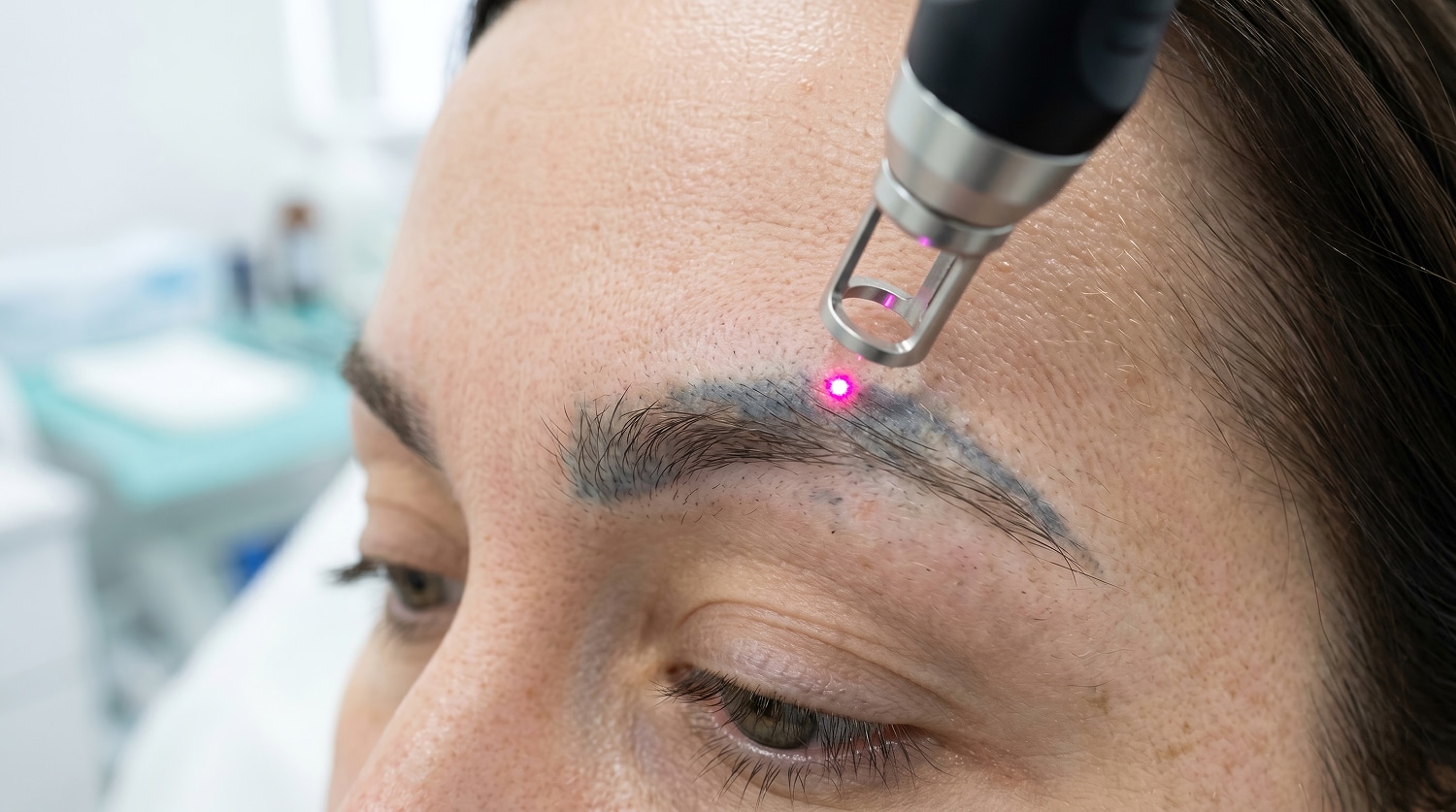
Eyebrow and eyeliner tattoo removal is one of the most requested cosmetic tattoo removal procedures in Singapore, yet it remains among the most technically demanding in the field.
The reasons come down to three things: what the ink is made of, where it sits in the skin, and how close it is to your eye. Each of those factors shapes what a laser can and cannot do, and understanding them changes how you read your own progress.
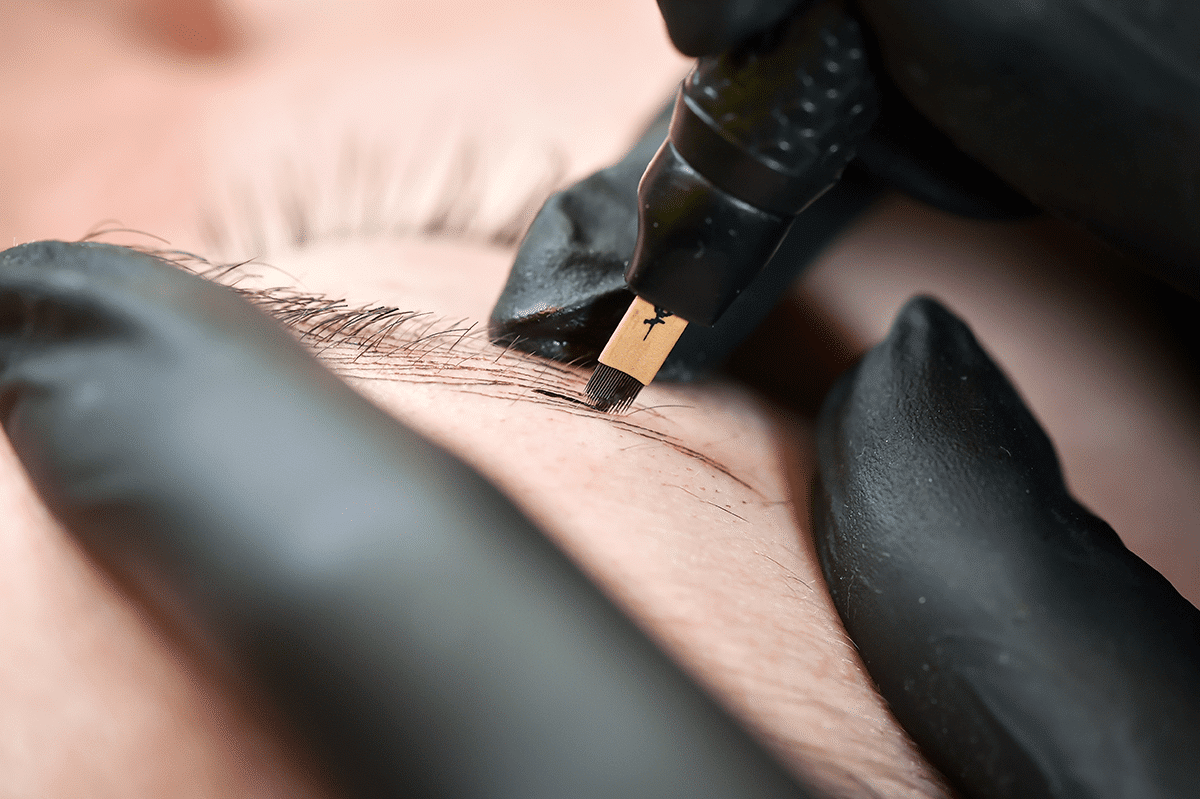
Cosmetic tattoo inks used in eyebrow embroidery, microblading, and ombre brow procedures across Singapore are formulated to mimic skin and hair tones.
To achieve those muted, flesh-like shades, manufacturers commonly use iron oxide and titanium dioxide as base pigments. These compounds behave very differently under laser energy compared to the carbon-based inks used in decorative tattoos.
Both compounds may also shift colour unpredictably across sessions, producing orange, grey, or chalky tones as different pigment components clear at different rates.
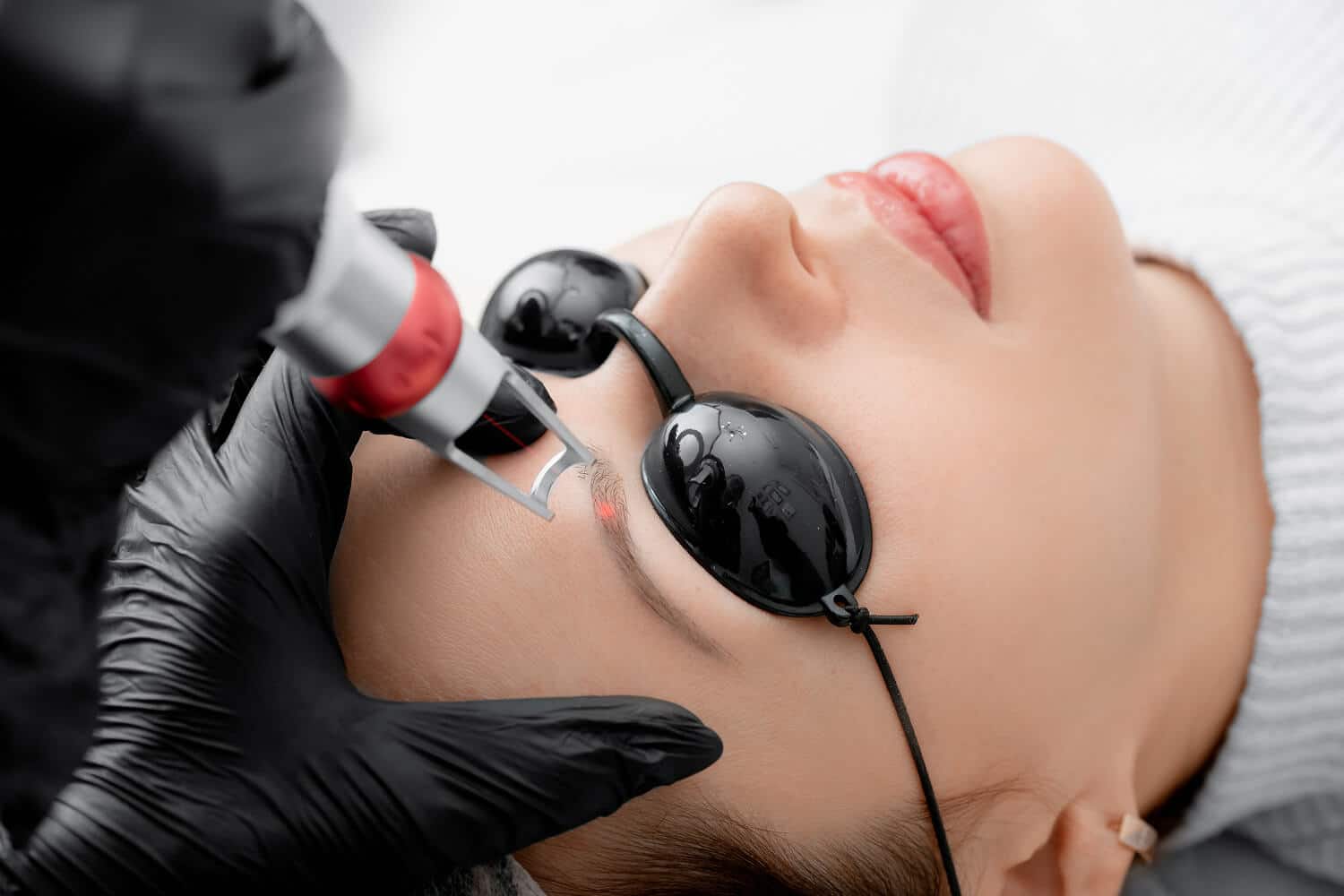
Beyond ink composition, the periorbital area (the region surrounding the eyes) constrains treatment parameters: the proximity of the eyes limits how aggressively the laser can be applied, and the relatively thin skin in this area is more vulnerable to thermal injury (heat damage to the tissue). The difference can matter for eyeliner in particular. Your doctor may place corneal shields over your eyes to shield them during the removal procedure.
Ink density also varies across cosmetic tattoos, with ombre brow procedures typically involving denser pigment deposition than microblading.
| Factor | What it involves | Why does it complicate removal |
|---|---|---|
| Location | Periorbital area, close to the eye | Limits how aggressively laser parameters can be applied; thin skin is more vulnerable to thermal injury; eyeliner requires corneal shielding |
| Ink density | Varies by procedure type: denser in ombre brows, lighter in microblading | Higher density requires more sessions; older tattoos with heavy pigment loading are harder to clear |
| Application depth | Cosmetic ink sits more superficially than body tattoo ink | Suggests easier clearance, but does not offset the constraints imposed by location and density |
If progress has been slower than expected, ink composition is often a contributing factor. A clinical assessment can help identify whether a different approach is warranted.
The earliest laser systems used for tattoo removal operated on a photothermal (heat-based) mechanism, delivering energy to the skin and relying on heat to destroy ink particles.
This came with a significant risk of collateral thermal damage, particularly in sensitive areas like the periorbital region. Scarring, textural changes, and hypopigmentation (loss of skin colour) were known risks, especially where multiple sessions were required.
Q-switched lasers, introduced from the 1980s onwards, delivered energy in nanosecond pulses (one billionth of a second) and produced a photomechanical rather than purely thermal effect, shattering ink with considerably less thermal damage.
Picosecond technology offers a fundamentally different mechanism for breaking down ink. At picosecond pulse durations, the energy is transferred to the ink particle so rapidly that it generates intense acoustic pressure waves (mechanical shockwaves within the tissue) rather than significant heat, shattering ink into dust-sized fragments that are easier for the body’s immune system to clear.
Research into picosecond laser removal of cosmetic facial tattoos suggests these devices can achieve strong clearance results, with the majority of patients rated as much or very much improved, though outcomes vary by ink composition, colour, and skin type.
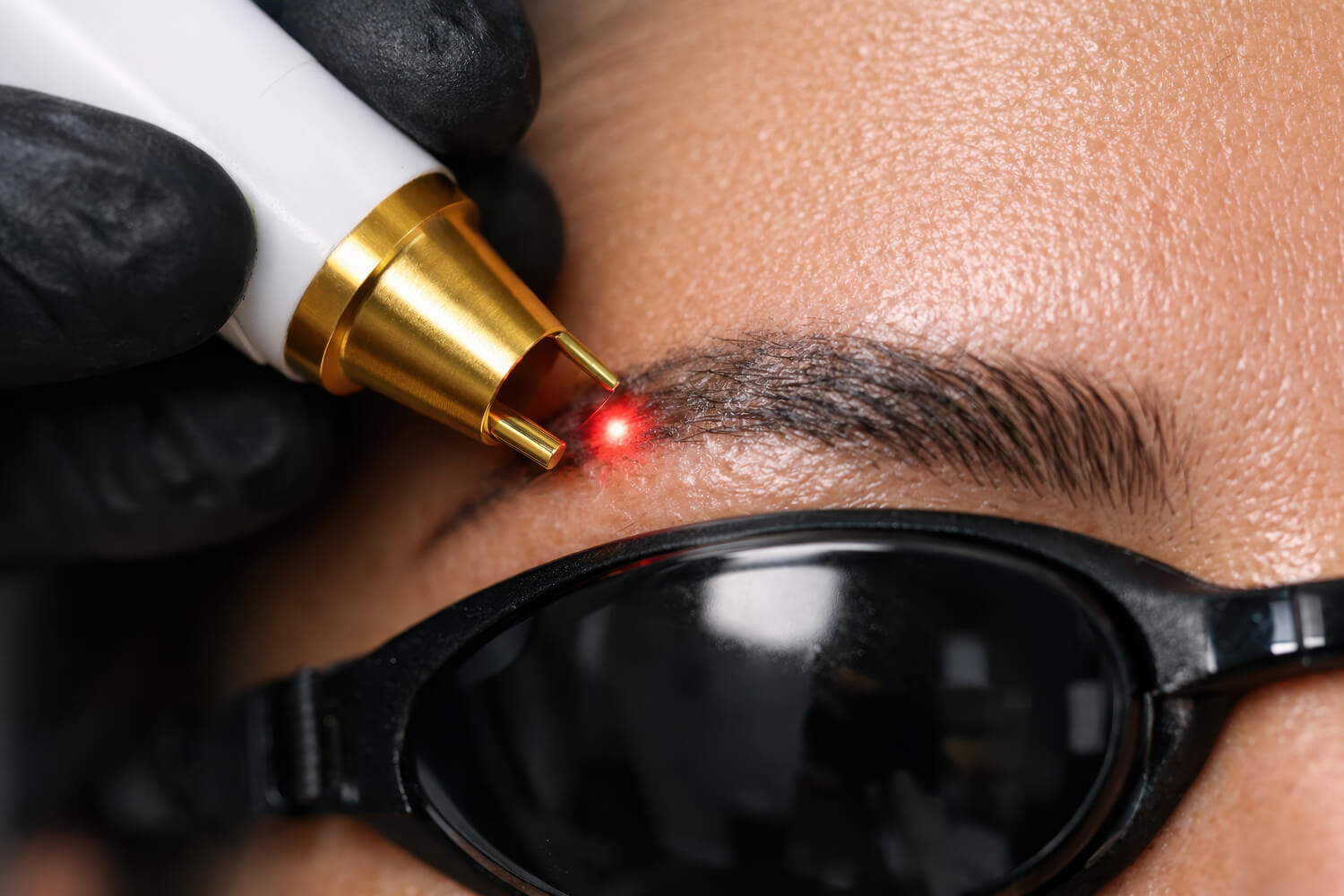
As the Founder and Medical Director of 1Aesthetics, Medical & Surgery in Singapore, I use a triple-wavelength picosecond laser. Its three native wavelengths allow the treatment to be matched precisely to the pigment colour at each stage. This is what makes the device effective for ghosting, where remnant pigment deep in the skin requires sufficient energy to reach and fragment.
At my practice, I typically use a fractional ablative CO2 laser as a pretreatment step before the picosecond device as part of the FracTAT combination approach.
This creates micro-channels in the skin that act as pressure relief ducts, allowing superheated gases generated during laser treatment to escape without causing blistering or scarring. The fractional pretreatment also increases penetration depth for the subsequent picosecond laser, which is particularly valuable for clearing remnant pigment in later sessions.
Extracorporeal shockwave therapy (ESWT) can also be incorporated into the protocol. ESWT uses a handheld device to transmit focused acoustic energy into the treatment area, which may stimulate lymphatic drainage and increase local metabolic activity, thereby accelerating the clearance of fragmented ink and reducing post-treatment side effects such as redness, swelling, and crusting.
Not sure whether a combination approach is right for your tattoo? A clinical assessment at 1Aesthetics will help you understand which elements of the protocol apply to your specific case.
Laser wavelengths work by targeting specific colour ranges, and a wavelength effective against dark ink may have little impact on green or sky blue.
Red pigments present a different challenge: they can react unpredictably to certain wavelengths, sometimes darkening rather than clearing, particularly where iron oxide is present.
Green and sky blue pigments require a wavelength in the 694 nm to 755 nm range for efficient targeting. The triple-wavelength picosecond laser I use at 1Aesthetics addresses this with a full-power native 694 nm Ruby wavelength.
Eyebrow and eyeliner tattoos often contain mixed pigment compositions, particularly older tattoos touched up with different ink batches over time. A single-wavelength approach to a multi-colour cosmetic tattoo is likely to produce incomplete clearance and may leave residual pigment that is difficult to address in later sessions.
If your tattoo contains green, blue, or red tones and progress has stalled, the wavelength used may not match your pigment. Book a consultation with me to find out whether your current protocol is targeting the right colours.
I typically start a clinical consultation with a visual assessment of the eyebrow or eyeliner tattoo, including the:
Other factors, listed below, can only be determined through treatment and observation over multiple sessions:
Eyebrow and eyeliner tattoo removal in Singapore generally requires fewer sessions than body art.
The cases I typically treat at 1Aesthetics fall within a range of six or more sessions, as cosmetic ink is typically placed more superficially in the skin.
Two patients with superficially similar tattoos may have very different journeys: skin type, healing response, immune function, and treatment tolerance all influence outcomes in ways that cannot be fully predicted at the outset. As such, this session estimate may change depending on your circumstances.
What happens between sessions matters just as much as the treatment itself, and aftercare is where many patients unknowingly lose ground.
Silicone-based ointments are commonly recommended for post-treatment care because they support the skin barrier (the outermost protective layer of the skin) without introducing fragrance, preservatives, or other potential irritants, and help maintain a moist wound environment associated with more efficient tissue repair.
Petroleum-based alternatives may also be used, but silicone formulations are generally preferred in sensitive periorbital skin.
Post-inflammatory hyperpigmentation (PIH) is a known risk following laser treatment, particularly in patients with Fitzpatrick skin types III to VI (medium to darker skin tones), and clinical practice guidelines consistently recommend UV protection in the weeks following treatment. Clinicians typically recommend the following:
Failure to follow these measures significantly increases the risk of PIH, which, in darker skin tones, may persist for several months.
Eyebrow and eyeliner tattoo removal is a genuinely complex process, and the variables that determine your outcome are specific to your tattoo, your skin, and your healing response.
At 1Aesthetics, Medical & Surgery, I offer a clinical assessment for eyebrow and eyeliner tattoo removal for an evaluation of the ink composition, pigment depth, colour, and proximity to the eye. Book an appointment to get a clear picture of what your removal journey is likely to involve.
Address:
1Aesthetics, Medical & Surgery
#14-90 The Central Tower 1
8 Eu Tong Sen Street
Singapore 059818
Mon-Fri 10 AM to 730 PM
Sat 10 AM to 6 PM
Phone / WhatsApp:
+65 66125173 / +65 84899962
Email:
[email protected]