Summary:
Hello, friends and patients. I'm Dr Wan Chee Kwang, Founder and Medical Director of 1Aesthetics, Medical & Surgery in Singapore.
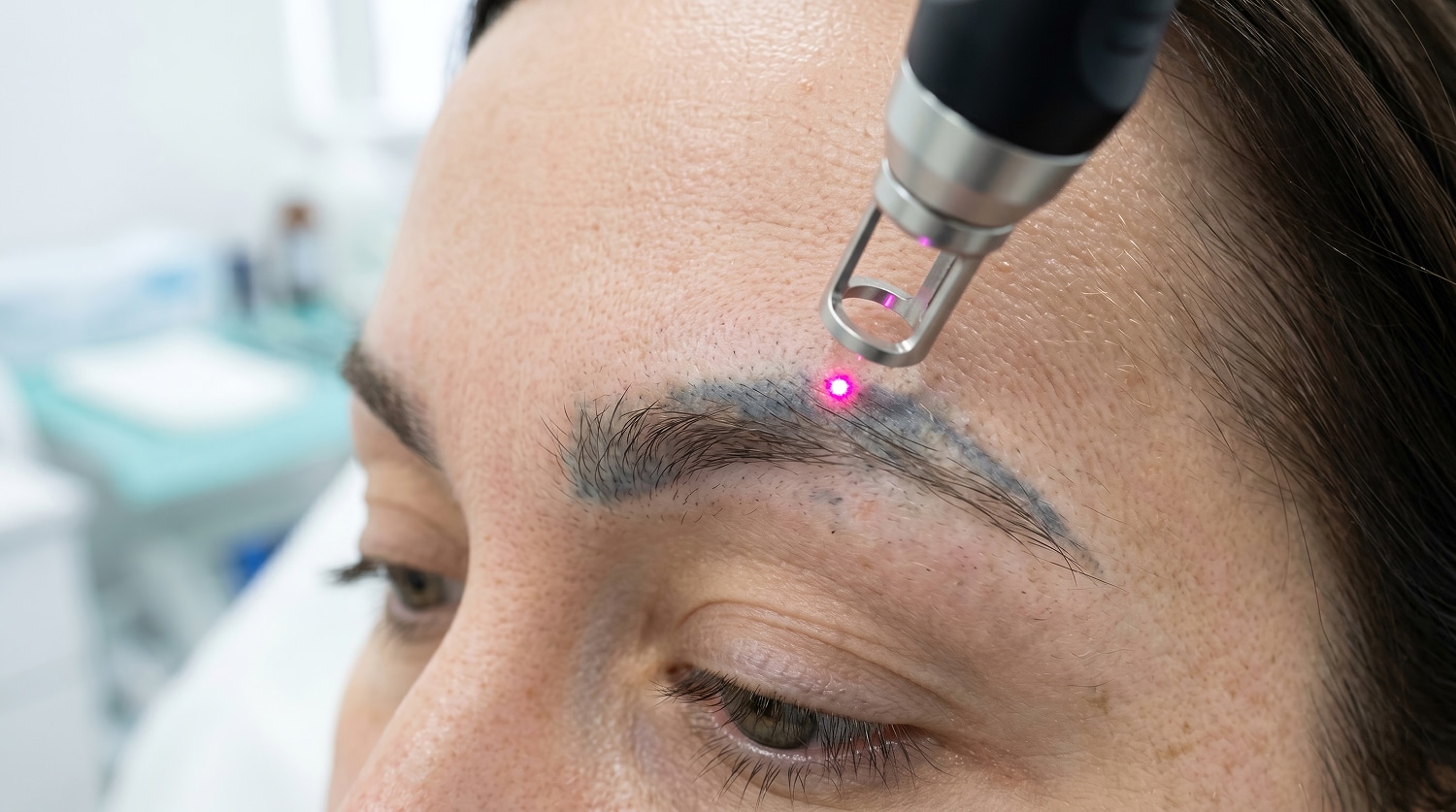
There's a common misconception that darkening or colour shifts during eyebrow tattoo removal mean something has gone wrong. In most cases, they do not.
Cosmetic tattoo ink is not the same as body tattoo ink. It commonly contains iron oxide and titanium dioxide, compounds that react to laser energy differently and in ways that can look alarming if you are not expecting them. This article explains what those reactions mean at each stage, so you can follow your treatment with confidence.
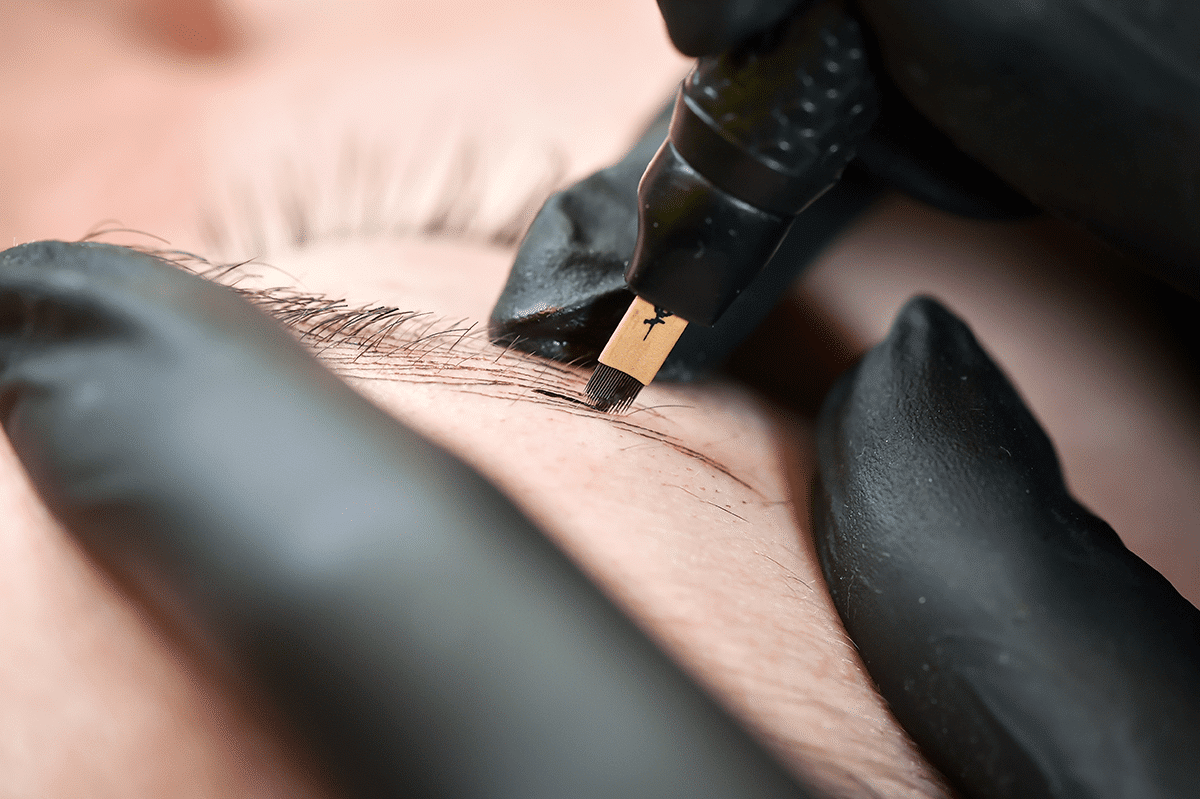
Cosmetic tattoo inks, the kind used in eyebrow embroidery removal and eyeliner treatments in Singapore, are not formulated the same way as decorative body tattoo inks. Many contain iron oxide and titanium dioxide, compounds that give the pigment its flesh-like, neutral, or muted tones.
These compounds are useful for mimicking natural hair or skin colour, but they respond to laser energy in ways that can catch both patients and inexperienced practitioners off guard.
Where a standard body tattoo ink might simply fragment and fade with each session, cosmetic ink may first darken before it begins to lighten. It may shift from a brown to a grey, from a taupe to an orange, or from a soft black to a rust tone.
These are not treatment failures. They are chemically predictable responses that an experienced clinician will anticipate and plan around.
If a practitioner does not account for pigment transformation, they may misread progress. A darkening after the first session could be mistaken for a worsening result, prompting a change in approach that is not warranted.
Equally, a shift to orange or grey mid-treatment may indicate that a different laser wavelength is now appropriate, and failing to adjust could slow clearance considerably.
What that assessment covers, and what determines your plan before the first session, is set out in my companion article on what to know before removing your eyebrow embroidery.
Iron oxide undergoes a process called photo-reduction when exposed to laser energy, shifting from ferric oxide (which appears brown or yellow) to ferrous oxide (which appears darker, often black or grey). This reaction can happen quickly, sometimes within the first session.
Titanium dioxide, another common ingredient, is generally understood to scatter light rather than absorb it efficiently, which may make inks containing high concentrations of this compound harder to clear and can contribute to a whitening or chalky appearance.
Because these reactions follow known chemical pathways, a clinician with experience in cosmetic tattoo removal will recognise each colour change as a signal rather than a setback.
An orange shift often indicates that the cooler-toned components of a mixed pigment have been cleared first, leaving warmer iron-based residues behind. A grey cast may suggest titanium dioxide involvement, while a temporary darkening in the first one or two sessions is consistent with iron oxide photo-reduction and typically resolves as treatment continues.
Because each of these shifts follows a known pattern, a well-prepared clinician can plan the treatment around them rather than reacting to them as surprises.
| Colour change | What you see | Likely cause | What it means |
| Darkening | Pigment appears darker or more defined after treatment | Iron oxide photo-reduction (ferric to ferrous oxide) | A predictable chemical reaction; not a sign the treatment has failed |
| Orange or reddish shift | Warm tones emerge mid-treatment | Cooler pigment components cleared first, leaving iron-based residues | Normal mid-treatment progression; may indicate a wavelength adjustment is needed |
| Grey or ashy cast | A flat, grey tone persists or develops | Titanium dioxide involvement | Ink may be harder to clear; clinician may need to adjust approach |
| Whitening or chalky appearance | Pale or chalky patches after treatment | High titanium dioxide concentration scattering laser light | Ink may require more sessions or a different laser modality |
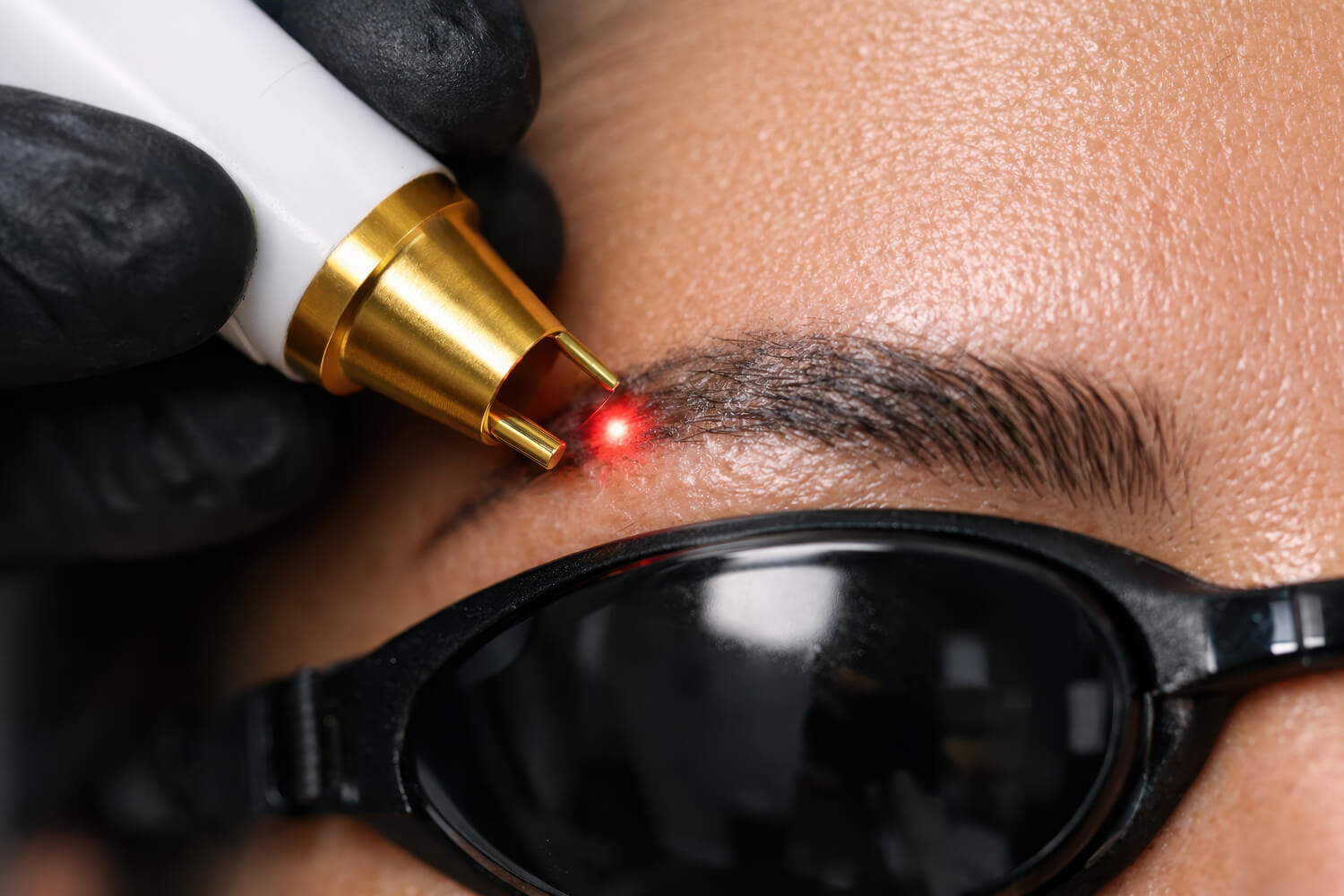
At 1Aesthetics, I use picosecond laser, matching the treatment wavelength to the pigment colour at each stage of removal.
This adaptability means the treatment can follow the pigment as it evolves, rather than applying a fixed protocol regardless of where the ink is in its clearance cycle. The full breakdown of which wavelength suits which pigment colour is in my companion article on what to know before removing your eyebrow embroidery.
Not sure how your ink is likely to respond? Book a clinical assessment with me to get a clear picture of your pigment type and what to expect at each stage.
Understanding how your ink behaves is one part of the picture. The other is understanding how treatment close to the eyes is managed safely.
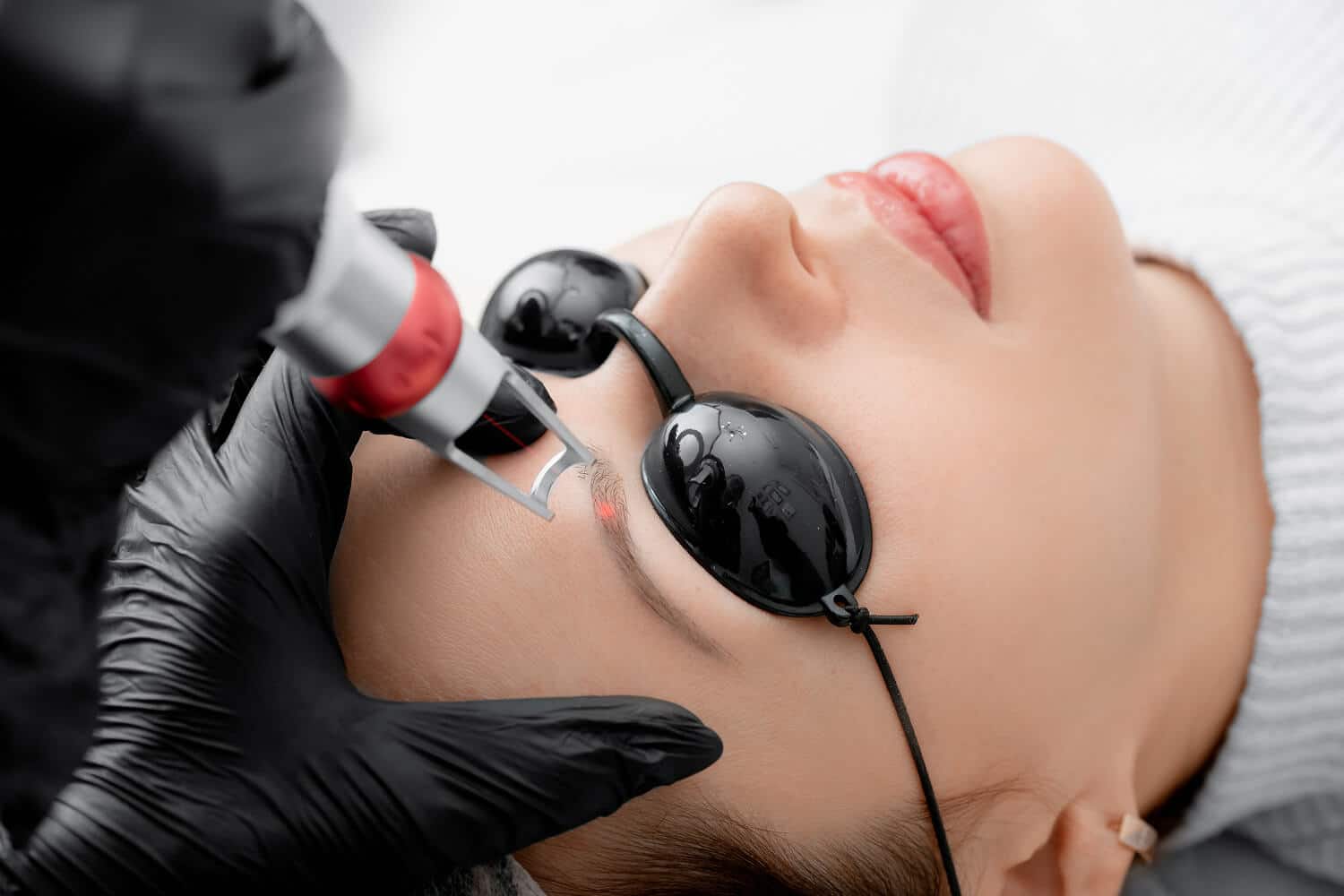
The periorbital area (the region surrounding the eyes) requires particular care because the eyes are sensitive to laser wavelengths that can pass through the eyelid.
For eyebrow tattoo removal, particularly when the tattooed area sits close to the upper eyelid, some clinicians use internal ocular shields (also called scleral shields): small, curved devices placed directly on the eye surface after topical anaesthetic (numbing) drops.
At 1Aesthetics, specialised ocular shields are used as standard for periorbital laser work.
| External shield | Internal (scleral) shield | |
| What it is | Opaque goggles or pads placed over closed eyelids | A small curved metal or plastic device placed directly on the eye surface, under the eyelid |
| How it is applied | Placed over the outside of the eye | Applied after topical anaesthetic (numbing) drops |
| What it protects | Blocks laser light reaching the eyelid | Physically protects the cornea, lens, and retina |
| When it is used | Standard for most laser procedures away from the eye margin | When the tattoo sits close to the upper eyelid; used at the clinician's discretion |
As the table above shows, the two approaches serve different purposes and are not interchangeable. Internal shields are not used in every case. Your clinician should assess the location of the tattoo, the laser parameters, and your individual anatomy before deciding which protection is appropriate.
Laser tattoo removal does not remove ink directly. It shatters the pigment particles into fragments small enough for the body's immune system to process.
Research confirms that dermal macrophages are selectively laden with tattoo pigment particles in treated skin, making them the primary vehicle for ink clearance. These cells carry ink fragments through the lymphatic system and eventually to the lymph nodes, where the particles are eliminated.
This is why sessions are spaced weeks or months apart: the body needs time to complete clearance before the next round of laser energy is applied.
Clearance speed varies between individuals and is influenced by several factors:
Smoking is consistently associated with slower clearance and reduced treatment outcomes in laser tattoo removal.
At 1Aesthetics, extracorporeal shockwave therapy (ESWT) can be incorporated into the removal protocol specifically to support this process. ESWT uses a handheld device to transmit focused shockwave energy into the tissues, increasing lymphatic drainage and metabolic activity, which may help accelerate clearance between sessions and reduce side effects such as redness, swelling, and crusting.
Because the body needs adequate time between sessions to complete this clearance process, compressing that interval carries specific risks, particularly in the sensitive periorbital area.
The skin around the eyes is among the thinnest on the face, making it more vulnerable to thermal injury (heat damage to the tissue) when laser energy is applied.
Standard laser removal also creates superheated gas and steam trapped within the skin, which can cause blistering and increase the risk of scarring in the brow area if not managed carefully. In the eyebrow area specifically, scarring carries a risk of hair loss, as scar tissue can damage the follicles responsible for brow hair growth.
At my practice, this is addressed through a combination approach that incorporates a fractional ablative CO2 laser as a pretreatment step, creating micro-channels in the skin that act as pressure relief ducts and reduce collateral damage to surrounding tissue.
A responsible timeline typically involves sessions spaced four to six weeks apart, though some clinicians recommend longer intervals of 10 to 12 weeks for the periorbital area.
Evidence from a large prospective cohort suggests treatment intervals of four weeks or less may be associated with a reduced clinical response, supporting the case for longer spacing where possible.
In practice, the number of sessions typically ranges from four to six, though this varies considerably by individual and depends on ink depth, pigment composition, colour, and skin type.
Concerned about treatment near the eye area? Schedule an appointment with me and I will walk you through exactly what the process involves for your specific case.
In the first one or two sessions, the tattooed area may appear darker or more defined rather than lighter.
This is consistent with iron oxide photo-reduction, as described above. By sessions three and four, most patients begin to see visible fading, though the colour may shift before it clears. Warm, orange, or reddish tones often appear in the mid-treatment phase as cooler pigment components clear first.
In later sessions, the remaining pigment may appear patchy, with some areas fading more quickly than others. Faint residual pigment, sometimes called ghosting, can be particularly difficult to shift with lower-powered devices.
To track your progress, my team and I at 1Aesthetics will compare the photographs taken at each visit and discuss the changes with you, so you understand what you are seeing at every stage of the eyebrow tattoo removal process.
If you are considering laser eyebrow tattoo removal, a clinical assessment is the right starting point. Let me evaluate your ink composition, pigment depth, colour, and proximity to the eye, and walk you through a treatment plan built around your specific tattoo.
My combination approach to eyebrow and eyeliner tattoo removal integrates the picosecond laser, fractional CO2 laser pretreatment, and extracorporeal shockwave therapy. Together, these technologies are used to enhance ink removal while minimising unnecessary thermal damage to the surrounding skin. Book an appointment to get started.
Address:
1Aesthetics, Medical & Surgery
#14-90 The Central Tower 1
8 Eu Tong Sen Street
Singapore 059818
Mon-Fri 10 AM to 730 PM
Sat 10 AM to 6 PM
Phone / WhatsApp:
+65 66125173 / +65 84899962
Email:
[email protected]