
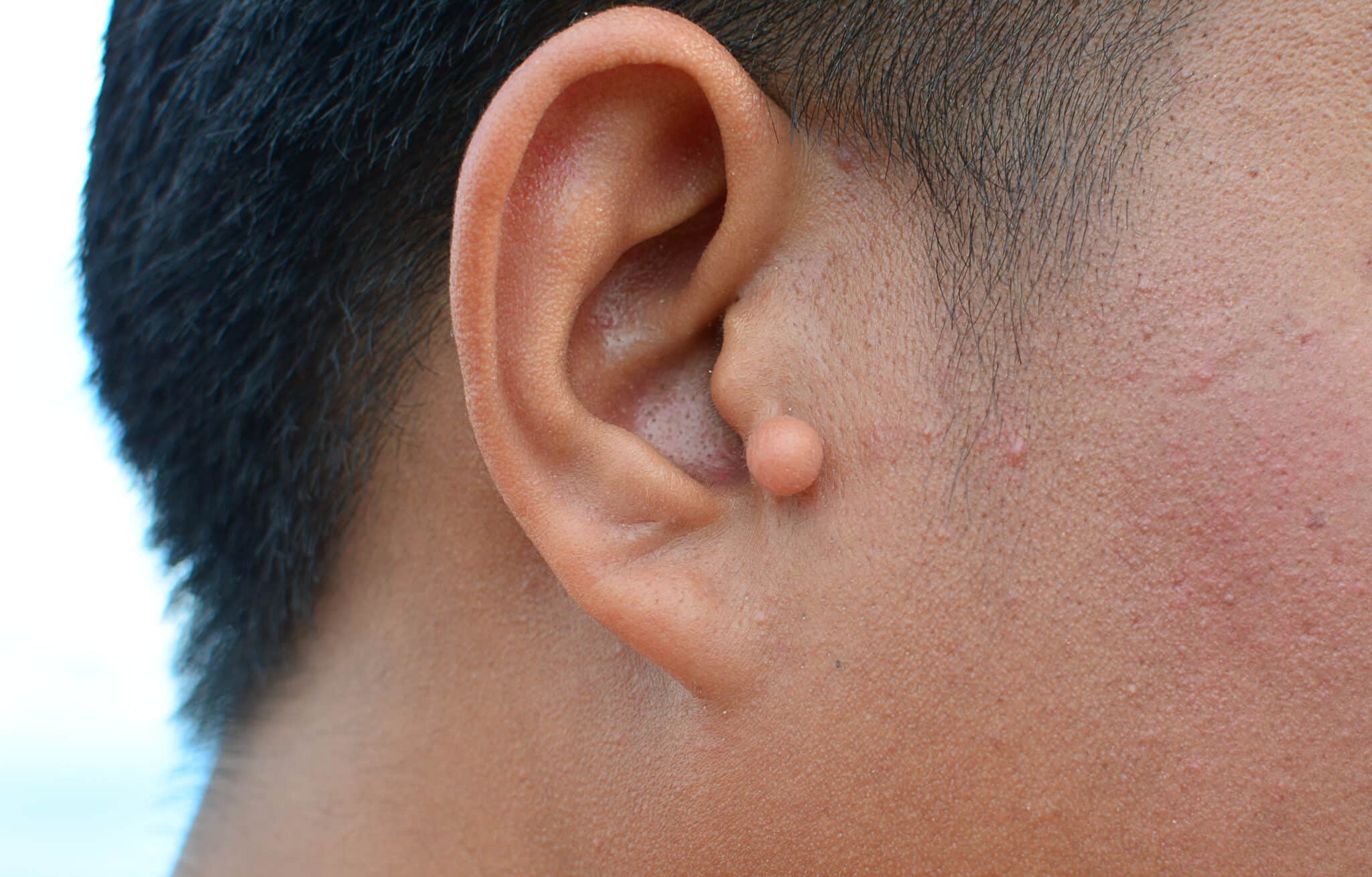
Ear keloids can develop after piercings, trauma, or surgery, and they affect people very differently. Some remain small and cause little more than cosmetic concern; others grow, cause discomfort, and affect how you feel day to day. It is one of the more common reasons people seek treatment at a medical aesthetics clinic in Singapore, from teenagers with ear keloids after a piercing to adults managing recurrent scars after previous treatments.
At 1Aesthetics in Singapore, Dr Wan Chee Kwang assesses each ear keloid based on its size, location, thickness, symptoms, skin type, and recurrence risk before recommending a personalised treatment plan. Because the ear has thin skin stretched over a curved cartilage framework, treatment needs to be more precise than it is for many other body sites. Treatment may include intralesional injections, laser therapy, surgical excision, silicone-based scar care, or a combination approach to help flatten the scar, improve comfort, preserve the natural contour of the ear, and reduce the risk of recurrence.
Speak with Dr Wan about suitable options for your ear keloid scar treatment in Singapore.
📍 1Aesthetics, Medical & Surgery
#14-90 The Central, 8 Eu Tong Sen Street, Singapore 059818
(Clarke Quay / Chinatown MRT)
📞 +65 6612 5173
💬 WhatsApp: +65 8489 9962
Mon–Fri 9 am–7 pm | Sat 9 am–3 pm
1Aesthetics is a licensed medical clinic in Singapore. Dr Wan Chee Kwang holds a Singapore Medical Council (SMC) licence and is SMC-accredited for Aesthetic Procedures. All treatments are performed in accordance with MOH guidelines.
Ear keloids are raised, thickened scars that develop when the skin over the ear heals abnormally after injury or piercing, producing excess collagen and scar tissue. What makes ear keloids particularly challenging is the ear's anatomy: thin, tightly stretched skin over rigid cartilage with limited blood supply. This creates an environment where healing is prone to going wrong.
The key difference between ear keloids and hypertrophic scars:
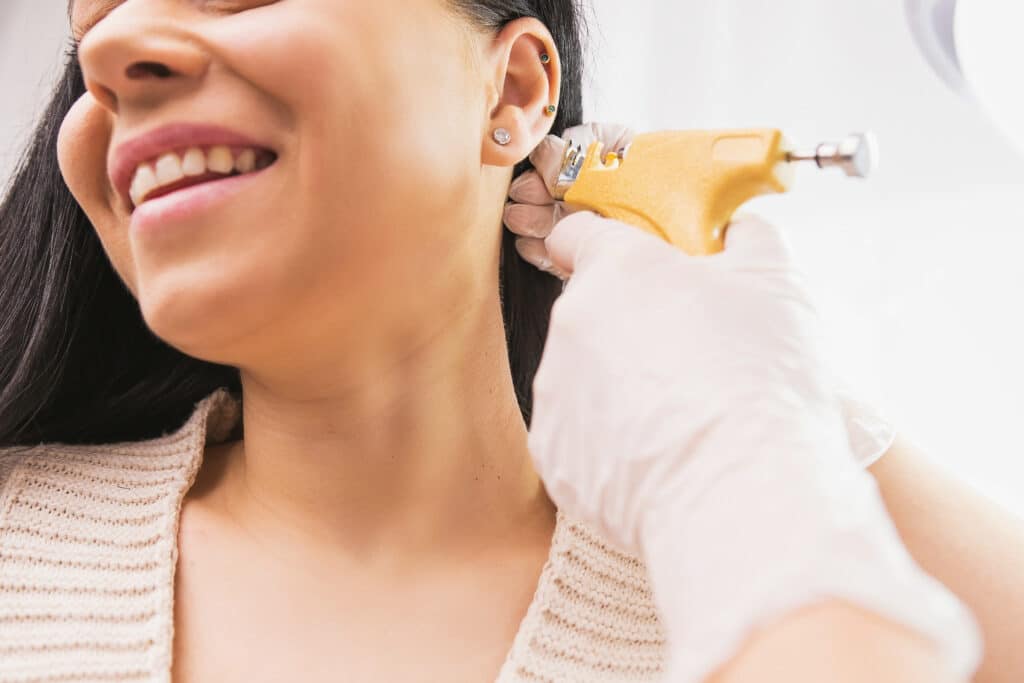
Ear keloids are overwhelmingly triggered by ear piercings, but not all piercings carry the same risk. The type of piercing, the technique used, and the aftercare all influence whether a keloid will form.
High-risk scenarios for ear keloid formation:
Other ear-specific triggers:
Other contributing factors include:
If you already know you scar easily, or have a family history of keloids, Are You Genetically Prone to Keloids? Here’s How to Know is especially relevant.
One of the most important things to understand about ear keloids is that treatment rarely ends with a single procedure. Recurrence is a defining feature of keloid biology.
Surgical excision alone carries a recurrence rate of 45% to 100%, which is why excision by itself is rarely recommended without additional post-treatment suppression.
Combining surgery with adjunct treatment lowers that risk substantially. Published recurrence rates vary because scar type, treatment methods, follow-up duration, and individual healing patterns differ across studies.
Indicative recurrence rates reported in medical literature include:
| Treatment Approach | Approximate Recurrence Rate |
| Surgical excision alone | 45–100% |
| Excision + post-operative steroid injections | 9–50% |
| Intralesional steroid injections (standalone) | 9–50% |
| Intralesional excision (e.g., KILE technique) | ~13% (pooled) |
| Excision + radiotherapy | 3–32% |
These literature ranges are general and may not predict an individual patient’s outcome. Recurrence risk is discussed specifically during consultation.
Not every ear keloid should be treated the same way.
At the consultation, Dr Wan considers:
An ear keloid may seem like a small problem at first, but because the ear is visible and exposed to daily friction, it can become difficult to ignore.
Patients commonly seek treatment because of:
The table below provides indicative fee ranges for common keloid treatments at 1Aesthetics. All figures are estimates only. Your actual fee will depend on the size, location, number, and complexity of your keloid(s), and will be confirmed following a clinical consultation with Dr Wan.
| Treatment | Estimated Fee Range (SGD) | Scope of Treatment | Estimated Sessions Required |
| Intralesional Injection | Starting from $100–$300 per session | Corticosteroid injected directly into the keloid under topical anaesthesia, frequently combined with other injectable agents (such as neurotoxin), depending on the keloid's response; may include a post-injection review | Typically 3–6 sessions at 4–6 week intervals, subject to individual tissue response |
| Surgical Excision | $1000–$3,000+ per lesion | Consultation, local anaesthesia, surgical removal, and wound closure; post-operative review included | Typically, one surgical procedure, followed by adjunct suppression therapy; the number of follow-up sessions is subject to clinical assessment |
| Laser Treatment (CO2 / Vascular) | $300–$1,200 per session | Laser application under topical anaesthesia; usually combined with injection therapy in the same session | Typically 3–6 sessions, depending on keloid type, depth, and response to treatment |
Keloid treatment often involves a combination of methods. The recommended approach depends on the keloid’s size, thickness, age, symptoms, location, and previous treatment history.
Common treatment options include:
Combination treatment
No single treatment is suitable for every keloid, and recurrence remains possible even after successful flattening or removal. Laser and non-surgical treatments may be suitable for selected keloids, particularly smaller, softer, red, itchy, or less established scars. These treatments are often combined with injections or other forms of scar suppression.
CO2 laser treatment uses targeted energy to remove or remodel thickened scar tissue. CO2 laser may be considered for selected raised scars, especially when precision tissue reduction is required. CO2 laser may help:
Downtime varies depending on treatment intensity and scar location.
In selected cases, radiofrequency may be used as part of a minimally invasive or surgical treatment plan. Radiofrequency may help:
Suitability depends on the keloid’s depth, location, and recurrence risk.
Vascular laser keloid treatment helps reduce redness and bulk by targeting blood vessels feeding the keloid. The laser’s photothermal effect damages the vessel walls, prompting the body to naturally eliminate the vessels. This reduces redness and gradually shrinks the scar.
Multiple vascular lasers can be used to target keloids that appear red, active, or vascular.
Vascular laser treatment may help:
Multiple sessions are usually required.
Injectable treatment remains one of the most important parts of ear keloid management.
Corticosteroids are commonly used to suppress excessive inflammation and collagen formation, but in Dr Wan’s practice, they are frequently combined with other injectable agents rather than used alone, as this can improve response and help offset individual side effects.
For ear keloids specifically, combination injections can be especially helpful because:
● the ear is small and highly visible
● the tissue is often tight and sensitive
● dense scars may respond better when treatment is multi-pronged
Depending on the scar and its behaviour, combination treatment may include corticosteroids together with agents such as neurotoxins, antimetabolites, antiproliferative antibiotics, or calcium channel blockers.
Correct concentration, dosage, and depth remain essential to avoid side effects such as skin thinning, depression, or pigment change.
Neurotoxins are increasingly used off-label for keloid management. Studies show they can reduce pain, itching, and scar thickness, especially when combined with steroid injections. They offer a lower risk of side effects such as injection pain or skin atrophy.
Surgical excision may be considered for selected ear keloids that are:
However, surgery is not suitable for every patient.
The main reason is that ear surgery is not just about cutting out the visible mass. It must also account for:
At 1Aesthetics, Dr Wan assesses whether surgery is appropriate based on the ear scar’s location, size, depth, tension, and previous recurrence pattern. Surgery is typically combined with post-operative suppression therapy to help reduce the chance of regrowth.
In suitable cases, surgery is not performed simply to lop off excess tissue.
It may help by:
This is a major difference between thoughtful ear keloid surgery and overly simplistic “scar removal”.
Surgery is performed under local anaesthesia, administered after topical numbing cream has been applied to the area. Depending on the keloid, surgical approaches may include:
Shave excision
This removes the protruding portion of the scar to improve contour. It is more suitable for selected narrow-based keloids. However, shave excision often cannot remove the deeper portion of the scar and is therefore not ideal for many thicker or more deeply seated ear keloids.
Full-thickness extra-lesional excision
This removes the keloid beyond its visible margins. It may be considered for larger or more aggressive scars where complete removal is the priority, although the limited skin reserve of the ear can make closure more difficult.
Intralesional fillet flap technique
This preserves surrounding skin while reducing scar bulk, helping to minimise wound tension during healing, preserve ear contour, and reduce recurrence risk.
Technology-assisted tools, including CO2 lasers, vascular lasers, and high-frequency radiofrequency devices, may be used where appropriate to improve precision, reduce intraoperative bleeding, and limit damage to surrounding tissue.
Because the ear has limited spare skin, excision may, in some cases, carry a higher chance of:
Where grafting is considered, the possibility of tension-related recurrence and even a secondary donor-site keloid also has to be weighed carefully. This is one reason why not every large ear keloid should automatically be treated by simple excision.
Recovery depends on the size and location of the keloid, the surgical technique used, and the individual’s healing response.
In general:
Dr Wan will provide wound care instructions and a review schedule after the procedure.
Surgery addresses the physical bulk of the keloid, but it does not eliminate the underlying tendency for the skin to overproduce collagen at the wound site. As outlined in the recurrence section above, adjunct suppression after surgery is what separates a manageable outcome from a returning keloid.
At 1Aesthetics, Dr Wan's approach is pre-emptive rather than reactive: rather than waiting for signs of regrowth and treating them as they appear, injections, frequently combined with other injectable agents such as neurotoxin, are used to suppress the wound's tendency to overheal throughout the period when recurrence risk is highest. This typically follows the phases of wound healing:
At the time of surgery: An initial injection is given during the procedure itself to begin suppressing collagen overproduction from the earliest stage of healing.
Week 2: A further injection is given once the wound has closed and initial healing is underway, targeting early collagen overproduction before it becomes established.
Week 4-8: Further injections are administered as the remodelling phase accelerates. Dose and concentration are adjusted based on the wound's response to previous injections.
Week 8+: Suppression continues into the later remodelling phase, when residual keloid activity is most likely to drive recurrence.
Most patients require more than three injections in total. Depending on individual healing, suppression is typically continued for six to 12 months, in line with the natural timeline for scar maturation. Combination injections may be used at any stage of this protocol, and the number of injections, dosage, agents, and intervals may all be adjusted based on how your skin responds at each review.
Managing Itching and Painful Keloids
Some keloids can itch, ache, sting, or feel tender. While medical treatment may be needed for persistent symptoms, some measures may provide temporary relief:
Seek medical review if the scar becomes increasingly painful, red, swollen, or grows quickly. Over-the-counter creams may provide temporary relief but are unlikely to remove established keloids.
Ear keloids are commonly seen in medical aesthetic practice in Singapore, especially after piercings. They can affect teenagers after a first ear piercing, young adults who develop recurrent keloids after repeated trauma, or patients who have already undergone treatment elsewhere but find that the scar has returned.
Because ear keloids behave differently from ordinary scars, treatment should not only focus on flattening or removing the visible scar. It should also address the risk of regrowth through structured follow-up care, scar suppression, and early management of recurrence.
In Dr Wan’s view, good ear keloid treatment is not about simply removing what protrudes. It is about choosing the right treatment for the shape and biology of the scar, preserving or restoring the natural contour of the ear as much as possible, and then maintaining control of the scar while it matures. With careful case selection and properly planned follow-up, many patients can achieve meaningful and lasting improvement, even though keloids remain a condition that requires respect and continued surveillance.
Address:
1Aesthetics, Medical & Surgery
#14-90 The Central Tower 1
8 Eu Tong Sen Street
Singapore 059818
Mon-Fri 9 AM to 7 PM
Sat 9 AM to 3 PM
Phone / WhatsApp:
+65 66125173 / +65 84899962
Email:
[email protected]