Summary:
Most people searching for mole removal prices in Singapore go through the same sequence. They find a range that varies more than expected, pick a number somewhere in the middle, and assume their mole will fall into that bracket.
Then they get to the consultation and discover that the mole is in a more complex location, deeper than it looks, or has features that make a biopsy advisable. The quote comes in higher than anticipated, and it is not always clear why.
Understanding the factors behind the cost allows you to prepare ahead of time. Here is a clear breakdown of mole removal prices in Singapore, and what determines it.
Mole removal is not a standardised procedure with a fixed menu price. The mole removal price in Singapore is shaped by a set of clinical variables that are specific to each patient and each lesion.
Several factors interact to determine the cost:
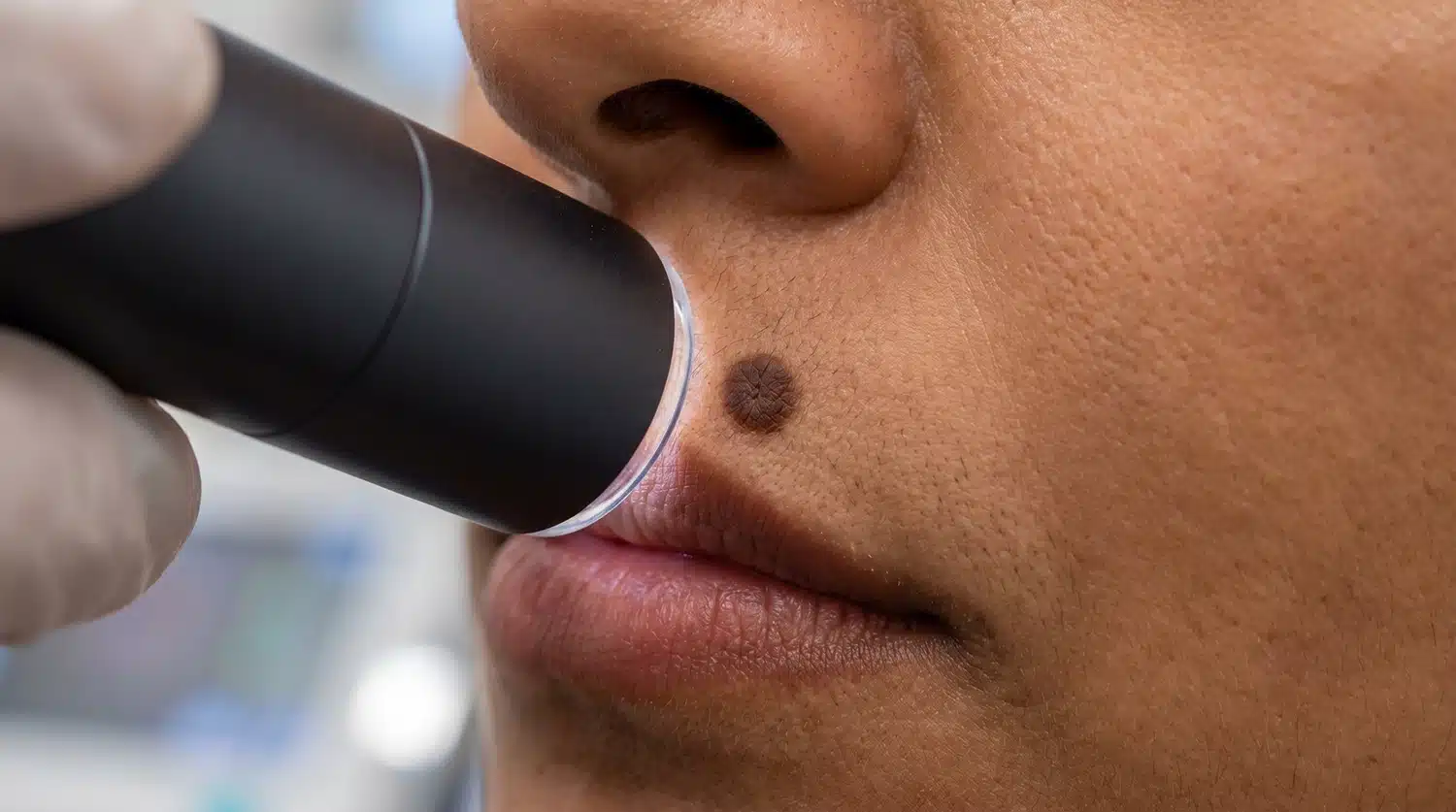
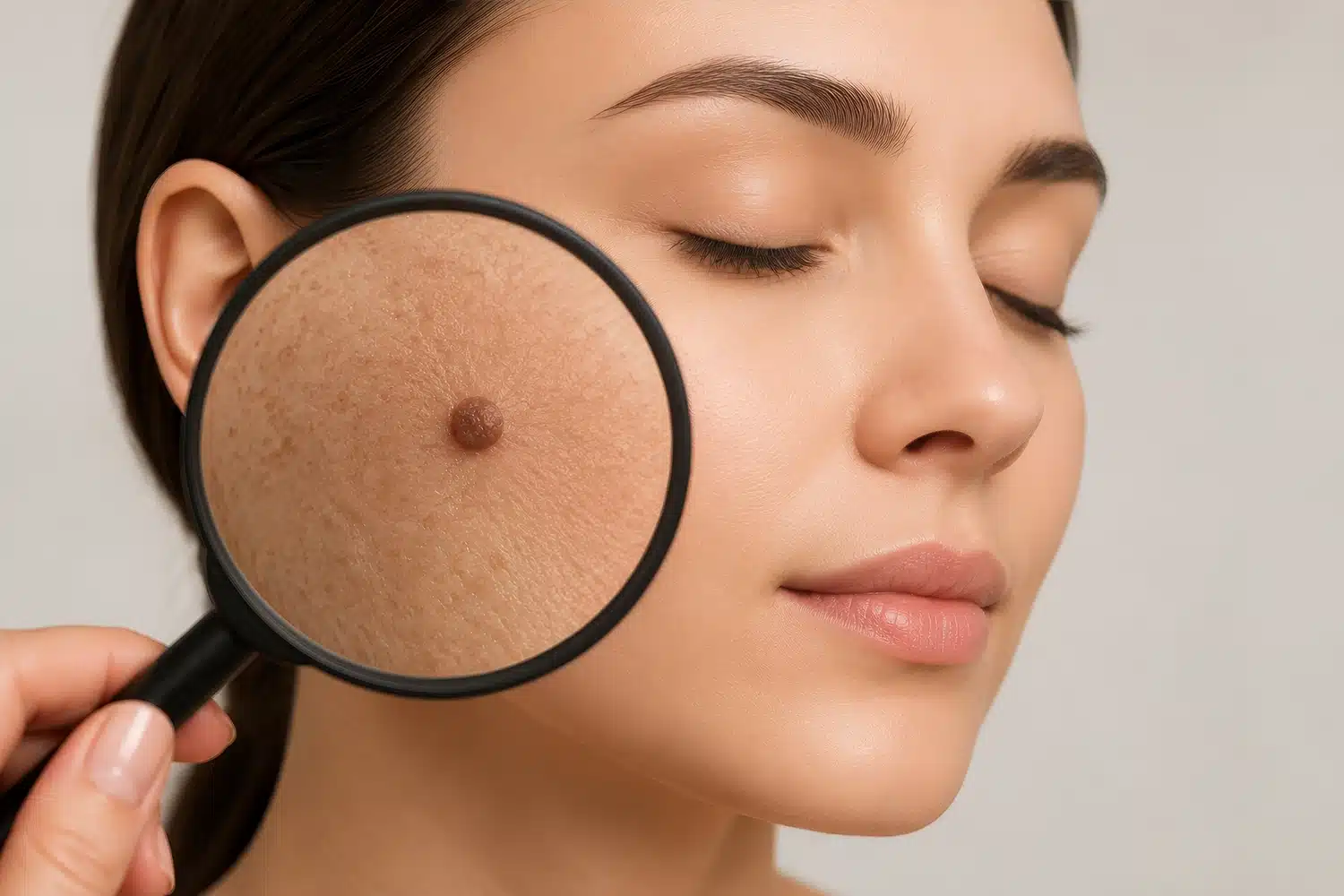
Any price quoted without a clinical examination should be treated as a rough guide only. Photographs may help give an initial indication, but they cannot substitute for a hands-on assessment with a dermatoscope (a magnifying device used to examine pigmented lesions in detail).
As the Founder and Medical Director of 1Aesthetics, Medical & Surgery in Singapore, I'm happy to give a rough cost estimate from photos, though I will need to examine each mole in person before recommending a specific treatment method or a firm price.
Book a consultation at 1Aesthetics to get started.
Where a mole sits has a direct bearing on the difficulty of the procedure.
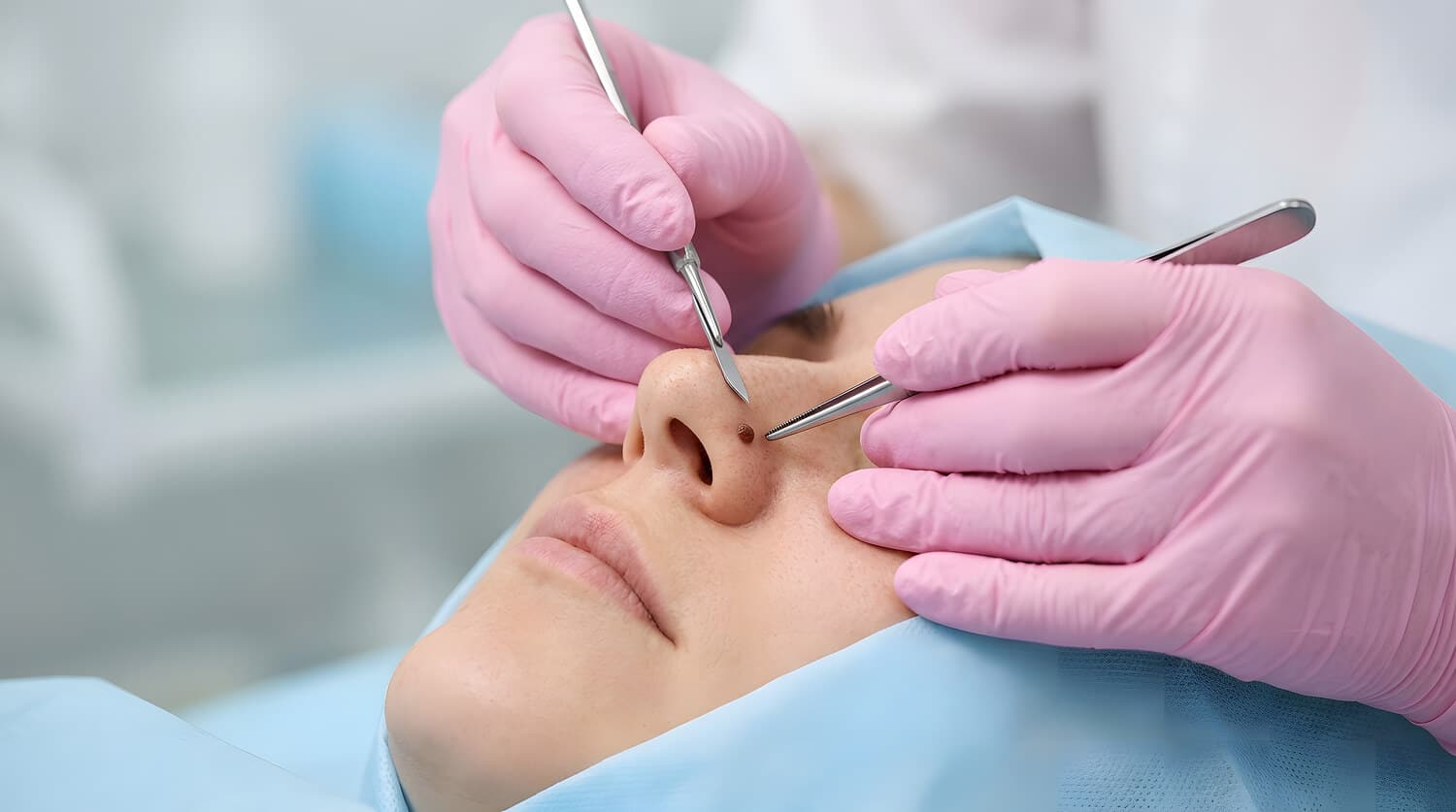
In clinical practice, moles near the eyelid margin, the edge of the nostril, or the lip line are among the most challenging to remove. These are areas where the skin is exceptionally thin, underlying structures are close to the surface, and any complication, such as scarring or pigmentation change, would be immediately visible. Surrounding structures such as nerves and blood vessels also sit closer to the surface in these zones, so extra care is needed to avoid affecting them during removal.
Working near these zones requires more time, greater technical skill, and in some cases a more conservative approach across multiple sessions, all of which is reflected in the cost.
The technique used is one of the most significant cost drivers.
There are several removal methods available at my practice, each used depending on the mole's characteristics.
The outcome of a mole removal depends far more on the operator than on the tool. Two clinics may use the same laser, yet get very different results, because the equipment is only part of the equation. What separates one outcome from another is the practitioner's skill, technique, and experience: recognising which approach suits a specific mole, adapting mid-procedure if something looks atypical, and pre-empting or managing a complication before it becomes a bigger problem.
These are judgement calls built over years of handling complicated cases, and they explain why the same procedure can be priced differently from one clinic to the next. You should account for this when evaluating treatment options and the overall costs.
Histopathology testing (laboratory examination of removed tissue under a microscope) is most commonly indicated when a mole has features consistent with atypical or potentially malignant lesions, including asymmetry, uneven pigmentation, or a history of change in size or colour.
Surgical excision is the method most likely to involve a biopsy; laser ablation vaporises the tissue, meaning there is nothing left to send for analysis. This is one reason why moles with suspicious features are generally not removed by laser vaporisation alone.
The laboratory fee is typically charged separately from the procedure fee and should not be declined on grounds of cost alone. Early detection of any malignant change allows appropriate follow-up to be arranged promptly.
How each mole is removed accounts for a significant part of the total cost. But for patients removing more than one mole, volume and staging introduce a separate set of pricing considerations.
Removing several moles in one session is generally more cost-effective per mole than returning for multiple visits, as the fixed costs of consultation, preparation, and anaesthesia are spread across more lesions.
For larger or raised moles requiring gradual reduction across multiple sessions, each session is priced individually, and the total will be higher than a single-session procedure.
I generally recommend waiting at least 3-4 weeks between sessions to allow the skin to recover properly.
Mole removal is considered cosmetic when performed for aesthetic reasons without any clinical concern, in which case neither MediSave nor most insurance plans will cover any portion of the fee.
It may be considered medically indicated when there is clinical evidence of concern, such as a mole displaying features associated with atypical or potentially malignant lesions.
A mole removed for medical reasons, with tissue sent for histopathology, may qualify for MediSave use or insurance claims under certain conditions. The specific criteria vary by insurer, so confirm your coverage directly before your appointment.
Not sure whether your mole would be classified as cosmetic or medical? Book an appointment with me at 1Aesthetics so I can assess the mole and explain how it would be categorised before you make any decisions.
A reputable clinic will provide a clear, itemised cost breakdown before any procedure begins.
A comprehensive quote should cover:
Before committing, it is worth asking a few questions, such as:
A clinician who answers these questions clearly before you proceed takes transparency seriously.
Mole removal pricing in Singapore cannot be accurately quoted without a doctor seeing the mole directly. Size, depth, location, skin tone, and the presence of any atypical features all influence which method is appropriate and what the procedure will involve.
My team at 1Aesthetics can provide a clear, itemised cost breakdown as you consider the treatment. There is no pressure to proceed during the first consultation.
Address:
1Aesthetics, Medical & Surgery
#14-90 The Central Tower 1
8 Eu Tong Sen Street
Singapore 059818
Mon-Fri 10 AM to 730 PM
Sat 10 AM to 6 PM
Phone / WhatsApp:
+65 66125173 / +65 84899962
Email:
[email protected]