Summary:
Eyebrow embroidery removal is not the same as laser tattoo removal applied to the brow area. The inks are different, the depth is different, and the way the pigment responds to laser energy can be dramatically different, too. Treating the two as equivalent is one of the most common reasons people are caught off guard.
What removal involves depends less on the ink itself than on how it was put in: how deep the pigment sits, how densely it was applied, and how many times the brows have been touched up. Your skin type then determines how aggressively that pigment can be treated.
Understanding what shapes the removal process, and what your clinician is assessing before treatment begins, will help you prepare for your first consultation.
No two eyebrow embroidery removal cases are identical. The variation begins with the materials used and the technique applied during the original procedure.
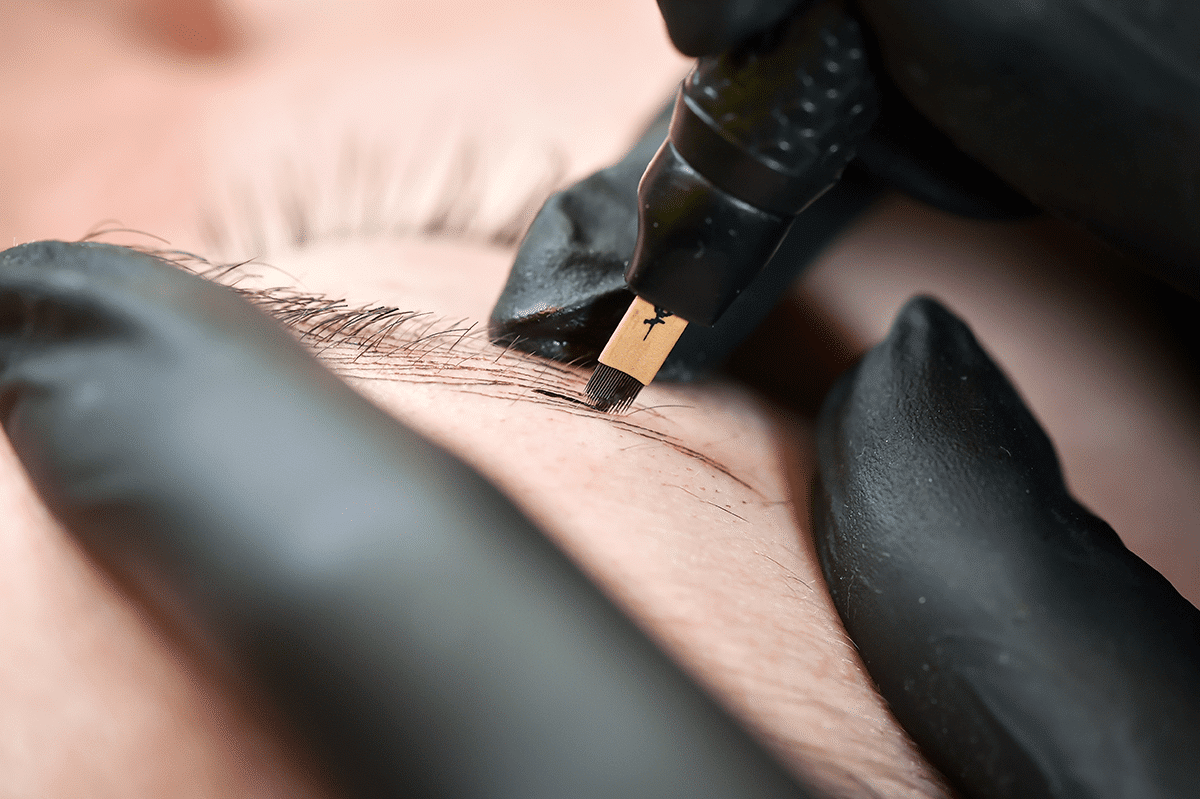
How the original embroidery was applied is the single biggest variable, which is why eyebrow embroidery removal is a more involved process than many people expect.
Pigment type/depth, application density, and the number of passes all influence how difficult removal will be.
Some older or less refined techniques result in pigment sitting deeper in the dermis (the layer of skin beneath the epidermis), requiring more laser energy and more sessions to clear. Pigment applied at varying depths, a common result of multiple touch-ups, is particularly unpredictable.
A thorough consultation before any laser session is needed to determine the treatment plan, which equipment and wavelengths are used, and a realistic session estimate for your case.
Skin type matters because the melanin in your skin competes with the target pigment for laser energy.
Patients with higher Fitzpatrick skin types, particularly Types III to V which are common in Singapore's population, carry a greater risk of post-inflammatory hyperpigmentation (PIH) if laser parameters are not carefully adjusted.
PIH is a darkening of the skin in response to inflammation or injury. The assessment allows the clinician to set the appropriate fluence (energy delivered per unit area), pulse duration, and cooling protocol before treatment begins.
Repeated needle passes during the original embroidery can cause localised tissue fibrosis (a hardening of the skin from scar tissue formation), which scatters laser energy differently from normal skin.
Pigment colour is also assessed at consultation, as embroidery that has faded from dark brown to a cooler, ashier tone responds differently to laser energy than the original colour. Taken together, your skin type, pigment colour, and brow tissue condition form the complete clinical picture that determines your treatment plan.
Every one of these factors is assessed in person at 1Aesthetics before any treatment is recommended. Book a pre-treatment assessment to find out exactly what your removal would involve.
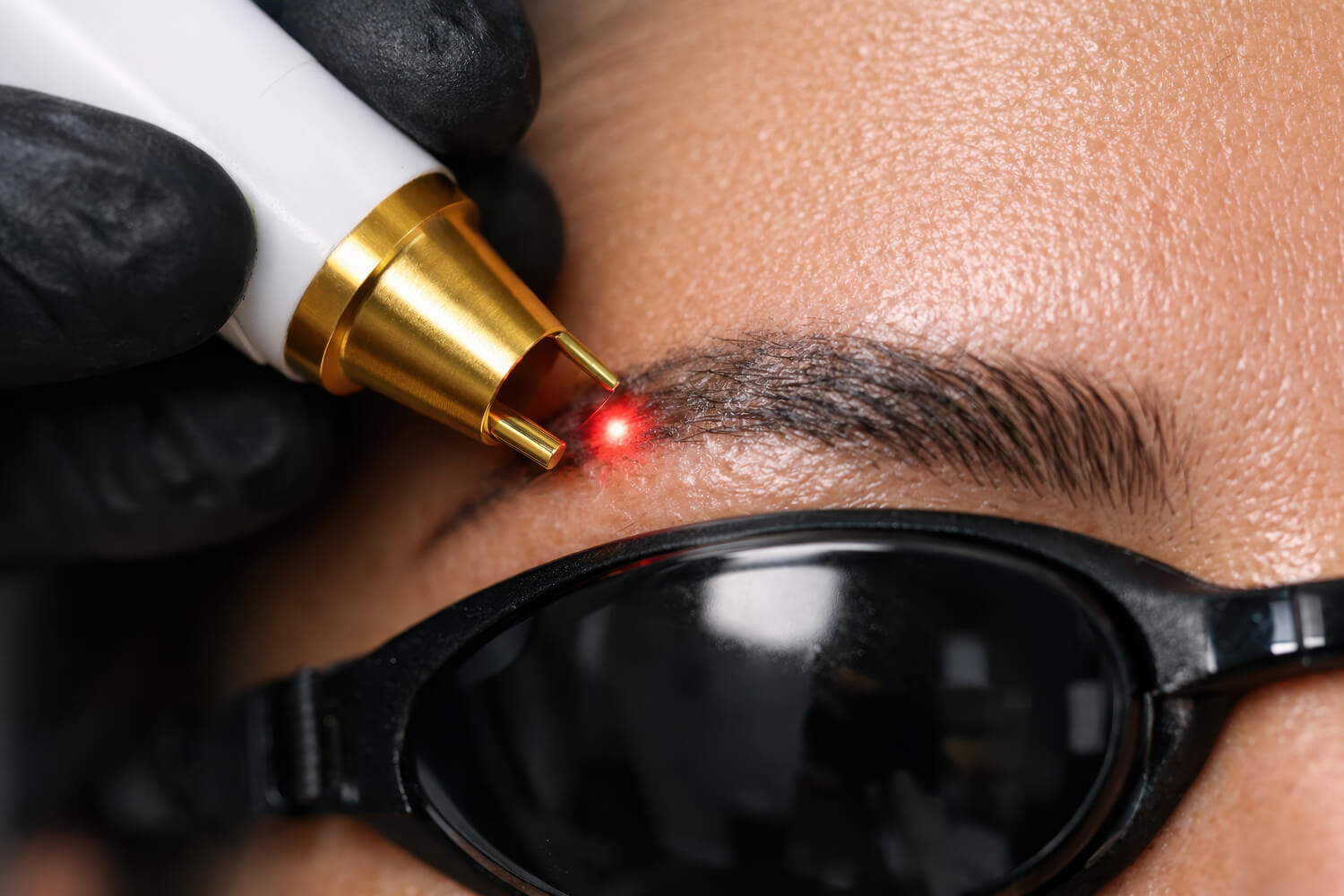
Laser wavelength selection is the most technically critical decision in eyebrow embroidery removal.
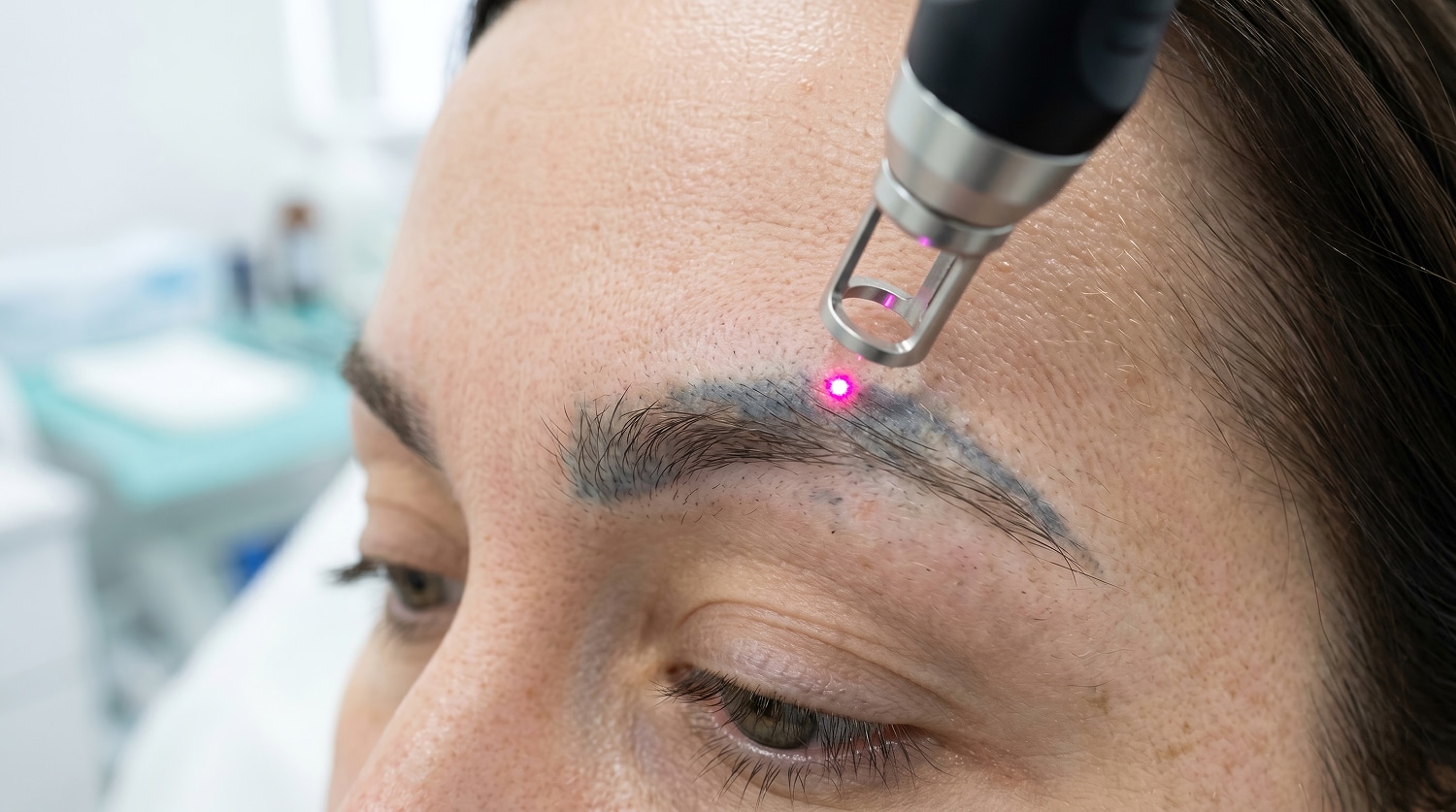
Research has shown a significant association between the presence of titanium dioxide and poor laser response, including unwanted darkening, which is why accurate colour assessment is essential before treatment begins.
| Pigment colour | Wavelength | Notes |
| Dark brown or black | 1064nm (Nd:YAG) | Deep penetration, high melanin absorption |
| Red-brown or orange | 532nm | Targets red-to-yellow end of the spectrum |
| Blue or green | 694nm ruby (native) | For blue and green residual pigment, including cases that have not cleared with other wavelengths |
As the Founder and Medical Director of 1Aesthetics, Medical & Surgery in Singapore, I examine the brow under magnification and various wavelengths of light such as UV and assess pigment depth and composition before committing to a wavelength and energy setting. Identifying the right settings from the outset is what allows the treatment to work with the pigment rather than against it.
Pigment colour also shifts as treatment progresses, and those changes are part of the clearing process rather than a sign that something has gone wrong. What each shift means is covered in my companion article on why your eyebrow tattoo looks darker after laser removal.
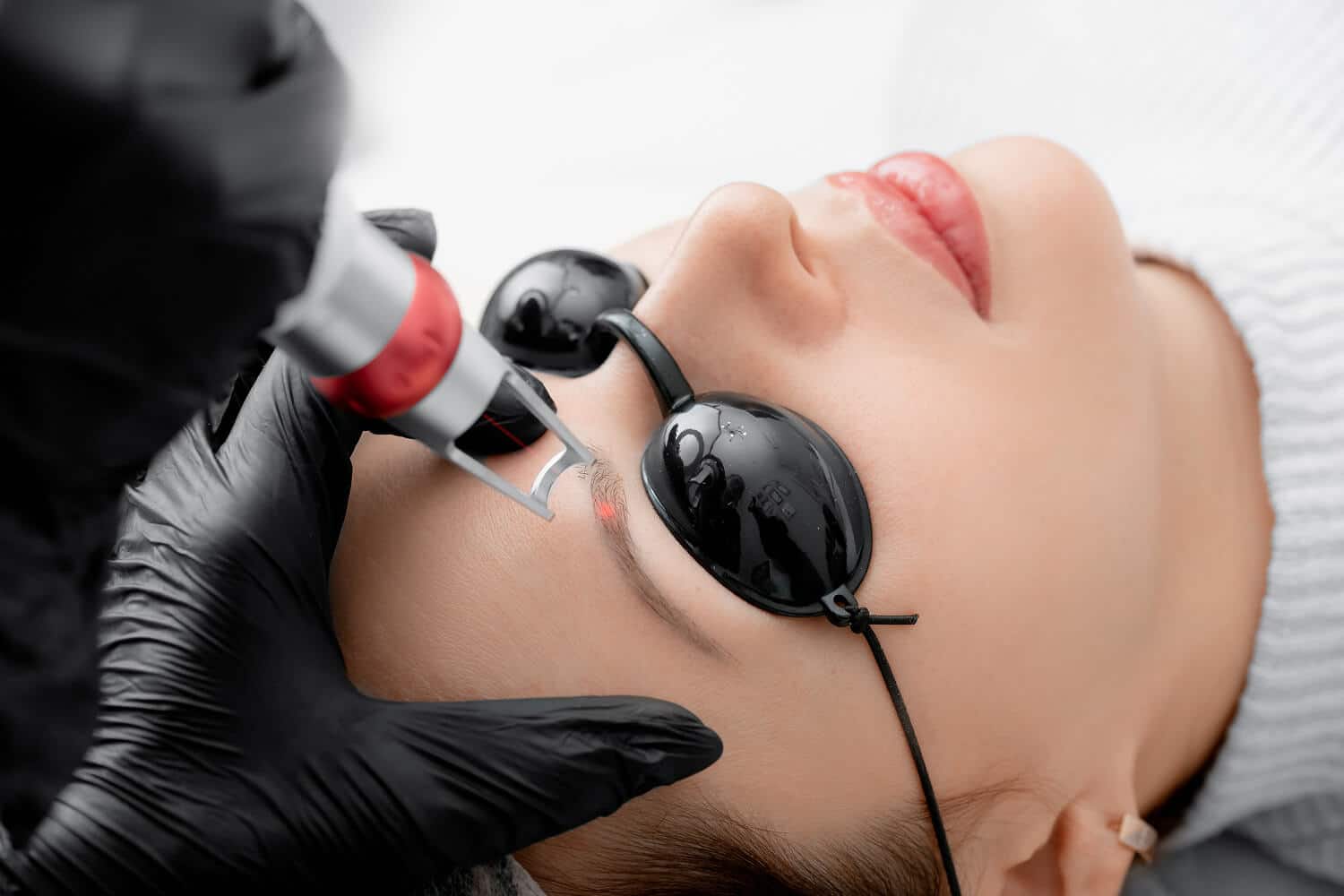
Laser energy shatters pigment particles into fragments small enough for the immune system to carry away through the lymphatic system. Sessions are typically spaced four to six weeks apart to allow your immune response to work between treatments.
At 1Aesthetics, Extracorporeal Shockwave Therapy may be used alongside laser treatment to enhance lymphatic drainage between sessions.
Light, superficial embroidery may clear in three to six sessions. Heavily layered embroidery with multiple touch-ups, or cases involving flesh-toned pigments, may require significantly more.
I typically use the FracTAT technique, combining fractional ablative laser with the Discovery Pico Plus picosecond laser to improve clearance of faint or deeply deposited residual ink.
Clinical evidence suggests this combination approach may achieve significantly higher clearance rates in fewer sessions than conventional single-laser treatment, though these figures are drawn from professional tattoo removal research; outcomes for eyebrow embroidery removal may vary depending on pigment type, depth, and individual response.
Temporary eyebrow hair thinning or loss is not uncommon during removal, as the laser energy affects the local tissue environment in the brow area. In most cases, regrowth occurs within three to six months of completing treatment.
The laser parameters used for eyebrow embroidery removal are calibrated to target pigment depth rather than the follicle, which sits deeper in the skin than cosmetic pigment is typically deposited. The thermal effect on follicle tissue is transient rather than permanent.
The brow area will appear red and slightly swollen immediately after treatment. This typically settles within 24 to 48 hours.
Micro-crusting (small scabs forming over the treated area) is common in the days that follow and should be left to resolve naturally. Picking at the crusted area increases the risk of scarring and PIH. Keep the area clean, moisturised, and protected from sun exposure during healing.
Certain signs warrant prompt follow-up:
Significant fading is the most common outcome, and most patients reach a point where the embroidery is no longer visible under normal conditions, though trace pigment may remain in some cases. The skin in the brow area typically returns to its natural texture and tone over several months following the final session.
If you are considering removing your eyebrow embroidery, the starting point is a proper clinical assessment, not a quote over the phone or an estimate based on photographs.
At 1Aesthetics, I conduct a thorough in-person evaluation covering your skin type, brow tissue condition, pigment colour and composition.
Book a clinical assessment at 1Aesthetics to understand what your removal process would involve before making any decisions.
Address:
1Aesthetics, Medical & Surgery
#14-90 The Central Tower 1
8 Eu Tong Sen Street
Singapore 059818
Mon-Fri 10 AM to 730 PM
Sat 10 AM to 6 PM
Phone / WhatsApp:
+65 66125173 / +65 84899962
Email:
[email protected]